0%

An Aluminum Bathroom Door is more than a bright, modern entrance. It is a practical response to humidity, limited space, and everyday cleaning. Unlike untreated wood, aluminum does not absorb bathroom moisture easily. Its lightweight frame also supports smooth opening, especially in compact apartments or family bathrooms. The surface can be powder-coated, anodized, or finished with a wood-like texture. Small details matter.

John Straube, a respected building-science expert, has emphasized, “Moisture control is central to durable building design.” This principle explains the door’s appeal. A properly designed Aluminum Bathroom Door can resist corrosion, support ventilation planning, and maintain a clean appearance near showers and sinks. However, aluminum is not automatically perfect. Poor installation can leave gaps, rattling panels, or weak seals. That part is easy to underestimate.

Choosing one requires more than comparing colors and prices. Check the frame thickness, hinge quality, drainage design, privacy glass, and surface warranty. A bathroom door should close quietly, protect personal privacy, and tolerate repeated contact with wet hands. Safety matters too. Tempered or laminated glass may improve protection, depending on the door style and local building requirements. Professional measurement is worthwhile, especially when replacing an old frame.

There is one honest limitation. Aluminum can feel colder and less warm than timber. Some finishes may also show fingerprints or scratches. Yet with suitable hardware, careful installation, and simple cleaning, the material offers a balanced combination of durability, hygiene, and contemporary style. It is not a magic solution. It is a sensible one.
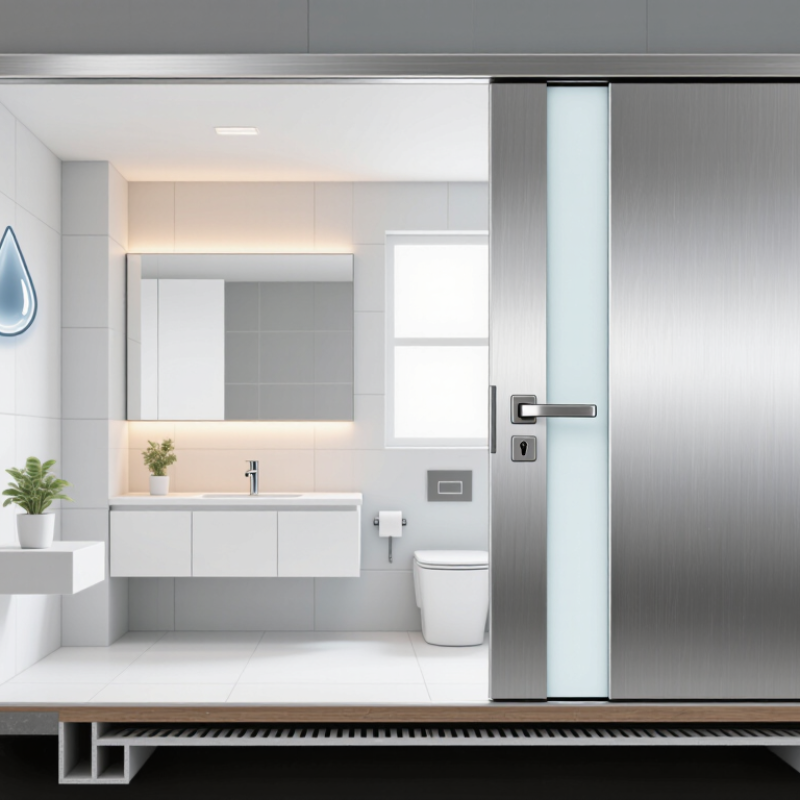
What Is an Aluminum Bathroom Door and Why Choose One?

Definition and Basic Structure of an Aluminum Bathroom Door

An aluminum bathroom door is a moisture-resistant door designed for humid indoor spaces. Its main structure usually includes an aluminum frame, door panel, hinges, handle, lock, and sealing strips. The frame forms the rigid outer boundary. The panel fills the opening and may use aluminum, glass, or a composite material. Aluminum is lightweight, dimensionally stable, and less vulnerable to bathroom humidity than many untreated materials.

The frame normally contains vertical stiles and horizontal rails joined at the corners. Hinges connect the door leaf to one side, while the lock assembly controls access on the other. Flexible seals around the edges help reduce water splashes, drafts, and noise. A threshold may guide water away, although its design must not create a tripping hazard. From installation experience, accurate leveling matters greatly. Even a strong door may scrape, swing open, or leave gaps when the frame is misaligned. Aluminum also needs care; surface damage can expose weaker areas, especially near fasteners and wet floor zones. No door is maintenance-free.

Tips: Check the frame thickness, seal quality, hinge alignment, and drainage path before installation. Keep the lower edge dry when possible. Clean with mild soap and water. Avoid abrasive pads, since they can dull the surface and damage protective finishes. Measure the wall opening carefully. A few millimeters matter.

Key Materials, Coatings, and Design Features

An aluminum bathroom door uses lightweight aluminum for its frame, panel, or both. The material resists swelling, rust, and everyday moisture better than untreated wood. However, aluminum quality still matters. A thicker frame usually feels steadier when the door closes.

Common surface treatments include powder coating and anodizing. Powder coating creates a sealed, colored layer over the metal. It handles frequent cleaning and offers many surface textures. Anodizing changes the aluminum surface itself, producing a hard, metallic finish. Both options can perform well, but poor preparation may cause peeling or uneven color. That detail is easy to overlook.

Design affects daily comfort. A narrow frame can make a small bathroom feel more open. Frosted glass provides privacy while allowing soft daylight through. Solid panels offer stronger visual privacy and may reduce water splashes. I prefer rounded frame edges near wet areas because they are easier to wipe and less harsh to touch. Still, the thinnest design is not always the best choice. It may leave less room for sturdy hinges, seals, or adjustment. A silicone bottom seal helps limit water movement, while stainless-steel hardware supports smoother operation. Check the hinges carefully. A beautiful coating cannot compensate for a door that drags, rattles, or closes poorly. Cleaning habits matter too; abrasive powders can dull even a durable finish.

What Is an Aluminum Bathroom Door and Why Choose One? - Key Materials, Coatings, and Design Features

Evaluation Dimension Typical Aluminum Bathroom Door Specification Practical Benefit Important Consideration
Main frame material Extruded aluminum profiles, commonly using 6000-series aluminum alloys Lightweight, corrosion-resistant, and suitable for accurate frame fabrication Alloy temper, profile thickness, and joint quality affect strength and durability
Approximate frame weight Generally lighter than comparable steel doors; the final weight depends on size, glazing, hardware, and profile design Easier handling and reduced load on hinges and surrounding walls Glass panels and reinforced hardware can add substantial weight
Moisture resistance Aluminum does not rust like carbon steel and is suitable for humid bathroom environments Helps maintain appearance and function in areas exposed to steam and water splashes Dissimilar-metal contact, salt, chemicals, and trapped moisture can still cause corrosion or staining
Anodized coating Electrochemically formed aluminum-oxide surface, often specified by an anodizing class or thickness Provides a durable surface with good resistance to abrasion and weathering Color range is more limited than paint finishes, and harsh cleaners may damage the surface
Powder coating Dry powder applied electrostatically and cured onto the aluminum surface Offers a broad selection of colors and textures with a continuous protective finish Coating quality depends on pretreatment, film thickness, curing, and edge coverage
PVDF coating Fluoropolymer-based architectural coating used where enhanced color and weathering performance are required Good resistance to ultraviolet exposure, fading, and atmospheric weathering Usually costs more than standard powder coating and may be unnecessary for many indoor bathrooms
Door infill options Tempered safety glass, laminated glass, aluminum panels, or moisture-resistant composite panels Allows different levels of privacy, daylight, impact resistance, and visual openness Glass thickness, safety classification, and edge protection should match the application
Privacy design Frosted, etched, patterned, reeded, or partially glazed panels can be combined with aluminum frames Balances natural light with visual privacy Textured surfaces may require more frequent cleaning because they can retain water spots
Operating styles Swing, sliding, pivot, folding, and pocket-style configurations Supports different bathroom layouts and space-saving requirements Sliding and folding systems require clean tracks and correctly adjusted rollers
Sealing and drainage Perimeter gaskets, brush seals, thresholds, drip edges, and correctly sloped shower tracks may be used Reduces water leakage, drafts, and noise around the door opening Seals are not a substitute for proper bathroom floor falls, drainage, and installation
Hardware compatibility Common hardware includes stainless-steel hinges, handles, rollers, locks, and magnetic catches Enables smooth operation and coordinated corrosion resistance Hardware should be rated for wet areas and isolated from incompatible metals when necessary
Thermal performance Standard aluminum conducts heat readily; thermally broken profiles can reduce heat transfer Improves comfort and condensation control where the bathroom door separates conditioned spaces Thermal breaks are more relevant to exterior or poorly insulated openings than to typical interior doors
Cleaning and maintenance Usually requires mild soap, clean water, and a soft cloth; abrasive pads and harsh solvents should be avoided Low routine maintenance and easy removal of common bathroom residue Regularly dry tracks, corners, seals, and drainage channels to prevent buildup
Sustainability and end-of-life Aluminum can be recycled repeatedly when collected and separated from glass, sealants, and other materials Supports material recovery and can reduce the need for replacement when properly maintained Actual environmental impact depends on recycled content, manufacturing energy, transport, service life, and recycling access

Note: Performance varies according to profile design, coating system, glass specification, hardware, installation quality, and bathroom ventilation.

How Aluminum Bathroom Doors Compare with Other Door Types

An aluminum bathroom door uses a lightweight metal frame, often paired with tempered glass, panels, or moisture-resistant infill. Compared with solid wood, aluminum handles humidity more confidently. Wood can swell, warp, or develop surface damage when water reaches unprotected edges. Aluminum does not absorb water, but its finish and hardware still need proper care.

It also offers a different balance than PVC doors. PVC is usually economical and warm to the touch, yet some thin profiles can feel less rigid. Aluminum frames provide sharper lines and stronger support around hinges. However, aluminum can transfer cold more quickly, especially in poorly ventilated bathrooms. That detail is easy to overlook. A thermal break or suitable seal can improve comfort and reduce drafts.

Glass doors create an open, modern appearance and make small bathrooms feel larger. They also show water spots and require frequent wiping. An aluminum-and-glass door shares that visual benefit while adding a stable frame, but the glass must be correctly rated and installed. Steel doors can be very strong, although ordinary steel may rust near persistent moisture. Aluminum avoids that common problem, yet low-quality coatings can peel or discolor over time. Inspect the corners, drainage path, seals, and hinge alignment before choosing. A door can look excellent on installation day and still perform poorly if the threshold holds water. That is the part I would question most.

What Is an Aluminum Bathroom Door and Why Choose One?

Aluminum bathroom doors are lightweight, moisture-resistant doors made from corrosion-resistant aluminum frames and panels. The chart compares common bathroom door materials using a relative 1–5 rating, where 5 indicates the strongest overall performance for the stated characteristic.

These ratings summarize typical material characteristics: aluminum offers an effective balance of moisture resistance, low maintenance, light weight, and long service life, while wood generally requires more protection in humid environments.

Benefits of Choosing an Aluminum Bathroom Door

An aluminum bathroom door has a lightweight aluminum frame, often paired with tempered glass, waterproof panels, or frosted acrylic. It is designed for rooms where steam, splashes, and frequent cleaning are normal. Aluminum does not develop red rust like ordinary steel. However, it can still suffer from oxidation, staining, or galvanic corrosion when finishes and fittings are poorly selected. It is not a magic moisture shield.

Moisture resistance is the main practical benefit. A properly coated frame keeps its shape around a wet shower area and needs less repainting than timber. The International Aluminium Institute reports that recycled aluminum requires about 95% less energy than primary aluminum production. Its industry data also indicates that roughly 75% of aluminum ever produced remains in use. That durability supports longer service life and more responsible material planning. The U.S. Environmental Protection Agency similarly notes that recycling aluminum saves about 95% of the energy used for new production.

Daily use brings smaller advantages. The door feels light, opens smoothly, and can fit narrow bathrooms. Slim frames also allow more daylight through frosted glass. Cleaning usually needs mild soap, a soft cloth, and careful drying around the bottom track. Still, poor installation can ruin a good door. Water may collect beneath an uneven threshold. Cheap rollers may rattle after months of use. Choose corrosion-resistant hardware, sealed joints, and a finish rated for humid interiors. Check those details before admiring the frame.

Installation, Maintenance, and Selection Considerations

What Is an Aluminum Bathroom Door and Why Choose One?

An aluminum bathroom door uses lightweight metal frames, often with frosted glass or waterproof panels. Installation needs accurate measurements, level hinges, and sealed joints. A 3–5 mm clearance beneath the door can improve airflow and prevent floor contact. Experienced installers also check wall moisture before fixing the frame. A weak substrate can loosen screws over time. That mistake is easy to miss.

Maintenance is simple but not careless. Wipe water from the lower frame after bathing. Clean tracks with a soft brush every month. Avoid abrasive powders, which can damage protective coatings.

The World Health Organization links damp indoor environments with higher risks of respiratory symptoms, allergies, and asthma. Therefore, ventilation matters as much as the door material. An exhaust fan and a visible drying gap are practical choices.

Tips: Choose anodized or powder-coated aluminum for humid rooms. Confirm the coating standard, glass thickness, hinge load, and replacement seal availability.

The International Aluminium Institute reports that recycling aluminum can save about 95% of the energy used for primary production.

Still, recycled content alone does not guarantee durability. I would inspect corners, drain paths, and fasteners before choosing. A beautiful frame with poor drainage becomes disappointing quickly.

Check the warranty carefully. Some warranties exclude corrosion caused by harsh cleaners, coastal air, or incorrect installation.

FAQS

Why is aluminum suitable for bathroom doors?

Aluminum resists swelling, rust, and daily moisture better than untreated wood. It stays lightweight. However, material quality still matters.

Which surface treatments are commonly used on aluminum bathroom doors?

Powder coating creates a sealed, colored surface with varied textures. Anodizing hardens the aluminum surface and keeps a metallic appearance. Poor preparation may still cause peeling or uneven color.

Does a narrow frame make a bathroom feel larger?

Usually, yes. A narrow frame can create a more open visual space. Yet an extremely thin frame may leave less room for strong hinges and seals.

Which door design provides bathroom privacy?

Frosted glass allows soft daylight while hiding clear views. Solid panels provide stronger visual privacy and can reduce water splashes. Privacy needs differ, so one option cannot suit everyone.

How does aluminum compare with wooden bathroom doors?

Aluminum does not absorb water like wood. Wood may swell, warp, or suffer damage around unprotected edges. Aluminum still needs proper care for its finish and hardware.

How does aluminum compare with PVC doors?

PVC is often economical and feels warmer to touch. Some thin PVC profiles may feel less rigid. Aluminum usually offers sharper lines and stronger hinge support.

What hardware and sealing details should be checked?

Inspect the hinges, bottom seal, threshold, drainage path, and frame corners. A silicone bottom seal can limit water movement. Poor alignment may cause dragging, rattling, or weak closing.

How should an aluminum bathroom door be cleaned?

Use gentle cleaning methods and a soft cloth. Avoid abrasive powders because they can dull the finish. I might clean too often, but water spots still need attention, especially on glass.

Can aluminum bathroom doors feel cold?

Yes, aluminum transfers cold quickly in poorly ventilated bathrooms. A thermal break or suitable seal may improve comfort and reduce drafts. This detail is easy to miss.

What should be inspected before buying?

Check coating quality, frame thickness, hinge alignment, seals, corners, and drainage. The threshold should not hold standing water. A door can look excellent on installation day and still perform poorly later.

Conclusion

An Aluminum Bathroom Door is a practical door system designed for humid spaces such as bathrooms, shower rooms, and washrooms. Its structure typically includes a lightweight aluminum frame, a door panel made from glass or another suitable material, hinges, handles, seals, and drainage or ventilation details where needed. Protective coatings can improve resistance to moisture, stains, scratches, and daily wear, while finishes, colors, glass options, and streamlined profiles allow the door to match different interior styles.

Compared with wooden or ordinary steel doors, an Aluminum Bathroom Door is less likely to swell, rust, or require frequent repainting when properly finished and maintained. It offers a useful balance of durability, low weight, easy cleaning, and modern appearance. When choosing one, consider the opening size, bathroom layout, privacy needs, glass safety, hardware quality, sealing performance, and ventilation. Accurate installation is essential for smooth operation and water control, while routine cleaning and periodic checks of seals, hinges, and fasteners can help extend its service life.

Evelyn

Evelyn

Evelyn is a highly experienced marketing professional dedicated to helping businesses better understand practical solutions, industry developments, and customer-focused innovation. With a strong command of the company’s products, services, and overall business strategy, she combines market insight......