0%

The global demand for Aluminium Door With Window systems is changing quickly. Buyers now expect slim profiles, tested security, thermal efficiency, and reliable after-sales support. Market reports from Grand View Research and Mordor Intelligence identify construction growth, renovation, and energy-efficient building standards as major demand drivers. Their findings also show regional differences in product specifications, installation practices, and purchasing priorities.

Performance matters more than appearance alone. The International Aluminium Institute reports that aluminium production carries significant carbon impacts, although recycled aluminium can require far less energy than primary metal. The World Green Building Council also stresses the importance of reducing embodied carbon across building materials. These findings make recycled content, thermal breaks, low-emission coatings, and responsible sourcing important comparison points. Small details matter. A poorly sealed corner can undermine an otherwise impressive door.

Carl Elefante, FAIA, a recognised building sustainability expert, said, “The greenest building is the one that is already built.” His observation supports careful renovation, where high-performing Aluminium Door With Window products can improve comfort without replacing an entire structure. Yet no universal ranking is perfect. Manufacturer claims may differ from independent test results, and local climate conditions can change product performance. This guide therefore considers verified certifications, air and water resistance, acoustic results, warranty terms, manufacturing experience, and installation networks. It also recognises an uncomfortable truth: the cheapest quotation may become the most expensive choice after years of maintenance. The leading manufacturers worldwide are not simply selling frames and glass. They are delivering tested building-envelope solutions, measurable efficiency, and dependable performance in real homes and commercial spaces.
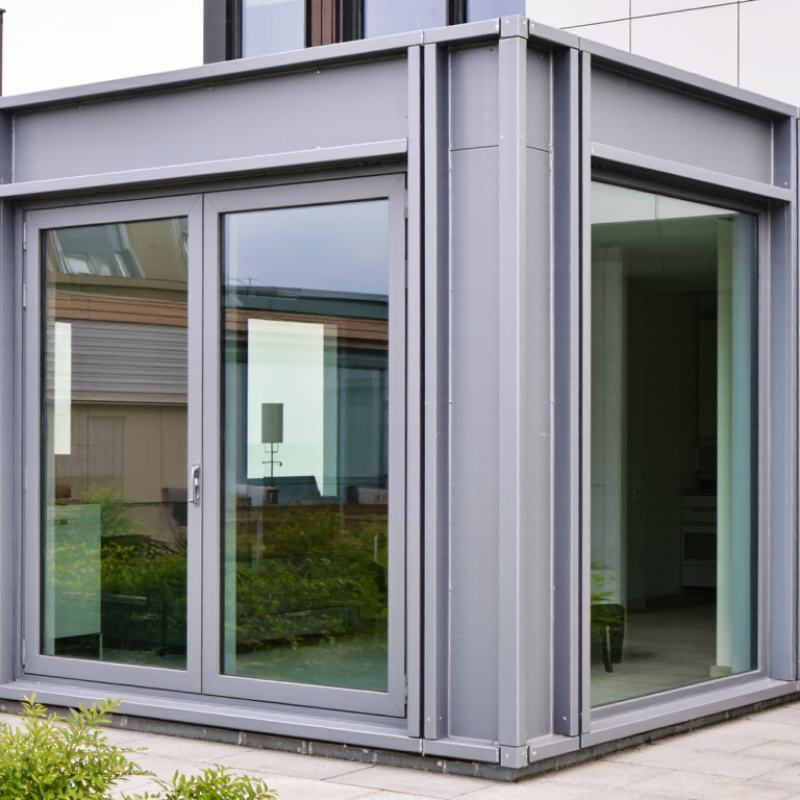
Top Aluminium Door With Window Manufacturers Worldwide

Defining Aluminium Doors with Windows and Their Main Applications

Aluminium doors with windows combine a structural frame with daylight, ventilation, and controlled access. Their main value is practical: they connect rooms, balconies, patios, offices, and retail spaces while keeping sightlines open. Slim aluminium profiles can support large glass panels without creating a heavy visual barrier. Thermal breaks, sealed joints, and low-emissivity glass are important for comfort. Without them, a stylish door may transfer heat quickly.

The U.S. Department of Energy reports that windows can cause 25% to 30% of residential heating and cooling energy use. This makes glazing performance relevant, not decorative.

In warm climates, doors with solar-control glass can reduce indoor heat and glare. In colder regions, insulated frames and double glazing help limit drafts near the threshold. They also suit schools, hospitals, apartments, and commercial entrances where durability matters.

The International Aluminium Institute reports that recycled aluminium requires about 5% of the energy used for primary production. That supports circular manufacturing, although collection and processing still need improvement.

A frame alone cannot guarantee efficiency. Poor installation, uneven floors, or weak drainage can undermine good specifications. Small details matter. According to field-based building practice, correct flashing, hardware alignment, and routine seal inspection often determine service life more than appearance.

Key Criteria for Comparing Manufacturers Worldwide

When comparing aluminium door with window manufacturers worldwide, begin with performance rather than catalogue appearance. Ask which alloy, profile thickness, and thermal-break system each supplier uses. A reliable manufacturer should provide test reports for air leakage, water resistance, wind pressure, and operating cycles. Details matter. Inspect how frames meet at corners, where weak fabrication often appears first.

Factory experience is easier to judge through evidence. Request production photos, inspection records, and a recent project reference with similar climate conditions. Coastal installations need strong corrosion protection, while cold regions require dependable insulation and drainage. Confirm glass specifications, hardware origin, replacement access, and expected service life. Independent laboratory testing adds confidence, but documents should match the exact profile and glass combination you will receive.

Communication also separates capable manufacturers from risky choices. Compare technical drawings, sample corners, packaging methods, and response times before accepting a low quotation. Ask how defects are recorded and corrected. A clear warranty is useful, yet after-sales support can matter more than its length. I have seen attractive samples hide uneven powder coating and stiff handles. That experience makes physical inspection essential. Some suppliers explain limitations openly; that honesty may be more valuable than polished sales language. Lead times deserve scrutiny, too, because customized colours, glazing, and hardware can quietly change delivery schedules.

Leading Aluminium Door with Window Manufacturers by Region

Choosing leading aluminium door with window manufacturers requires more than comparing online catalogs. Regional climate, building habits, and installation skills change the buying decision.

European manufacturers often focus on thermal insulation, narrow sightlines, and tested hardware. Their systems suit renovated apartments and energy-conscious commercial buildings. North American manufacturers commonly emphasize larger openings, impact resistance, and practical replacement sizes. Ask for air, water, and structural test records. A beautiful frame is not enough.

Asia-Pacific manufacturers provide broad production capacity and many custom profiles. Buyers should inspect powder coating, drainage holes, glass specifications, and factory quality controls. In the Middle East, manufacturers usually develop stronger shading solutions and corrosion-resistant finishes for heat, dust, and coastal air. African suppliers may prioritize durable hardware, simple maintenance, and flexible delivery. Latin American manufacturers often adapt designs to strong sunlight, ventilation needs, and local construction methods.

Site experience reveals details that brochures miss. I would check corner joints, roller movement, gasket compression, and screw alignment on a sample unit. Small faults matter. Salt-spray testing is useful near the sea, but it does not replace proper installation. Manufacturers with traceable materials, clear warranties, and responsive technical teams deserve more confidence. Still, regional reputation can be misleading. A large factory may deliver inconsistent batches, while a smaller producer may provide better supervision. Buyers should compare verified projects, inspection reports, lead times, and after-sales support before selecting a supplier.

Top Aluminium Door With Window Manufacturers Worldwide — Regional Aluminium Supply Context

This chart shows rounded 2023 primary aluminium production by region in million metric tonnes, providing a factual supply-side reference for the global aluminium door and window manufacturing industry. It does not rank individual companies or brands. Source: International Aluminium Institute, 2023 regional production statistics.

Manufacturing Standards, Materials, and Product Technologies

Top Aluminium Door With Window Manufacturers Worldwide

Reliable aluminium door and window manufacturers begin with controlled production, not attractive brochures. Their factories should document alloy grades, extrusion tolerances, coating thickness, and hardware inspections. Common reference points include ISO-based quality systems, regional thermal performance standards, and independently verified air, water, and wind tests. Requirements differ between coastal housing, high-rise buildings, and cold climates. A strong supplier provides test reports, batch records, and traceable samples. Certificates help, but they do not replace practical inspection. Installation evidence matters too.

Material selection directly affects service life. Thermally broken aluminium frames reduce heat transfer through reinforced polyamide sections. Powder coating or anodising can improve surface resistance when preparation is properly controlled. Sealed corners, multi-point locks, stainless fasteners, and low-conductivity spacers support better performance. Modern manufacturers may use CNC machining, automated gasket insertion, and digital dimensional checks. These technologies reduce variation, although automation cannot correct poor design. Glass selection also deserves attention. Low-emissivity double glazing may improve comfort, while laminated glass can support safety and acoustic goals. Small gaps matter.

I have seen specifications that looked excellent but ignored drainage paths. That weakness can cause leakage after installation. Human review remains necessary. The best purchasing decision compares tested performance, material transparency, maintenance guidance, and local installation capability. No specification is perfect. Manufacturers should explain limitations instead of promising universal results.

How to Select a Reliable Global Aluminium Door Manufacturer

Selecting a reliable global aluminium door manufacturer requires more than comparing catalogue prices. In real projects, small details often decide performance: alloy grade, wall thickness, thermal breaks, drainage paths, and hardware quality. Ask for full technical drawings, not only polished photographs. A dependable supplier should explain air leakage, water resistance, wind load, U-value, and acoustic results clearly. If answers stay vague, pause.

Experience is visible in evidence. Request samples, factory inspection records, production photos, and references from climates similar to your site. A coastal building needs stronger corrosion protection than an inland office. A cold region may require insulated frames and tested glazing combinations. Check whether the manufacturer controls extrusion, powder coating, assembly, and final inspection, or outsources each stage. Outsourcing is not automatically weak, but unclear responsibility creates expensive gaps.

Global reliability also depends on communication after the order. Confirm drawings, packing methods, replacement-part procedures, delivery terms, and response times in writing. Ask how defects are recorded and corrected. Independent test reports should match the exact profile and glass system offered, not a similar model. Attractive samples can still fail when installation guidance is too general. That lesson matters. Leave room for local engineering review, because one standard rarely suits every building or market.

Top Aluminium Door With Window Manufacturers Worldwide – How to Select a Reliable Global Aluminium Door Manufacturer
Evaluation Dimension What a Reliable Manufacturer Should Provide Relevant Benchmark or Standard Recommended Verification Evidence Why It Matters
Aluminium Alloy Clearly identified alloy and temper for frames, sashes, and profiles; common architectural grades include 6063-T5 or 6063-T6. ASTM B221 or EN 755/EN 573, depending on the supply market. Material certificates, alloy designation, temper information, and random incoming-material tests. Alloy composition and temper affect strength, surface quality, machinability, and long-term dimensional stability.
Profile Design Thermally broken or non-thermally broken systems selected according to climate, building type, and energy requirements. Thermal performance should be calculated for the complete door-and-window assembly, not the aluminium profile alone. Section drawings, polyamide thermal-break specifications, system test reports, and calculated U-value documentation. A suitable profile system reduces heat transfer, condensation risk, air leakage, and operating problems.
Frame and Sash Tolerances Documented dimensional tolerances, controlled corner joints, accurate machining, and consistent assembly procedures. Tolerances should be defined in approved shop drawings and aligned with the applicable product standard. Inspection plans, dimensional inspection records, corner-joint samples, and approved production drawings. Accurate fabrication supports smooth operation, reliable sealing, and consistent installation results.
Glass Configuration Glass thickness, air space, coating, spacer, and safety-glass type matched to the project requirements. EN 12150 for thermally toughened glass; EN 14449 for laminated glass; ASTM C1048 for heat-treated flat glass. Glass certificates, safety classification, thickness records, edge-quality inspection, and sample approval. Correct glazing selection affects safety, sound insulation, solar control, energy use, and impact resistance.
Air Permeability Tested door-and-window assemblies with air leakage results reported at defined pressure differences. EN 1026 testing with classification under EN 12207, or ASTM E283 testing for applicable projects. Independent or laboratory test report showing specimen size, pressure sequence, leakage result, and product configuration. Low air leakage improves indoor comfort, energy efficiency, and resistance to drafts.
Watertightness External doors and windows tested for water penetration using the same drainage and sealing design offered to the buyer. EN 1027 testing with classification under EN 12208, or ASTM E331 where specified. Test report identifying water pressure, exposure time, drainage arrangement, and tested assembly details. Verified watertightness helps prevent leakage, interior damage, corrosion, and sealant failure.
Wind and Structural Resistance Structural calculations or tests based on project wind loads, opening size, glass weight, and fixing conditions. EN 12211 with classification under EN 12210, or ASTM E330/E330M where required. Project-specific structural calculations, test reports, mullion and transom details, and fixing schedules. Correct structural design is essential for safety, deflection control, and long-term operation.
Thermal Performance Whole-product U-value and solar-control data for the specified frame, glass, spacer, and dimensions. EN ISO 10077-1/2 or ISO 15099 calculation methods; project limits vary by local energy code. Calculation report listing frame fraction, glass build-up, spacer type, dimensions, and boundary conditions. Whole-assembly data is more reliable than a profile-only claim and supports accurate energy compliance.
Surface Finish Powder coating, anodizing, or liquid coating with controlled pretreatment and documented color tolerance. AAMA 2603/2604/2605 or QUALICOAT requirements where applicable; anodizing may follow ISO 7599. Coating thickness records, pretreatment process records, color samples, adhesion tests, and weathering documentation. Proper finishing improves corrosion resistance, appearance retention, and suitability for coastal or high-UV environments.
Hardware and Security Corrosion-resistant hinges, handles, locks, rollers, restrictors, and compatible hardware tested with the supplied system. Hardware performance should match the applicable door standard and the specified security level. Hardware datasheets, cycle-test records, corrosion-test results, load ratings, and spare-parts policy. Hardware quality directly affects safety, operating force, service life, and maintenance cost.
Weather Seals and Gaskets Compatible EPDM, TPE, or silicone seals with defined hardness, geometry, and replacement availability. Material specifications should identify resistance to UV exposure, ozone, temperature, and compression set. Gasket datasheets, material declarations, sample inspection, and compression or aging-test information. Seals are critical for air, water, acoustic, and thermal performance over the product life cycle.
Quality Management Controlled purchasing, production inspection, nonconformance handling, traceability, and final inspection procedures. ISO 9001 certification is a useful management-system reference, but it does not replace product testing. Valid certificate, quality manual excerpt, inspection checklist, corrective-action records, and factory audit results. A documented quality system reduces batch variation and makes corrective actions traceable.
Testing Capability Access to qualified internal or independent laboratories for complete door-and-window assemblies. Laboratory competence may be demonstrated through ISO/IEC 17025 accreditation where applicable. Laboratory accreditation scope, test equipment calibration records, reports, and specimen configuration details. Testing is meaningful only when the reported specimen matches the product being supplied.
International Compliance Technical files adapted to the destination market, including drawings, declarations, installation guidance, and labeling. Examples include EN 14351-1 for windows and external pedestrian doorsets, and local building or energy codes. Market-specific compliance matrix, declarations, technical file, installation manual, and product labels. Compliance documentation reduces customs, approval, installation, and project-handover risks.
Customization Control Clear limits for maximum dimensions, sash weight, glass thickness, opening configuration, color, and hardware options. Each customized combination should be checked against system calculations and test scope. Approved technical submittal, configuration matrix, production drawings, and written deviation approval. Many failures occur when a customized size or configuration exceeds the tested system range.
Factory Inspection Clean production areas, calibrated equipment, controlled cutting and crimping, protected glass, and organized finished-goods storage. Inspection should cover incoming materials, in-process assembly, finished products, and packaging. Factory-audit checklist, dated production photographs or video, sample inspection, and corrective-action report. Direct factory verification helps confirm that documented procedures are applied in daily production.
Packaging and Logistics Moisture-resistant protection, corner guards, separation between finished units, identification labels, and loading plans. Packaging should reflect transport distance, container handling, humidity, and installation sequence. Packaging specification, loading photographs, carton or unit labels, packing list, and damage-claim procedure. Good packaging protects coated surfaces, glass, hardware, and frame geometry during international transport.
Warranty and After-Sales Support Written warranty scope covering frames, finish, glass, hardware, seals, exclusions, response times, and spare parts. Warranty terms should be linked to documented maintenance, installation, and environmental conditions. Signed warranty, spare-parts list, service process, installation guidance, and named technical contact role. Transparent after-sales terms reduce lifecycle risk and clarify responsibility for product or installation issues.
Total Cost of Ownership Quotation that separates product price, glazing, hardware, packaging, documentation, tooling, shipping, duties, and installation support. Compare equivalent specifications rather than unit price alone. Detailed quotation, approved bill of materials, Incoterms, payment schedule, and change-order policy. The lowest initial price may not represent the lowest cost after freight, maintenance, energy use, and replacement parts.
Selection principle: Choose a manufacturer whose documented test results, production controls, technical support, and product configuration match the destination market and the exact door-and-window specification.

FAQS

What are aluminium doors with windows used for?

They connect rooms, balconies, patios, offices, schools, and retail areas. Glass keeps sightlines open and brings daylight inside.

Why do thermal breaks matter?

Thermal breaks reduce heat transfer through the aluminium frame. Without them, the door may feel cold or release indoor heat quickly.

Which glass options can improve comfort?

Low-emissivity double glazing can reduce heat loss. Solar-control glass helps limit heat and glare in warm climates.

What should buyers check before selecting a manufacturer?

Request air, water, and structural test records. Check verified projects, inspection reports, delivery times, warranties, and technical support.

How does climate affect door selection?

Coastal buildings need corrosion-resistant finishes and reliable drainage. Cold areas need insulated frames, sealed joints, and suitable glazing.

What manufacturing details indicate better quality?

Look for documented alloy grades, coating thickness, extrusion tolerances, and hardware inspections. Traceable samples are useful.

Can automation guarantee a reliable aluminium door?

No. CNC machining and digital checks reduce variation, but they cannot correct poor design or missing drainage paths.

What installation details affect service life?

Correct flashing, aligned hardware, even floors, and compressed gaskets matter. Small faults can cause leaks or difficult roller movement.

Is recycled aluminium always the better choice?

Recycled aluminium uses much less production energy. Collection and processing still need improvement, so material records should be reviewed.

Are certificates enough when comparing suppliers?

Not always. Certificates support confidence, but sample inspection and installation evidence reveal problems brochures may hide.

Conclusion

Aluminium Door With Window systems combine the strength, light weight, and corrosion resistance of aluminium with the natural lighting and ventilation benefits of glass. They are widely used in residential buildings, offices, retail spaces, hotels, and modern industrial projects. When comparing manufacturers worldwide, buyers should consider product quality, design flexibility, thermal and acoustic performance, safety features, production capacity, customization services, delivery reliability, and after-sales support.

Leading manufacturers across different regions may offer varied solutions based on local climate, construction practices, and market requirements. Important evaluation factors include certified manufacturing standards, durable aluminium alloys, advanced surface treatments, energy-efficient glazing, reliable hardware, precise fabrication, and effective quality control. To select a dependable global supplier, customers should review technical documentation, production experience, testing procedures, project capabilities, communication efficiency, and warranty policies. A trustworthy manufacturer should provide consistent performance, transparent specifications, professional service, and solutions that meet the project’s functional, aesthetic, and long-term maintenance needs.

Amelia

Amelia

Amelia is a dedicated marketing professional with a strong understanding of the company’s products, customers, and industry trends. With extensive experience in content strategy, market research, and professional communications, she plays an important role in presenting the company’s expertise to a......