Glass Louver
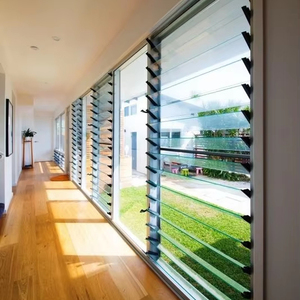
AS2047 Customized Aluminum Glass Louver Window with Mesh Thermal Break
- AS2047 & CE Certified
- PA66 Thermal Break Profile
- Integrated Stainless Fly Mesh
Engineered specifically for high-humidity micro-climates, residential developments, resort villas, and commercial pod construction. Custom tailored to international building codes.
A comprehensive analysis of thermodynamic behavior, thermal break mechanics, and structural compliance in modern bathroom fenestration manufacturing.
Technical Insight: Bathrooms represent the most thermally challenging micro-climates in modern residential and commercial architecture. Standard fenestration systems fail prematurely due to internal vapor pressure accumulation, uncontrolled interstitial condensation, and organic mold propagation. Specifying CE-certified aluminum ventilation windows with engineered thermal breaks is mandatory to guarantee structural longevity and indoor air quality (IAQ).
Modern sanitary facilities generate rapid ambient changes in relative humidity (RH), jumping from baseline indoor levels (40%–50%) to saturated conditions exceeding 95% within minutes of shower operation. This dramatic rise creates high vapor pressure differentials across the fenestration envelope. Uninsulated aluminum profiles become immediate cold-bridges, causing moisture vapor to condense into liquid water upon contact with internal frame faces.
Continuous condensation corrodes non-anodized hardware, degrades perimeter sealants, and spawns harmful fungal colonies including Aspergillus niger and Cladosporium. Changsha Wincraft Aluminum Window Tech Co., Ltd. addresses these thermodynamic challenges by manufacturing advanced 6063-T6 extruded aluminum profile systems insulated with glass-fiber reinforced Polyamide (PA66-GF25) thermal barriers. These isolators decouple internal and external aluminum extrusions, shifting the dew-point boundary outside the structural frame assembly and eliminating interior surface sweating.
How metallurgical purity, multi-barrier weatherstripping, and kinetic hardware integration deliver superior wind load resistance and zero-leakage performance.
We utilize primary A00 ingot aluminum extruded into 6063-T6 temper profiles. Offering a tensile strength ≥205 MPa and yield strength ≥180 MPa, our structural frames withstand aggressive wind loads (EN 12210 Class C5) while resisting torsional warping in high-moisture environments.
Surface treatments undergo 10-step pre-treatment chemical conversion followed by AkzoNobel or PPG fluorocarbon (PVDF) electrostatic spraying. Tested under ISO 9227 salt spray conditions for >3,000 hours, ensuring absolute immunity against acidic cleaning agents and coastal salt fog.
Perimeter weatherstripping utilizes continuous co-extruded EPDM synthetic rubber gaskets. Featuring high elasticity memory from -40°C to +120°C, these seals prevent water ingress even under severe wind-driven rain conditions exceeding 1,050 Pa (EN 12208 Class E1050).
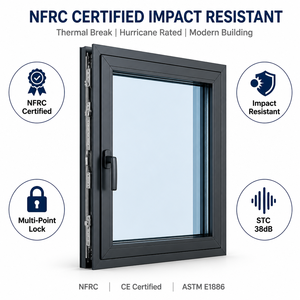
Equipped with German-engineered Siegenia/Hoppe multi-point locking gear, our tilt-turn systems offer a 10mm micro-ventilation top-tilt gap. This allows continuous passive steam evacuation while preserving structural child safety and anti-burglary resistance (RC2 standard).
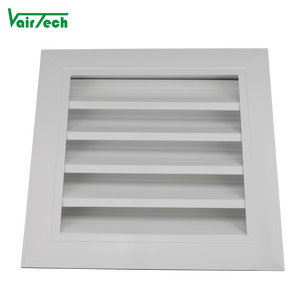
Glass and aluminum louver systems are engineered with overlapping weatherproof blade geometry. Variable pitch adjustment allows precise natural airflow management while internal condensation channels divert trapped moisture outward through concealed flap weep valves.
Insulated Glass Units (IGU) incorporate Low-E soft-coat technology, warm-edge stainless steel spacers, and high-purity argon gas filling. Achieving U-values down to 1.1 W/m²K and sound reduction up to STC 42 dB for ultimate noise suppression in urban residential towers.
Standard flat-track window frames trap water during high-volume condensation events or heavy rain showers. Changsha Wincraft's architectural engineers integrate a pressure-equalized stepped drainage channel within every bathroom window extrusion profile. This structural design equalizes air pressure within the internal drainage cavity to match external ambient pressure, preventing capillary action from drawing moisture backward into the building interior.
Integrated unidirectional silicone flap valves over weep outlets allow rapid water drainage while preventing insect ingress and wind pressure backdrafts during severe weather conditions.
Integrated design, high-precision automated manufacturing, and global project delivery for commercial B2B buyers, architects, and trade distributors.
Changsha Wincraft Aluminum Window Tech Co., Ltd. is a modern building-materials manufacturer and global exporter, integrating research and development, automated production, quality assurance, and international logistics support. Operating from a 20,000-square-meter standardized manufacturing plant in Hunan, China, Wincraft maintains complete vertical control over extrusion processing, corner assembly, thermal break insertion, glazing, and final testing.
Quality Assurance Guarantee: Every production batch undergoes strict quality control protocols prior to export packaging, including 100% frame squareness measurements, hardware cycle testing (min. 20,000 opening operations), and hydrostatic air/water tightness chamber testing under high differential pressure.
Emerging technological innovations shaping the next generation of residential and commercial bathroom ventilation window manufacturing.
Automated micro-ventilation is rapidly becoming standard in high-end developments. Windows equipped with embedded relative humidity sensors automatically trigger concealed 24V linear electric actuators to tilt open when RH exceeds 70%, venting moisture without manual intervention.
Eliminating blinds and fabric shades that trap moisture, modern bathroom windows integrate Electrochromic Polymer Dispersed Liquid Crystal (PDLC) glass. Transitioning from opaque to clear in milliseconds via wall switch or smartphone app, combining immediate privacy with maximum daylighting.
Architects increasingly demand narrow frame profiles with hidden hinges and concealed sash designs. Narrow-bezel aluminum frames increase daylight opening area by up to 18% while maintaining full thermal break performance and structural wind load safety.
Driven by strict European ESG legislation (CBAM and EPD certifications), window manufacturing is shifting toward hydro-powered low-carbon primary aluminum and post-consumer recycled aluminum, reducing embodied carbon footprints by up to 70% per window unit.
Strategic insights into how real estate developers, general contractors, and fenestration importers are re-engineering their supply chains through 2030.
Mid-tier trading intermediaries are being bypassed in favor of direct factory partnerships. By interfacing directly with technical manufacturers like Changsha Wincraft, global procurement teams eliminate 20%–35% distributor margins while securing direct engineering oversight, customized extrusion dies, and rapid shop drawing approvals.
Off-site volumetric construction and modular bathroom pod manufacturing are accelerating in multi-family residential and hotel development. Procuring pre-glazed, precise-dimension window units designed specifically for rapid mechanical fastening into steel or GFRC pod frames cuts job site installation labor costs by up to 40%.
Developers working across international territories demand unified product platforms. Sourcing aluminum window systems engineered to simultaneously meet European CE standards, Australian AS2047 wind-water requirements, and North American NFRC thermal rules simplifies cross-border inventory and project specification management.
Ocean freight damages represent major project delay risks. Modern procurement agreements require specialized export packaging: heat-treated fumigated wooden crates, corner guards, polyethylene shrink-wrapping, and internal silica gel desiccant packs to prevent transit corrosion during long sea voyages.
A side-by-side technical evaluation of window system mechanics for bathroom ventilation applications.
| Window Mechanism Type | Thermal Transmittance (U-Value) | Air Permeability (EN 12207) | Water Tightness (EN 12208) | Ventilation Efficiency | Recommended Application |
|---|---|---|---|---|---|
| Thermal Break Glass Louver | 1.8 – 2.2 W/m²K | Class 3 | Class 7A (600 Pa) | Maximum (100% Opening Area) | Tropical, Coastal & Warm Climates |
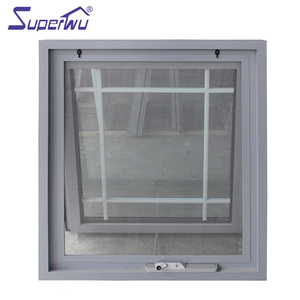
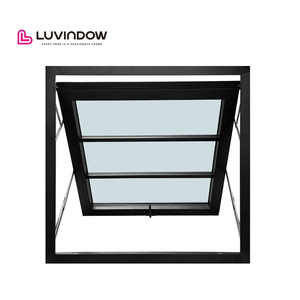
| Outward Push-Out Awning | 1.2 – 1.6 W/m²K | Class 4 | Class E1050 (1050 Pa) | Moderate (Rain-Shielded Opening) | High-Wind Coastal & Rain Zones |
| German Tilt-Turn System | 0.9 – 1.3 W/m²K | Class 4 (Highest) | Class E1200 (1200 Pa) | Dual-Mode (Micro-Tilt & Full Turn) | Cold Climates & High-Rise Luxury Villas |
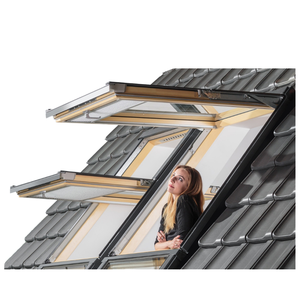
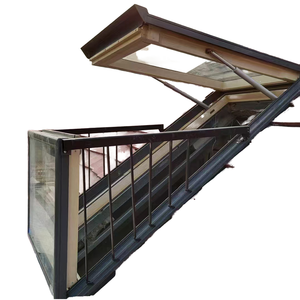
| Convertible Skylight Balcony | 1.1 – 1.4 W/m²K | Class 4 | Class 9A (600 Pa) | High (Roof/Attic Extraction) | Loft Bathrooms & Attic Conversions |
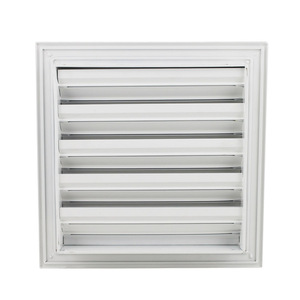
| Fixed Wall Air Vent Louver | N/A (Uninsulated Frame) | Class 1 | Class 4A (150 Pa) | Continuous Passive Airflow | Mechanical Equipment Rooms & Vents |
Technical, commercial, and logistics answers for importers, architects, and building contractors.
Partner with a trusted CE certified manufacturer. Our architectural engineering team is ready to analyze your drawings, calculate wind load parameters, and deliver competitive factory-direct pricing for your project.