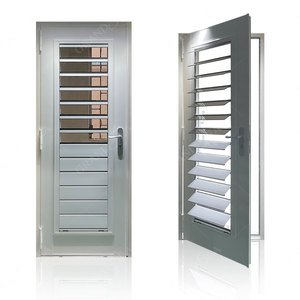
Featured Fenestration Series
CE Certified Commercial & Residential Outdoor Doors
Direct factory export of precision-engineered aluminum entrance, patio, louver, and accordion systems built to withstand extreme climatic pressures.
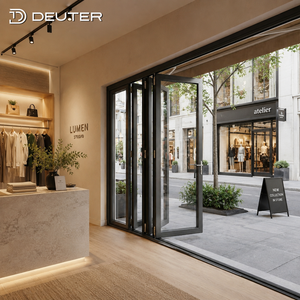
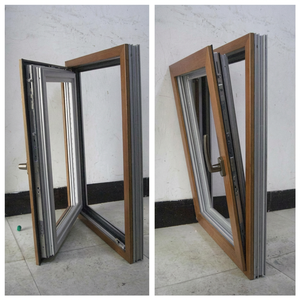
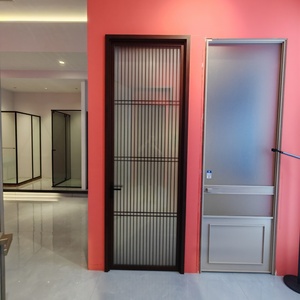
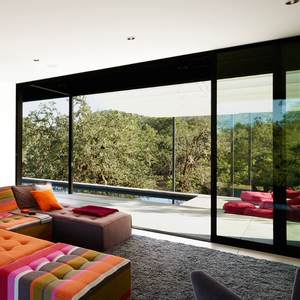
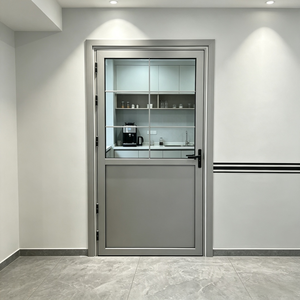
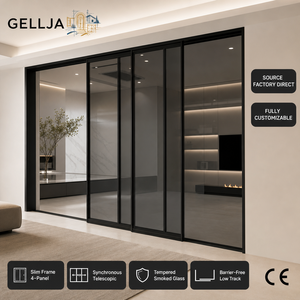
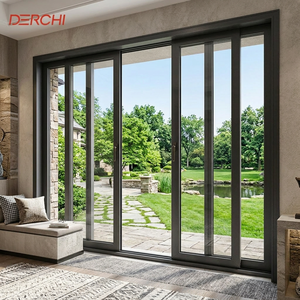
B2B Technical Whitepaper
Engineering Standards for CE Certified Aluminum Outdoor Doors
An exhaustive analysis of material chemistry, thermal barrier physics, structural wind load testing, and compliance benchmarks for international procurement directors and architectural engineers.
In the global fenestration market, procuring CE Certified Aluminum Outdoor Doors is no longer simply a regulatory checkbox—it is a rigorous baseline for structural performance, environmental resistance, and occupant safety. The European Conformity (CE) mark under standard EN 14351-1:2006+A2:2016 specifies mandatory performance parameters for external pedestrian doorsets. For international real estate developers, commercial contractors, and importing distributors, sourcing doors from a certified manufacturer ensures that the products have undergone rigorous third-party verification covering air permeability, watertightness, wind resistance, thermal transmittance, and load-bearing capacity of safety devices.
1. Structural Metallurgy: Why 6063-T6 Architectural Aluminum Dominates
The primary chassis of high-end exterior doors relies heavily on high-tensile aluminum alloys. Most premium systems manufactured by Changsha Wincraft Aluminum Window Tech Co., Ltd. utilize 6063-T6 or 6061-T6 magnesium-silicon aluminum alloys. The T6 heat-treatment temper involves solution heat treating and artificially aging the metal to achieve an ultimate tensile strength exceeding 205 MPa and a yield strength over 170 MPa.
Compared to traditional timber or PVC profiles, 6063-T6 structural aluminum offers an exceptional strength-to-weight ratio, allowing engineers to design ultra-narrow sightlines (<25mm visible frames) while supporting heavy double- and triple-glazed insulated glass units (IGUs) weighing up to 400 kg per panel. Furthermore, chemical pre-treatment and electrostatic fluorocarbon (PVDF) or powder coating (complying with Qualicoat standards) guarantee a salt-spray corrosion resistance rating exceeding 2,000 hours, making these doors ideal for coastal regions exposed to atmospheric chloride.
205+ MPa
Tensile Strength (T6 Temper)
Class C5
EN 12210 Wind Load Rating
0.8 W/m²K
Lowest Thermal Transmittance (Uw)
45 dB
Sound Reduction Index (Rw)
2. Thermal Break Technology: Polyamide PA66GF25 Insulation
Raw aluminum possesses a high thermal conductivity ($k \approx 200 \text{ W/m}\cdot\text{K}$), making uninsulated extrusions prone to severe thermal bridging, condensation, and energy loss. To satisfy European NZEB (Nearly Zero Energy Buildings) and Passive House thermal requirements, modern CE-certified exterior doors incorporate structural thermal break strips made of Polyamide 66 reinforced with 25% glass fiber (PA66GF25).
The PA66GF25 insertion creates a physical thermal barrier between the exterior and interior aluminum extrusions. The coefficient of thermal expansion of PA66GF25 ($2.5 \times 10^{-5} /\text{K}$) virtually matches that of aluminum, preventing internal shearing stresses during extreme seasonal temperature differentials ranging from $-30^\circ\text{C}$ in Northern European winters to $+50^\circ\text{C}$ in Middle Eastern summers. Combined with continuous multi-channel EPDM (Ethylene Propylene Diene Monomer) gasket seals, thermal break door systems lower the total frame-and-glass U-factor ($U_w$) down to 0.8 – 1.2 W/m²K.
Industry Intelligence
Future Procurement Trends in Architectural Outdoor Doors
Key technological, regulatory, and aesthetic shifts shaping international procurement decisions over the next decade.
1. Extreme Weather & Impact Resistance
Driven by escalating global climate volatility, international procurement is rapidly prioritizing hurricane-proof and blast-resistant fenestration. Systems engineered with laminated SentryGlas® interlayers and reinforced multi-point locking gear withstand wind pressures up to Class C5 (EN 12210) and missile impact standards (TAS 201/203).
2. Passive House & Ultra-Low Energy
Global carbon neutrality targets (such as the EU Energy Performance of Buildings Directive) require exterior doors to achieve $U_w \le 0.8 \text{ W/m²K}$. Demand for warm-edge spacer technology, triple-glazing with argon gas filling, and Low-E soft coatings is becoming a standard baseline rather than a premium upgrade.
3. Ultra-Slim Minimalist Sightlines
Architectural design favors seamless indoor-outdoor transitions. Advanced structural bonding allows frame sightlines to shrink below 20mm while maintaining high structural deflection resistance. Recessed threshold design with concealed multi-stage drainage channels eliminates physical barriers.
4. Smart Home & Mechatronic Locks
B2B importers are shifting toward motorized sliding and bifold doors integrated with IoT home automation systems. Mechatronic multi-point locks featuring biometric access, RFID entry, and automated weather sensor response (closing doors upon sensing rain or high winds) are experiencing steep growth.
5. Circular Carbon Footprint & EPD
Architects now require Environmental Product Declarations (EPDs) tracing the carbon intensity of raw aluminum billets. Sourcing doors manufactured using hydroelectric-melted low-carbon aluminum and 100% recyclable extrusions guarantees compliance with LEED and BREEAM green building certifications.
6. Turnkey Customization & Modular Assembly
To reduce expensive site labor costs in North America, Europe, and Australia, global procurement managers favor factory-pre-assembled, pre-glazed modular door packages accompanied by precise 3D BIM/CAD shop drawings for effortless on-site plug-and-play installation.
Technical Benchmarks
Outdoor Door Performance Specification Matrix
Comparative analysis of core outdoor aluminum door typology configurations engineered by Wincraft.
| Door System Typology | Profile Wall Thickness | Thermal Transmittance ($U_w$) | Air Tightness (EN 12207) | Water Tightness (EN 12208) | Acoustic Insulation ($R_w$) | Target Application |
|---|---|---|---|---|---|---|
| Hurricane Louver Swing Door | 2.0mm – 3.0mm | 1.8 – 2.2 W/m²K | Class 4 | Class 9A (600 Pa) | 32 dB | Caribbean & Coastal Tropical Areas |
| Thermal Break Accordion Bifold | 1.8mm – 2.5mm | 1.1 – 1.4 W/m²K | Class 4 | Class E750 (750 Pa) | 40 dB | Luxury Villa Patios & Balconies |
| Passive House Casement Window/Door | 2.0mm – 3.0mm | 0.8 – 1.0 W/m²K | Class 4 (Highest) | Class E1050 (1050 Pa) | 45 dB | Cold Climates & Urban Luxury Hotels |
| Ultra-Narrow Minimalist Sliding Door | 1.6mm – 2.2mm | 1.3 – 1.6 W/m²K | Class 3 | Class 7A (300 Pa) | 36 dB | Modern Kitchens, Terraces & Patios |
| Heavy-Duty Flush Exterior Sliding Door | 2.0mm – 2.5mm | 1.0 – 1.3 W/m²K | Class 4 | Class 9A (600 Pa) | 42 dB | High-Rise Residential & Exterior Fronts |
Manufacturer Profile
Changsha Wincraft Aluminum Window Tech Co., Ltd.
Changsha Wincraft Aluminum Window Tech Co., Ltd. is an industry-leading manufacturer and exporter specializing in high-performance aluminum doors, windows, sunrooms, and garden pavilions. Operating from a modern 20,000+ square meter intelligent manufacturing facility in China, Wincraft integrates independent R&D, precision structural extrusions, custom fabrication, and international export logistics under a unified ISO 9001 and CE certified quality control framework.
Serving clients across more than 80 countries, Wincraft delivers tailored OEM and ODM solutions to distributors, commercial developers, architectural firms, and cross-border project managers.
- 20+ Years Manufacturing Mastery: Over two decades of fenestration engineering excellence, specializing in complex aluminum thermal break systems.
- 24-Hour Design & CAD Service: Dedicated architectural engineering team providing 3D renderings, structural calculations, and shop drawings within one business day.
- Strict CE & ISO Compliance: Full traceability of raw materials, anodizing/powder coating thickness audits, and 100% pre-shipment assembly and water tightness testing.
- End-to-End Export Logistics: Heavy-duty fumigated plywood packaging, steel corner bracing, customs clearing support, and door-to-door delivery options worldwide.
- Agile Production & ~4-Week Lead Time: Automated CNC double-head cutting saws and corner-crimping machinery enable rapid 4-week production cycles for custom orders.
Why Partner With Wincraft?
Zero Communication Barriers
Direct technical dialogue with fenestration engineers who understand regional building codes (AS2047, Florida Building Code, EU CPR).
Complete Customization Freedom
Custom RAL colors, dual-color extrusions, custom glass build-ups (tinted, reflective, low-E, soundproof acoustic PVB), and hardware branding.
Project Guarantee & Warranty
10-year comprehensive warranty on aluminum extrusions and structural thermal break integrity, backed by continuous spare parts support.
Procurement Guide
Frequently Asked Questions for Global Importers & Contractors
Comprehensive answers to key technical, regulatory, and logistics queries prior to initiating bulk orders.
What specific certificates and DoP documentation do your CE-certified doors provide?
Our products strictly comply with the European Union Construction Products Regulation (CPR 305/2011) under standard EN 14351-1. Each export shipment includes a official Declaration of Performance (DoP) document outlining verified test results for Air Permeability (EN 12207), Watertightness (EN 12208), Resistance to Wind Load (EN 12210), and Thermal Transmittance ($U_w$ values under EN ISO 10077-2). Full test reports issued by accredited notified testing bodies are provided for project submission.
Do you accept OEM and ODM orders for specialized architectural door projects?
Yes, OEM and ODM cooperation forms the core of our export operations. We engineer custom aluminum extrusions, private-label packaging, bespoke hardware configurations, and specialized thermal break systems tailored to your specific market requirements or architectural blueprints.
What is your standard production lead time for customized door orders?
Standard customized orders are manufactured within approximately 4 weeks following final shop drawing sign-off and deposit confirmation. For large-scale multi-unit commercial or residential developments, production schedules are strategically batched in synchronization with your site installation timeline.
Can your engineering team provide structural design proposals and CAD drawings prior to production?
Absolutely. Our in-house technical team collaborates directly with project architects, structural engineers, and procurement managers. We deliver comprehensive 2D CAD shop drawings, 3D BIM models, and elevation proposals within 24 hours of receiving your initial architectural schedules.
How do you ensure outdoor door systems withstand severe hurricane and salt-spray coastal environments?
For coastal and cyclone-prone areas (such as the Caribbean, Gulf Coast, or Pacific Islands), we utilize heavy-duty 6063-T6 aluminum profiles with a minimum wall thickness of 2.0mm–3.0mm, paired with laminated hurricane-impact glass (such as SentryGlas® PVB/SGP interlayers). All aluminum extrusions undergo Qualicoat-certified fluorocarbon (PVDF) coating or 25-micron anodization to resist aggressive marine salt-spray corrosion.
What packaging standards do you employ to prevent damage during ocean container transport?
All door units undergo a rigorous multi-layer packaging protocol: 1) Protective anti-scratch film wrapped over extrusions; 2) EPE foam corner protectors on all edges; 3) Sealed waterproof plastic wrap; and 4) Fully enclosed non-fumigation plywood crates braced with steel straps. This prevents moisture ingress, frame warping, or glass breakage during long-distance ocean shipping.
How can I verify whether your aluminum door systems comply with my country's local building code?
Simply submit your local project design criteria (design wind speed, water penetration test pressure, target U-factor, and sound attenuation rating). Our engineers will cross-reference your requirements against our tested profile series, select the ideal thermal break width and glass assembly, and issue a pre-production compliance feasibility report.
What hardware options and locking mechanisms are integrated into your outdoor doors?
We offer premium German hardware systems (including Siegenia, Hoppe, and Roto) as well as top-tier custom Wincraft heavy-duty stainless steel hardware. Multi-point security locking mechanisms, concealed hinges, heavy-duty stainless steel rollers (rated for 100,000+ open-close cycles), and smart motorized drive units are fully configurable.
Ready to Elevate Your Project with CE Certified Fenestration?
Contact our senior architectural engineering team today for factory-direct price quotes, custom technical consultation, and 24-hour drawing turnarounds.