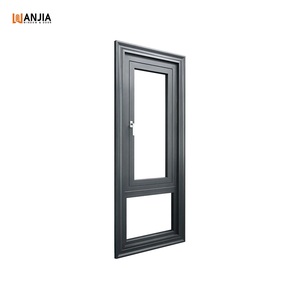
European Villa Energy Efficient Large Profile Casement Windows
U-Value: ≤ 1.1 W/(m²·K)
Acoustic Insulation: 42 dB
Certification: CE / EN 14351-1
Direct factory supply featuring thermal break aluminum windows, specialized ventilation sashes, and architectural entrance solutions engineered for global commercial and high-end residential projects.
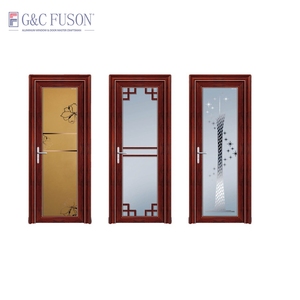
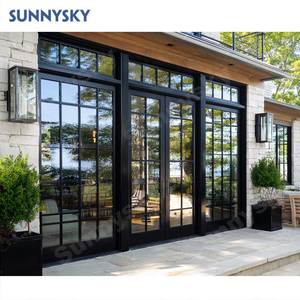
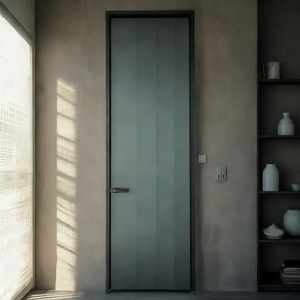
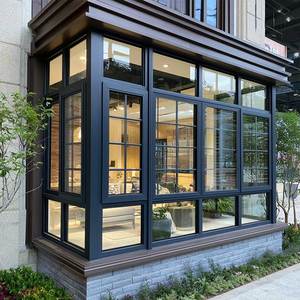
In modern architectural engineering, an aluminum window is no longer merely a transparent building envelope component; it is an active mechanical node regulating indoor air quality (IAQ), acoustics, thermal energy efficiency, and structural safety. Procurement managers, commercial contractors, and architectural specifiers operating within the European Economic Area (EEA) and global markets requiring strict compliance must navigate **EU Construction Products Regulation (CPR 305/2011)** and the governing harmonized standard **EN 14351-1:2006+A2:2016**.
High-performance aluminum ventilation windows manufactured by Changsha Wincraft achieve **Class 4 rating** (test pressure up to 600 Pa with air leakage below 3 m³/h·m²). Continuous EPDM gasket co-extrusion prevents exfiltration and uncontrollable draft loss.
Featuring multi-stage pressure equalization chambers and concealed sub-frame drainage paths, our systems achieve up to **Class E900** water tightness, withstanding continuous unshielded water spraying during 900 Pa wind pressure storms.
Structural extrusion profilesutilizing high-tensile **6063-T6 aluminum alloy** deliver deflection resistance under **Class C5/B5** testing parameters. Frame geometry is optimized for high-rise commercial facades and coastal hurricane zones.
To provide actionable Information Gain for technical buyers, the table below outlines core performance indicators of CE-certified aluminum ventilation window configurations against European normative benchmarks.
| Window System Type | Thermal Transmittance ($U_w$) | Acoustic Reduction ($R_w$) | Ventilation Mechanism | CE EN Standard Compliance | Ideal Architectural Application |
|---|---|---|---|---|---|
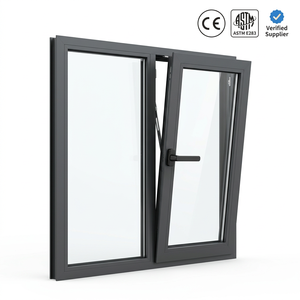
| Thermal Break Tilt & Turn | 1.0 - 1.3 W/(m²·K) | 38 - 45 dB | Micro-tilt top sash + full swing opening | EN 14351-1 / EN ISO 10077-2 | European luxury residential & high-efficiency villas |
| Parallel Pop-Out Outward Window | 1.2 - 1.5 W/(m²·K) | 35 - 40 dB | Continuous 4-sided peripheral airflow slot | EN 12207 Class 4 / EN 12208 Class E1050 | Commercial office towers & glass curtain walls |
| Integrated Trickle Vent Casement | 1.1 - 1.4 W/(m²·K) | 40 - 48 dB (Acoustic Vent) | Pressure-differential self-regulating damper | DIN 1946-6 / EN 13141-1 | Urban residential apartments near main transit corridors |
| Slim-Profile Heavy Sliding Window | 1.4 - 1.8 W/(m²·K) | 32 - 36 dB | Interlocking sash multi-rail sliding track | EN 12210 Class C4 | Resort hotels, patio doors, warm climatic zones |
High-rise structures experience immense exterior wind velocity and severe wind pressure dynamics. Standard outward casement sashes risk structural failure during sudden wind gusts. We recommend **Parallel Opening Windows or Inward Tilt & Turn Systems** equipped with acoustic trickle ventilators. These systems permit continuous 24/7 background ventilation without compromising occupant child-safety or building envelope wind pressure integrity (EN 12210 Class C5).
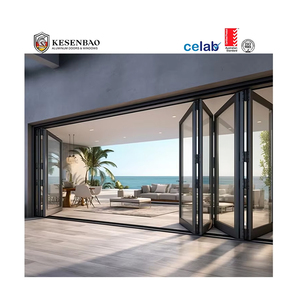
Coastal hospitality developments demand high resistance to salt-spray oxidation and torrential rain ingress. Specify our **Heavy-Duty Bi-Fold and Lift-and-Slide Aluminum Systems** treated with 25-micron anodic oxidation or PVDF (Fluorocarbon) 3-coat marine-grade powder coating. Thermal break zones incorporate multi-cavity PA66-GF25 polyamide strips infused with continuous hydrophobic gaskets for Class E900 watertightness.
Changsha Wincraft Aluminum Window Tech Co., Ltd. is a specialized, integrated manufacturer and global exporter of high-performance aluminum doors, custom windows, sunrooms, and garden pavilions. We bridge architectural vision with mass-scale factory precision.
Our in-house facade engineers collaborate directly with project architects, delivering detailed CAD shop drawings, elevation schematics, thermal simulation models, and 3D renderings within 24 hours of inquiry.
From spectrographic analysis of raw 6063-T6 aluminum ingots to automated corner crimping tolerance checks (±0.5mm), every batch undergoes strict factory quality control prior to protective export crating.
Streamlined automated CNC cutting and dual-component silicone sealing lines ensure rapid lead times—standard customized OEM orders complete within 4 weeks, with phase-locked container loading schedules.
B2B buyers, real estate developers, and international importers must realign supply chains to meet upcoming environmental legislation and technological breakthroughs shaping fenestration engineering over the next decade.
Global carbon border adjustments (such as EU CBAM) mandate low embodied carbon footprint in structural metals. Future procurement heavily favors factories utilizing recycled aluminum scrap and hydro-electric powered smelting, reducing profile carbon intensity below 4.0 kg CO₂/kg Al.
Integration of motorized chain actuators connected to Building Management Systems (BMS). Windows auto-adjust aperture openings based on interior CO₂ levels, humidity, and volatile organic compound (VOC) thresholds, optimizing natural free-cooling energy cycles.
Transitioning from standard triple argon-filled glazing units to ultra-thin Vacuum Insulated Glass (VIG). VIG delivers extraordinary center-of-glass thermal insulation ($U_g \le 0.4 \text{ W/m}^2\text{K}$) within slim 10mm glass profile profiles suitable for lightweight frames.
Factory-level innovations directly drive performance reliability. The fenestration industry is undergoing rapid technical evolution across raw material processing, thermal barrier design, and sealing chemistry.
Older window profiles utilized basic PVC thermal strips that degraded under extreme thermal expansion cycles. Modern CE-compliant factories employ 24mm to 39mm multi-chamber **Polyamide PA66 reinforced with 25% glass fiber**. These structural insulating strips match the thermal expansion coefficient of aluminum frames, preventing shear separation and cold-bridge formation under severe temperature differentials (-30°C to +70°C).
Structural frame integrity depends heavily on corner joint mechanics. Modern automated assembly utilizes heavy hydraulic corner-crimping machines combined with dual-component epoxy corner adhesives (Teroson / Weiss). This process guarantees structural frame rigidity against wind deflection while providing permanent watertight seal integrity at profile miter joints.
Direct technical answers addressing certification compliance, customization, factory lead times, and international logistics.
Partner with an audit-ready China manufacturer for your next residential villa package, commercial facade project, or wholesale distribution catalog.