China Best Aluminium Commercial Entrance Doors Manufacturers & Factories

Comprehensive Technical Engineering Guide, Architectural Specifications & OEM Procurement Insights for Global B2B Buyers & Commercial Contractors

Factory Direct Commercial Doors

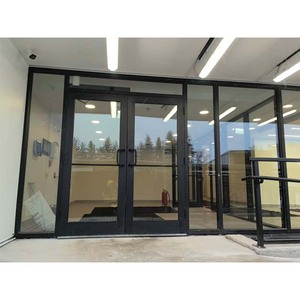
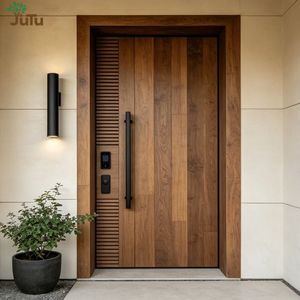
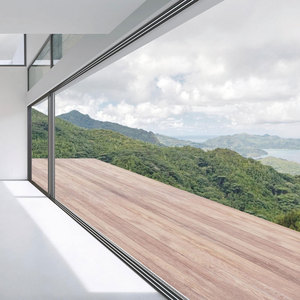
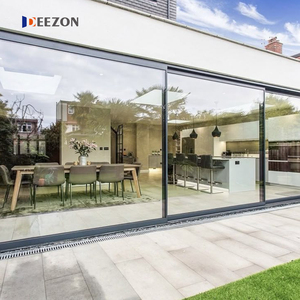
Featured Commercial & Architectural Entrance Systems

Engineered for extreme structural durability, thermal performance, and high-traffic security compliance. Explore our factory-direct export configurations.

B2B Manufacturing Intelligence

China’s Commercial Aluminium Entrance Door Sector: Technical Whitepaper

An evaluation of structural metallurgy, thermal performance standards, and manufacturing benchmarks driving global architectural procurement.

The global commercial architectural sector has undergone a structural shift toward high-performance fenestration systems. Among modern architectural materials, extruded aluminum commercial entrance doors stand out as the primary standard for retail storefronts, corporate office towers, hospitality complexes, and luxury residential projects. China’s manufacturing ecosystem—centered around industrial hubs such as Foshan and Changsha—produces over 60% of the world's structural aluminum door assemblies. However, evaluating and sourcing from China’s leading aluminum entrance door manufacturers requires a technical understanding of alloy metallurgy, extrusion wall thickness, thermal break geometry, hardware cycle durability, and international building code compliance.

Modern commercial entrance doors must withstand harsh environmental conditions, high frequency cyclic opening (often exceeding 500,000 to 1,000,000 operation cycles per year in retail environments), extreme wind loads (ASTM E330 / AS2047), and severe thermal gradients. Top-tier Chinese manufacturers have evolved beyond basic extrusion assembly; they operate advanced 5-axis CNC machining centers, automated powder-coating lines compliant with AAMA 2605 specifications, and thermal bridge crimping technologies utilizing high-grade Polyamide 66 reinforced with 25% glass fiber (PA66GF25).

6063-T5/T6
Architectural Alloy Standard
PA66GF25
Thermal Break Polymer
AAMA 2605
PVDF Coating Standard
1.0 M+
Hardware Test Cycles
Industry Horizon

Future Procurement & Development Trends in Commercial Aluminium Doors

Key structural, thermal, and technological innovations shaping international architectural specifications over the next decade.

1. High-Performance Thermal Decarbonization

Global energy codes—such as ASHRAE 90.1, California Title 24, and the EU Energy Performance of Buildings Directive (EPBD)—are enforcing ultra-low overall thermal transmittance values ($U_w \le 1.2 \text{ W/m}^2\text{K}$). Future commercial entrance procurement centers heavily on multi-chambered thermal breaks, aerogel-infused profile cavities, and triple Low-E insulated glass units (IGUs) with warm-edge spacer technology. Chinese tier-1 factories are rapidly adopting structural polyamide thermal bridges to eliminate thermal conductivity between interior and exterior aluminum extrusions.

2. Smart Access & Automated Motorized Integration

Commercial entrance points are shifting from traditional manual latching to smart access control integration. Procurement trends show a 45% annual growth in heavy-duty automatic pivot and sliding doors equipped with concealed electric multi-point locks, biometric readers, RFID access, and direct integration into Building Management Systems (BMS). Modern factories in China now pre-wire internal profile raceways during extrusion assembly to facilitate seamless plug-and-play installation on job sites.

3. Oversized Minimalist Sightline Engineering

Architectural demand favors grand entrance openings with ultra-slim interlock profiles (often under 20mm visible sightlines) without sacrificing wind-load structural integrity ($P_3 \ge 5000 \text{ Pa}$). Leading Chinese manufacturers utilize aircraft-grade 6061-T6 aluminum alloys and structural silicone glazing (SSG) technology, allowing commercial glass pivot doors to reach heights up to 6 meters while supporting panel weights exceeding 500 kg.

4. Harmonized International Certification Standard

Global developers demand full traceability and standard certification. Top Chinese suppliers now maintain direct testing certifications including Australian AS2047 / AS1288, North American NFRC / AAMA / CSA, European CE Mark (EN 14351-1), and Florida Building Code (FBC) impact compliance. Sourcing strategies focus heavily on manufacturers capable of delivering factory-issued third-party test reports prior to shipping.

Technical Evaluation Matrix

Commercial Entrance Door System Specifications

Engineering breakdown of profile parameters, glazing configurations, hardware ratings, and application thresholds across major commercial door typologies.

Door System Typology Structural Alloy Grade Wall Thickness Glazing Specification Hardware & Accessories Target Application
Heavy-Duty Commercial Swing Storefront AA6063-T5 / T6 2.0mm – 3.0mm 6mm + 12Ar + 6mm Tempered / Low-E Dorma/Geze Concealed Overhead Closer, Continuous Hinge High-Traffic Retail, Fast Food Outlets, Shopping Malls
Architectural Large-Format Pivot Door AA6061-T6 High-Strength 3.0mm – 4.0mm 8mm + 1.52SGP + 8mm Laminated Security Glass Heavy Floor Spring (Up to 500kg), Multi-Point Deadbolt Villa Main Entrances, Luxury Hotel Lobbies, Corporate HQ
Multi-Track Stacker Sliding Door AA6063-T5 Thermal Break 2.0mm – 2.5mm 5mm + 16Ar + 5mm Warm Spacer Double Glazed Stainless Steel Tandem Rollers, Flush Mortise Lock Resort Patios, Commercial Terraces, Restaurant Backyards
Panoramic Glass Folding / Bi-Fold Door AA6063-T6 Structural 2.2mm – 3.0mm 6mm + 14Ar + 6mm Low-E Double Glazed Heavy-Duty Stainless Steel Top/Bottom Guide Tracks Auto Showrooms, Convertible Storefronts, Event Halls
Armored Bulletproof & Security Entry Aluminum-Steel Hybrid 3.5mm – 5.0mm Composite Multi-Layered Bullet-Resistant Polycarbonate IGU Biometric Fingerprint, Smart Password, Motorized Deadbolts High-Security Residence, Banks, Embassy Entrances
Enterprise Manufacturing Strength

Why Source Commercial Entrances from Changsha Wincraft & CHANGYI

Direct factory production, engineering oversight, and global logistics execution backed by decades of specialized fenestration experience.

Fully Integrated Production Base

Operating out of a modern 20,000+ square meter manufacturing facility, Changsha Wincraft Aluminum Window Tech Co., Ltd. controls the complete supply chain: profile extrusion milling, thermal break crimping, precision CNC cutting, corner welding/crimping, surface anodizing, and final assembly.

24-Hour CAD & 3D Engineering Turnaround

Our in-house team of senior fenestration engineers works directly with commercial architects, general contractors, and B2B importers. We supply detailed shop drawings, structural wind-load calculation reports, and photo-realistic 3D renderings within 24 hours of enquiry receipt.

Global Logistics & Export Packaging

Exporting to over 80 countries, every commercial door order undergoes multi-stage quality control. Panel structures are wrapped in protective polyethylene film, corner-guarded, and secured in fully enclosed sea-freight plywood crates to guarantee damage-free site delivery.

B2B Procurement FAQ

Frequently Asked Questions by Commercial Buyers & Contractors

Direct technical and commercial answers addressing common evaluation criteria when sourcing aluminum commercial doors from Chinese factories.

What is the standard profile wall thickness for commercial entrance doors manufactured in China?
Commercial storefront entrance doors require significantly higher structural rigidity than residential doors. Standard commercial swing and storefront doors manufactured by top factories use architectural aluminum alloy 6063-T5 or 6061-T6 with a nominal wall thickness ranging between 2.0mm and 3.0mm (conforming to ASTM B221 / GB 5237 standards). For heavy-duty oversized pivot doors or high-wind coastal applications, structural load-bearing mullions may feature reinforced inner webs up to 4.0mm thick.
How do Chinese manufacturers guarantee thermal break integrity in extreme climates?
High-tier Chinese manufacturers employ precision crimping machines to insert Polyamide 66 reinforced with 25% glass fiber (PA66GF25) thermal barrier strips between the inner and outer aluminum profiles. PA66GF25 is selected because its coefficient of thermal expansion matches that of aluminum, preventing shear separation under severe freeze-thaw cycles or extreme desert heat. Combined with argon-filled double/triple Low-E insulating glass units (IGUs), these systems achieve low total U-factors suitable for energy-conscious building codes worldwide.
Do your entrance door systems accept standard international hardware brands?
Yes. While we supply premium factory-fitted commercial hardware (including continuous hinges, concealed floor springs, multi-point locksets, and panic exit hardware), our aluminum profiles are engineered with standard European groove (E-Groove) or North American template cutouts. This allows general contractors to easily install hardware specified by project architects, such as Dormakaba, Geze, LCN, Adams Rite, or Yale locks.
What surface finishes and powder coating standards are available for export orders?
We provide a broad range of architectural surface treatments:
  • Fluorocarbon (PVDF) Coating: Meets AAMA 2605 specifications with a 20-25 year weatherability guarantee against fading and UV chalking.
  • Powder Coating: Qualicoat Class 2 certified electrostatic powder finishes available in all standard RAL color codes.
  • Anodizing: Architectural Class I (25-micron coating thickness) offering superior resistance to salt-spray corrosion in coastal commercial developments.
What structural testing certifications are available prior to order dispatch?
Our entrance door series undergo rigorous third-party laboratory testing. We provide certified performance test reports covering:
  • Air Infiltration: ASTM E283 / BS EN 12207 compliance.
  • Water Penetration Resistance: ASTM E331 / AS2047 static water pressure testing.
  • Structural Uniform Load: ASTM E330 wind pressure design loads up to 5000 Pa.
  • Acoustic Insulation: STC ratings ranging from 35 dB to 42 dB depending on glass configuration.
What is the standard production lead time and minimum order quantity (MOQ)?
Standard production lead time for customized commercial door orders is approximately 4 weeks following final approval of CAD shop drawings and deposit confirmation. For large-scale commercial developments, batch shipments can be staggered according to construction site progress. We accommodate both project-based orders (MOQ starting at 1 set for custom high-end pivot/security doors) and high-volume container shipments for wholesale distributors.
How do you ensure proper fitment for custom-sized commercial openings?
Before production commences, our technical engineering office produces millimeter-precise shop drawings detailing frame depths, rough opening (RO) allowances, sill drainage profiles, anchoring points, and glass thickness schedules. Production only begins once these shop drawings receive written sign-off from the buyer or project architect, virtually eliminating site installation discrepancies.
What export packaging protocols are used to prevent transit damage?
Export fenestration products are packed according to strict heavy-sea freight protocols:
  1. Individual aluminum frames and glass panels are wrapped in protective scratch-resistant film.
  2. Corner protectors are fitted to all frame junctions.
  3. Assemblies are placed in multi-layer foam wrapping and loaded into fully enclosed, fumigated solid wooden crates or reinforced steel-frame stillages.
  4. Desiccant packs are inserted to absorb moisture during transoceanic shipping.

Ready to Source Architectural Commercial Doors Directly from Factory?

Consult with our engineering team for technical proposals, structural advice, CAD shop drawings, and factory-direct B2B price quotations for your upcoming project.

Contact Us