Curated Export Portfolio
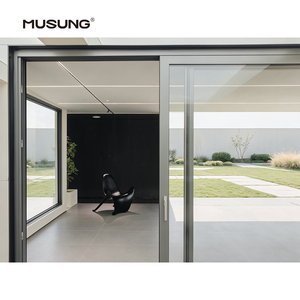
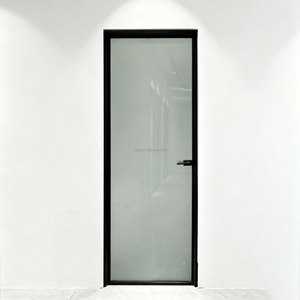
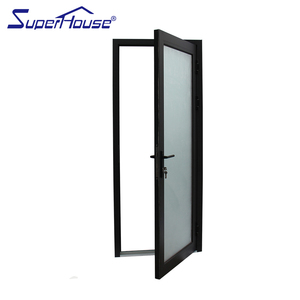
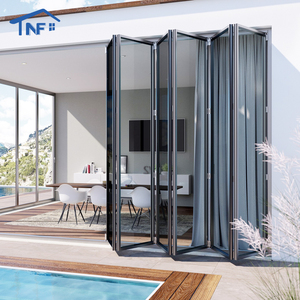
High-Performance Aluminium Flush Windows & Fenestration Systems
Engineered for structural integrity, zero-sightline aesthetic harmony, and extreme thermal insulation across commercial and luxury residential applications.
20+
Years Manufacturing Expertise
20,000m²
State-of-the-Art Production Base
80+
Countries & Territories Served
<24h
CAD Drawing Turnaround
Engineering Whitepaper
Structural Architecture & Engineering Dynamics of Aluminium Flush Windows
An exhaustive breakdown of metal alloy physics, thermal barrier geometry, weatherproofing acoustics, and sash-to-frame coplanar integration.
1. Coplanar Flush Alignment Geometry & Structural Metallurgy
Architectural demand for ultra-clean exterior elevations has elevated the Aluminium Flush Window system from a boutique modern preference to a global procurement standard. Unlike traditional overlap casements where the window sash projects outward from the outer frame plane, a true flush casement system positions the sash outer face exactly coplanar with the frame face. Achieving this seamless alignment requires rigorous structural engineering to mitigate tolerance stacking.
Leading Chinese exporters utilize high-density 6063-T6 aluminum extrusions, engineered with minimum wall thicknesses ranging between 1.6mm and 2.2mm per ASTM B221 and EN 755 standards. The structural web within the extrusion profiles features internal multi-cavity chambering, designed to absorb high torsional stress during extreme wind load pressures (rated up to Class C5, 3000 Pa). This metallurgical rigor guarantees that the flush perimeter shadow gap remains uniform (typically maintained at 4mm ± 0.5mm) across fluctuating ambient temperatures.
2. Thermal Break Mechanics: Polyamide Strip Optimization & Energy Efficiency
Aluminum is inherently conductive ($k \approx 200 \text{ W/m}\cdot\text{K}$). To achieve stringent building envelope energy targets (such as Passive House standard $U_w \le 0.8 \text{ W/m}^2\cdot\text{K}$ or North American NFRC thresholds), top-tier Chinese suppliers integrate multi-chamber thermal breaks utilizing PA66 GF25 (25% Glass Fiber Reinforced Polyamide) barrier strips.
The insertion of 24mm to 34mm engineered polyamide strips effectively severs the thermal pathway between interior and exterior aluminum profiles. When combined with warm-edge spacer bars (e.g., Technoform or Swisspacer) and triple-pane insulated glass units (IGUs) filled with 90%+ Argon gas and double Low-E coatings (such as Saint-Gobain Planitherm or PPG Solarban), total system U-values drop dramatically to between 0.85 and 1.3 W/m²K. Furthermore, specialized thermal foam insulating blocks (aerogel or expanded polyethylene) are inserted within the profile cavities to curtail radiative and convective heat transfer inside the frame structure.
3. Multi-Barrier Triple-EPDM Sealing & Pressure-Equalized Drainage Architecture
Water infiltration resistance in flush windows is historically challenging due to the elimination of outer overlap lips. To solve this, Chinese manufacturing centers of excellence have engineered a three-stage EPDM (Ethylene Propylene Diene Monomer) gasket system coupled with pressure-equalized drainage tracks.
The system incorporates: (1) An outer weather-deflecting gasket that blocks bulk rainwater; (2) A central continuous vulcanized corner gasket that forms an airtight cavity for pressure equalization; and (3) An inner acoustic structural seal. Under high-pressure rain testing (EN 12208 Class 9A / 600 Pa, ASTM E331), rainwater entering the outer cavity is instantly depressurized and evacuated outward through concealed downward-facing drainage slots equipped with anti-backdraft valves, preventing water ingress under extreme storm conditions.
Technical Benchmarking
System Performance Matrix: Flush Windows vs Standard Systems
Direct comparative analysis of technical parameters for architectural fenestration procurement.
| Performance Criteria | System 108 Flush Casement | System 75 Slim Flush Window | Standard Overlap Casement | Testing Standard / Benchmark |
|---|---|---|---|---|
| Frame Profile Depth | 108 mm (Integrated Screen) | 75 mm Architectural | 60 - 70 mm Standard | ISO 9001 / GB/T 8478 |
| Thermal Insulation ($U_w$) | 0.9 - 1.2 W/m²K | 1.2 - 1.5 W/m²K | 1.8 - 2.4 W/m²K | EN ISO 10077-2 / NFRC 100 |
| Air Permeability | Class 4 (600 Pa) | Class 4 (600 Pa) | Class 2 - 3 | EN 12207 / ASTM E283 |
| Water Tightness | Class E1050 (1050 Pa) | Class 9A (600 Pa) | Class 5A (200 Pa) | EN 12208 / ASTM E331 |
| Wind Pressure Resistance | Class C5 (3000 Pa) | Class C4 (2400 Pa) | Class C3 (1800 Pa) | EN 12210 / ASTM E330 |
| Acoustic Attenuation ($R_w$) | 38 dB - 45 dB | 35 dB - 42 dB | 28 dB - 34 dB | EN ISO 717-1 / ASTM E90 |
| Hardware Integration | Hidden 180° Hinges / Multi-Lock | Concealed Friction Stays | Surface Mounted Hinges | Siegenia / Hoppe / Sobinco |
Industry Foresight
Global Sourcing Trends & Engineering Innovations (2025–2030)
Key technological shifts re-shaping how real estate developers, general contractors, and fenestration importers source Chinese aluminum systems.
1. Ultra-Narrow Sightlines & Zero-Frame Visuals
The modern architectural paradigm demands maximum daylight penetration ($VLT > 78\%$). Next-generation flush aluminum windows utilize ultra-slim visible frame profiles (as narrow as 18mm to 25mm). Frame embedding techniques allow the exterior outer frame to be fully concealed within the exterior wall insulation matrix, presenting pure, uninterrupted glass facades.
2. Smart Automation & Integrated Micro-Ventilation
B2B buyers are increasingly specifying motorized flush tilt-and-turn windows integrated with Smart Building Management Systems (BMS). Hidden electric chain actuators powered by 24V DC allow automated micro-ventilation (gap openings of 8mm to 12mm) tied to air quality sensors ($CO_2$, humidity, VOCs) while maintaining RC2/RC3 intruder resistance safety levels.
3. Green Carbon Footprint & Recycled Aluminum
With ESG compliance tightening across Europe and North America, leading Chinese manufacturers are adopting low-carbon primary aluminum billet produced via hydroelectric power, alongside high-ratio post-consumer recycled aluminum alloy (up to 75% recycled content). This slashes embodied carbon per metric ton from 18 t $CO_2$e down to under 4.0 t $CO_2$e.
4. Surface Treatment Tech: Qualicoat Class 2 & PVDF
Coastal and high-UV installation environments require exceptional coating durability. The market is shifting towards super-durable powder coatings meeting Qualicoat Class 2 specifications and fluorocarbon (PVDF) three-coat spraying systems. These finishes undergo 3,000+ hours of accelerated salt spray testing (ASTM B117) to prevent chalking, blistering, and color fading.
5. Direct Factory OEM/ODM vs. Trading Intermediaries
Global B2B procurement heads are shifting away from third-party trading agencies in favor of direct engineering partnerships with specialized Chinese manufacturers. Direct mill sourcing yields 15% to 25% cost efficiencies while ensuring transparent quality control, direct BIM object integration, and expedited shop drawing approvals.
Enterprise Authority
Manufacturing Excellence: Changsha Wincraft Aluminum Tech
An established industrial titan delivering end-to-end custom architectural fenestration solutions to over 80 countries worldwide.
Integrated Industrial Infrastructure & Precision Machining
Changsha Wincraft Aluminum Window Tech Co., Ltd. operates a modernized manufacturing complex spanning over 20,000 square meters. Equipped with fully automated German CNC double-head cutting saws, four-axis CNC machining centers, and automatic corner crimping machines, Wincraft maintains strict dimensional machining tolerances within ±0.1mm. This level of mechanical precision is critical for the tight tolerances required by high-end flush aluminum window profile systems.
From initial billet extrusion, thermal strip insertion, and surface treatment to structural glass glazing and factory assembly, every single production stage operates under an ISO 9001 certified quality management framework. Internal testing rigs conduct real-time air tightness, water penetration, and cycle loading validations prior to export packaging.
24-Hour CAD & 3D Rendering Turnaround
Wincraft’s in-house engineering squad collaborates directly with overseas architects, structural consultants, and facade engineers. We provide full shop drawings, thermal simulation analysis, and structural wind-load calculation reports within 24 hours of receiving initial architectural elevation plans.
Rapid 4-Week Manufacturing Cycle & Export Logistics
With optimized supply chain integration, standard custom order production cycles are completed within 4 weeks. Wincraft provides robust export packaging—fumigated wooden crates, protective PE film wrap, corner guards, and nitrogen-cushioned container loading—ensuring zero transit damage to overseas jobsites.
Full Compliance with International Building Codes
Systems engineered by Wincraft comply with North American NFRC / AAMA standards, European CE mark criteria (EN 14351-1), and Australian AS2047 fenestration standards. Independent test certificates are provided for project submission compliance.
Procurement Guidance
Frequently Asked Procurement & Engineering Questions
Direct technical answers for fenestration buyers, importers, and real estate developers.
How do flush aluminum windows handle severe wind driven rain without overlapping sashes?
Flush window systems utilize a pressure-equalized rainscreen principle. Water barrier integrity is maintained by a continuous middle EPDM gasket that creates an outer pressure-equalization chamber. Air pressure within this chamber instantly balances with exterior wind pressure, eliminating the pressure differential that normally forces water inward. Multi-tier concealed weeping channels direct any incidental moisture outward.
What thermal break strip width is required to meet European Passive House standards?
To achieve frame thermal performance under $U_f \le 1.1 \text{ W/m}^2\cdot\text{K}$, we specify 34mm multi-cavity polyamide PA66 GF25 thermal break strips combined with low-emissivity insulation inserts inside profile chambers and triple-pane IGUs ($U_g = 0.5 - 0.7 \text{ W/m}^2\cdot\text{K}$).
Can Wincraft manufacture flush windows according to custom architectural drawings and hardware specifications?
Yes. We specialize in OEM and ODM custom fenestration manufacturing. We fully support custom profile extrusions, specialized powder-coat color matching (RAL, Pantone, anodized tones), and custom hardware integration from premium hardware brands like Siegenia, Hoppe, Roto, or Sobinco.
What is the structural aluminum alloy grade used in your window profile extrusions?
We strictly utilize primary 6063-T6 architectural grade aluminum alloy. 6063-T6 delivers optimal tensile strength ($\ge 205 \text{ MPa}$), yield strength ($\ge 170 \text{ MPa}$), and superior surface finish characteristics for anodizing and powder coating.
How do you ensure zero shipping damage for glass and finished window frames exported overseas?
All products undergo a 5-layer protective packing protocol: (1) Surface protective film, (2) Corner guard protection, (3) EPE foam wrapping, (4) Waterproof shrink wrap, and (5) Heavy-duty fully enclosed plywood cases with internal shock-absorbing spacers, suitable for long-distance ocean transport.