Featured Aluminium Slide & Swing (PT/PD) Door Systems
Precision-engineered space-saving fenestration solutions designed for luxury villas, commercial spaces, and high-density residential developments.
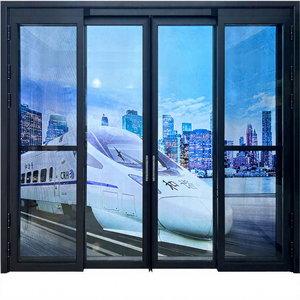
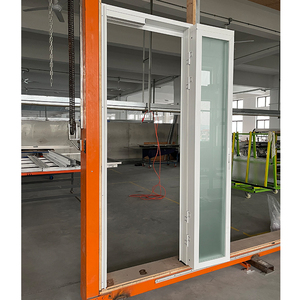
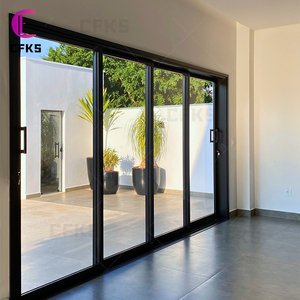
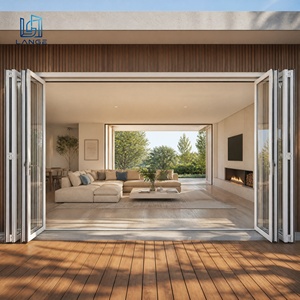
1. Kinematic Mechanics & Engineering Fundamentals of Slide & Swing Doors
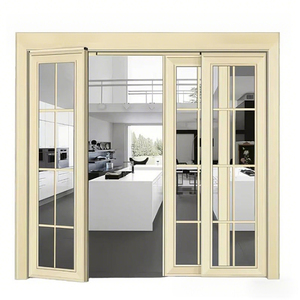
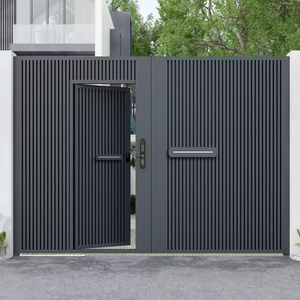
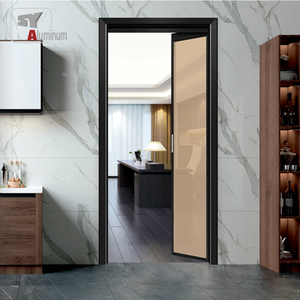
In modern architectural fenestration, the search for functional space optimization without sacrificing structural weatherproofing has led to the rapid rise of Aluminium Slide and Swing Doors (frequently categorized in trade markets as PT (Pivot-Translate) or PD (Push-Door) systems). Unlike traditional bi-folding doors that accordion into room interiors, or conventional sliding doors that permanently obscure 50% of the structural rough opening, slide-and-swing systems incorporate a hybrid dual-action tracking and pivot mechanism.
The kinematic core of a premium Chinese-engineered slide and swing door relies on a heavy-duty top-hung track paired with micro-friction roller assemblies and specialized corner pivot hinges. During operation, individual sash panels glide horizontally along the overhead track toward the side jamb. Upon reaching the end position, each sash disengages from the primary sliding channel and hinges outward to stack neatly at a 90-degree or 180-degree angle against the wall. This dual-motion capability enables an unobstructed clear opening ratio exceeding 95%, making it the ideal architectural solution for tight interior transitions like kitchens, bathrooms, balconies, and luxury villa outdoor courtyards.
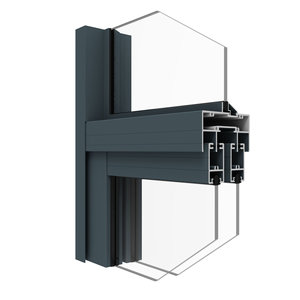
6063-T5 Architectural Alloy
High-tensile extruded aluminum frames providing structural rigidity, high wind load resistance (up to 5000 Pa), and extreme corrosion resistance under salt spray environments.
PA66 GF25 Thermal Barriers
Polyamide thermal break strips reinforced with 25% glass fiber prevent conductive heat transfer, cutting building HVAC energy loss by up to 40%.
EPDM Double Sealing
Automotive-grade EPDM continuous gaskets combined with multi-point lock transmissions guarantee superior airtightness (Class 4) and watertightness (Class 9A).
From a structural engineering standpoint, top Chinese manufacturers utilize 6063-T5 profile extrusions with wall thicknesses ranging from 1.4 mm for interior residential partitions to 2.0–3.0 mm for heavy-duty hurricane-rated exterior villa entryways. Surface treatments are tailored for harsh climatic exposures, including fluorocarbon (PVDF) coatings for tropical coastal UV resistance, electro-anodizing for industrial wear durability, and high-definition thermal transfer wood grain finishes for modern luxury interior aesthetics.
2. Structural & Operational Comparison: Slide & Swing vs. Alternative Door Systems
For project specifiers, general contractors, and hardware importers, selecting the proper fenestration mechanism directly impacts spatial efficiency, long-term maintenance costs, and structural compliance with localized building codes. Below is an engineering comparison between hybrid Slide & Swing (PT/PD) systems, standard sliding doors, and traditional bi-fold patio systems.
| Performance Criteria | Aluminium Slide & Swing (PT/PD) | Standard Sliding Doors | Bi-Fold Patio Doors |
|---|---|---|---|
| Maximum Clear Opening Width | 90% – 95% Clear Access | 50% (2-track) or 66% (3-track) | 85% – 90% Clear Access |
| Interior Swing Clearance Required | Minimal (Single panel width swing arc) | Zero (Slides inside track) | Large (Full accordion projection depth) |
| Track Depth & Threshold Profile | Ultra-Slim (Low barrier or flush track) | Wide multi-track footprint | Deep heavy-duty bottom roller track |
| Acoustic Insulation (STC Rating) | STC 35 dB – 42 dB (With IGU glass) | STC 28 dB – 34 dB | STC 32 dB – 38 dB |
| Hardware Wear & Maintenance | Low (Independent sash glide, zero hinge strain) | Low (Roller maintenance only) | High (Hinge sag & continuous track wear) |
| Air & Water Infiltration Resistance | High (Multi-point compression latching) | Moderate (Brush seals wear over time) | High (Perimeter compression gaskets) |
3. Global Procurement Trends & Future Outlook for Aluminium Fenestration
As the international building sector moves rapidly toward Net-Zero Carbon targets and streamlined urban spatial planning, global buyers are adjusting their sourcing strategies. Sourcing aluminum slide and swing doors directly from leading Chinese OEMs offers substantial technological and economic advantages, provided buyers stay ahead of five key industry developments:
1. Ultra-Slim Sightline Minimalism
Architects increasingly demand narrower vertical stiles (as thin as 18–25mm visibility) to maximize natural lighting, requiring higher structural yield strength alloys from Chinese aluminum profile extruders.
2. Integrated Smart Lock & Automation
The modern procurement trend favors slide and swing systems pre-engineered with smart biometric locking, motorized automatic slider actuators, and hidden magnetic sensor triggers compatible with modern building management systems (BMS).
3. High-Performance Low-E Triple Glazing
Driven by strict energy efficiency standards such as North America's NFRC, Europe's CE EN14351, and Australia's AS2047, manufacturers are integrating double Low-E argon-filled units with warm-edge spacers to achieve U-factors below 1.4 W/m²K.
Furthermore, B2B buyers are prioritizing suppliers who provide comprehensive BIM (Building Information Modeling) structural files, FEA (Finite Element Analysis) wind-load simulations, and verified Environmental Product Declarations (EPDs) for green building certifications like LEED and BREEAM.
4. Enterprise Strengths & One-Stop Manufacturing OEM Capabilities
As a pioneer in custom architectural fenestration, Changsha Wincraft Aluminum Window Tech Co., Ltd. has established an integrated operational ecosystem combining specialized R&D, intelligent CNC manufacturing, strict quality control, and global logistics execution. Serving importers, contractors, and architectural specifiers across more than 80 countries, Wincraft sets the benchmark for factory-direct reliability.
State-of-the-Art Production Base
Operating a 20,000+ m² modern facility equipped with high-precision double-head CNC miter saws, automatic corner-crimping machines, and digital glass assembly stations, ensuring structural tolerances within ±0.5 mm.
Annual output capacity exceeds 150,000 m² of architectural windows, slide & swing doors, aluminum sunrooms, and garden pavilions.
24-Hour Technical & Design Turnaround
Our dedicated engineering unit collaborates directly with project architects and procurement managers. We deliver 3D visual renderings and shop drawings within 24 hours of initial blueprint submission.
Complete structural calculations, FEA wind-load reports, and glass stress analysis provided for complex commercial project approvals.
Flexible OEM / ODM Customization Models
Full support for private-label branding, customized aluminum extrusions, bespoke hardware system engineering, and custom protective packaging designed for cross-border transit.
Standard export orders maintain an industry-leading lead time of ~4 weeks, backed by milestone tracking from raw profile extrusion to container seal.
Rigorous Quality Assurance & Testing
Every sash assembly undergoes air permeability, water tightness, structural deflection, and cycle-durability testing (over 100,000 open/close cycles) prior to export packing.
Export crating uses multi-layer protective foam, corner guards, and vacuum-sealed plastic shrink wrap within heavy-duty fumigated wooden crates.
5. Frequently Asked Questions (FAQ) for B2B Importers & Specifiers
Answers to technical, operational, and commercial questions surrounding China-manufactured aluminium slide and swing door systems.
What is the fundamental engineering difference between a PT door, a PD door, and a standard Slide & Swing door?
Do you support OEM and ODM cooperation for custom profile dies and hardware designs?
What is your standard production lead time and how are large project orders scheduled?
How do China manufacturers ensure water tightness and wind load resistance for high-rise exterior installations?
Can you provide structural CAD drawings, 3D renderings, and engineering proposals prior to order placement?
What packaging standard is utilized to prevent damage during long-distance ocean freight handling?
Engineering High-Performance Fenestration for Your Next Project?
Connect directly with our engineering team for expert technical support, detailed shop drawings within 24 hours, and competitive direct-from-factory OEM pricing.