High-Performance Aluminum Clad & Architectural Fenestration Systems
Factory-direct engineered systems tailored to climate-specific energy ratings, structural wind-load requirements, and advanced architectural aesthetics.
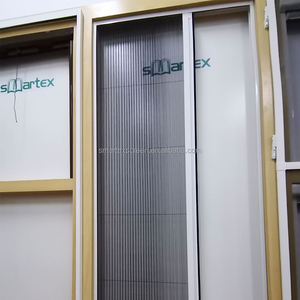
Sturdy Construction Pleated Folding Fly Mesh Aluminium Frame Anti Insect Polyester Screen Door
- High-tension pleated polyester mesh
- Extruded 6063-T5 aluminum track
- Ultra-low transition threshold
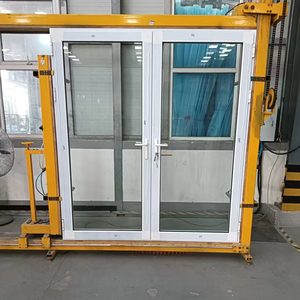
China Manufacturer Swing Open Aluminium Glass French Doors Double Panel Exterior Aluminium Door for Patio
- Multi-point compression locking
- Double-glazed Low-E toughened glass
- Polyamide thermal-barrier frame
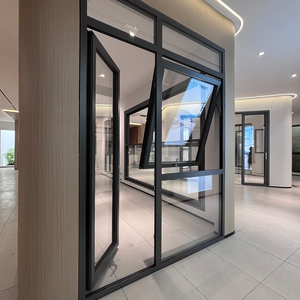
Black Aluminum Frame Glass Thermal Insulation Interior Door Fire-Rated Sliding Door for Hotels Offices Entry & Bathroom
- Fire-rated intumescent edge seals
- Sound reduction up to 42 dB STC
- Heavy-duty concealed roller guides
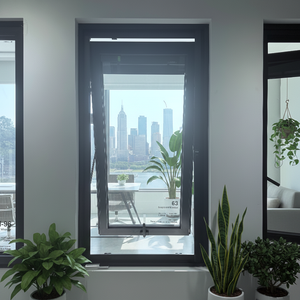
DERCHI Aluminum Casement Window Impact windows Hurricane Proof Modern Aluminium windows With Double Glazed Glass
- SGP laminated impact-resistant glass
- Tested to design wind loads >5.0 kPa
- Stainless steel friction stays
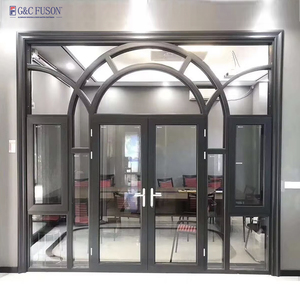
Fuson New Fashion Luxury Aluminum Casement Door And Aluminium Swing Door For Residential Commercial Aluminium Glass Door
- Architectural powder coating finish
- Triple EPDM gasket sealing system
- German-engineered heavy hinges
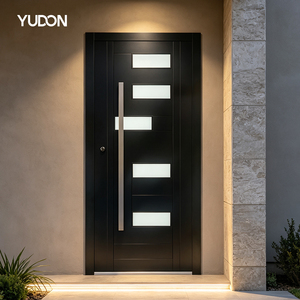
YUDON DOOR Cast Aluminum Pivot Door with Glass Frame Minimalist Style Matte Black Finish Waterproof for High End Villas
- Heavy-duty floor spring pivot system
- Cast aluminum armored core panel
- Concealed magnetic drop seal
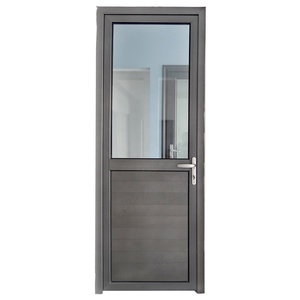
WANJIA Aluminum Swing Door Hinged Single Doors French Style Casement Door
- Classic French muntin grid profile
- Anodized corrosion-resistant aluminum
- Integrated keyless access option
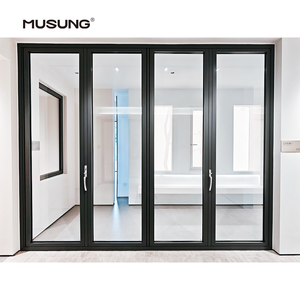
Seaside Hotel Hurricane Proof Aluminum Exterior Balcony Patio Soundproof Glass Garden Aluminum Folding Doors
- Heavy-duty bottom-rolling stainless track
- Fluorocarbon AAMA 2605 coastal coating
- Panoramic bi-fold multi-panel design
1. The Engineering Physics of Aluminum Clad Wood & Glass Door Systems
In high-end architectural fenestration, Aluminum Clad Wood Doors represent the apex of structural hybrid design. By integrating the organic thermal insulation and aesthetic warmth of interior solid wood (such as White Oak, Teak, or Larch) with an exterior armor of high-extrusion aluminum alloy (6063-T5), these systems solve the classic building envelope dilemma: timber degradation caused by exterior atmospheric exposure versus aluminum thermal bridging.
The key engineering advantage lies in the independent thermal expansion decoupling mechanism. Outer aluminum extrusions expand and contract at rates vastly different from inner timber components under ambient temperature swings ranging from -30°C to +70°C. Top-tier Chinese exporters utilize snap-on nylon (PA66 GF25) floating clips rather than rigid mechanical fastenings. This allows the exterior aluminum cladding to slide micro-fractionally along the wood core without inducing shear stress, preventing frame warp, joint cleavage, or seal degradation over decades of service.
Alloy Profile Standards
Manufactured using primary ingot 6063-T5 aluminum extrusions with minimum wall thickness of 2.0mm to 3.0mm, delivering extreme flexural strength under severe wind loads.
Polyamide Thermal Barrier
Employs 24mm to 34mm PA66 GF25 (25% Glass Fiber reinforced) thermal break strips to eliminate cold-bridge paths, achieving overall frame U-factors as low as 0.16 BTU/h·ft²·°F.
Surface Finish Coatings
Exterior extrusions undergo AkzoNobel or PPG AAMA 2605 fluorocarbon (PVDF) powder coating, providing a 10-year guarantee against salt-spray corrosion, UV chalking, and color fading.
2. Architectural Performance Matrix: Clad Wood vs. Thermally Broken Aluminum
Selecting the optimal fenestration product requires a empirical evaluation of thermal performance (U-Value), Solar Heat Gain Coefficient (SHGC), Acoustic STC Rating, and Structural Wind Load Resistance (Pa). The table below outlines standard performance metrics verified through NFRC, CE (EN 14351-1), and AS2047 laboratory testing standards.
| System Classification | Overall U-Factor (W/m²K) | Acoustic Rating (STC / Sound) | Max Wind Load (Pa) | Ideal Project Application |
|---|---|---|---|---|
| Aluminum Clad Solid Wood Doors | 0.8 – 1.2 (Ultra-Low) | 38 – 45 dB | 3,500 – 5,500 Pa | Luxury Residential Villas, Cold Climate Mansions, Alpine Resorts |
| Thermally Broken Aluminum Patio Doors | 1.3 – 1.8 (Medium-Low) | 32 – 40 dB | 4,000 – 6,000 Pa | High-Rise Residential, Coastal Hotels, Modern Commercial Entrances |
| Cast Aluminum Heavy Pivot Doors | 1.6 – 2.2 (Standard) | 35 – 42 dB | 5,000 – 7,500 Pa | Grand Villa Entrance Portals, High-Security Architectural Statements |
| Hurricane-Impact Bi-Fold Aluminum Doors | 1.4 – 1.9 (Medium) | 36 – 43 dB | 6,000 – 9,000+ Pa | Tropical Coastal Estates, Typhoon-Prone Resort Waterfronts |
3. Strategic Global Sourcing & Product Engineering Trends (2025–2030)
The global door and window supply chain is experiencing a structural pivot toward high-efficiency, engineered Chinese manufacturing. Driven by strict net-zero carbon building codes across North America (IECC 2024), Europe (EPBD directives), and Australia (NCC Section J), procurement managers are shifting away from traditional off-the-shelf distributors toward direct OEM engineering partnerships.
Trend 1: Ultra-Slim Sightlines & Invisible Frames
Architects are demanding structural glass systems with ultra-narrow interlocking stile profiles (as thin as 18mm–25mm). Advanced factories utilize structural silicone bonding (IGU structural glazing) where the glass unit itself bears racking loads, allowing floor-to-ceiling glass expanses up to 6 meters high.
Trend 2: Quadruple Glazing & Aerogel Insulation
For passive house certification (PHI), leading exporters are integrating triple and quadruple-pane Insulated Glass Units (IGUs) filled with 95%+ Argon or Krypton gas, low-conductive warm-edge Technoform spacers, and optional aerogel-infused thermal cavities achieving U-values below 0.6 W/m²K.
Trend 3: Smart Access & Automated Hardware Integration
Modern luxury doors are evolving into mechatronic security gateways. Premium Chinese exporters are pre-integrating concealed motorized multi-point locks (e.g., German Siegenia Genius, Winkhaus EAV), biometric fingerprint sensors, smartphone BLE connectivity, and motorized auto-sliding drives into the profile frame.
Factory-Direct Manufacturing Benchmark & Quality Control Integrity
As an integrated building materials manufacturer and exporter—Changsha Wincraft Aluminum Window Tech Co., Ltd.—our facility bridges architectural vision and precision manufacturing. We provide full-cycle oversight from CAD shop drawings to automated CNC extrusion milling and export container loading.
Direct Engineering Design Support
Eliminate intermediary distortion. Our in-house structural engineers review your architectural drawings, provide CAD shop details, and generate 3D project renderings within 24 hours.
Strict Raw Material Auditing
We source 100% primary aluminum billets (6063-T5 grade), imported German EPDM weather gaskets (Semperit/Seals), and authentic hardware from Siegenia, Roto, and HOPPE.
4-Week Production Lead Time
Our 20,000 m² automated facility utilizes high-speed double-head cutting saws and CNC machining centers, maintaining a standardized 4-week lead time for custom project orders.
Global Logistics & Duty Packing
Export orders feature heavy-duty multi-layer protective packaging: foam-wrapped profiles, corner protectors, vacuum shrink film, and fully enclosed IPPC-certified fumigated plywood crates.
Full OEM / ODM Customization
Complete flexibility for B2B distributors: custom profile extrusion dies, private labeling, custom RAL color matching, and tailored system engineering for local code compliance.
Verified International Certifications
Products are rigorously tested to comply with international standards including North American NFRC / AAMA, European CE EN 14351-1, and Australian AS2047 / AS1288 standards.
Frequently Asked Questions for Importers & Contractors
Authoritative technical answers to common questions encountered during international fenestration procurement.
Q1. How do aluminum clad doors differ from standard aluminum clad windows?
While both systems share the hybrid aluminum-exterior/wood-interior principle, aluminum clad doors require significantly heavier structural extrusions (minimum 2.5mm–3.0mm wall thickness), specialized heavy-duty threshold drainage profiles, multi-point lock rods, and load-bearing hardware rated for sash weights from 200kg to over 400kg per panel.
Q2. What is the advantage of PA66 GF25 thermal breaks over poured polyurethane (debridge)?
Polyamide 66 reinforced with 25% glass fiber has a thermal expansion coefficient virtually identical to aluminum. This prevents structural shear failure under extreme ambient temperature shifts. Poured polyurethane debridge systems, while offering low U-factors, can degrade and loosen over time under heavy mechanical door usage.
Q3. Can Chinese aluminum clad door factories meet hurricane impact codes in coastal zones?
Yes. Premium exporters manufacture heavy-impact series equipped with SGP (SentryGlas® Interlayer) laminated safety glass and reinforced aluminum profiles. These systems are laboratory-tested to withstand cyclic wind pressures exceeding +5,000 Pa and large-missile impact testing (ASTM E1886/E1996 and Florida Miami-Dade NOA standard equivalents).
Q4. What is the typical MOQ and lead time for custom villa projects?
Our factory supports flexible low MOQs (as low as 1 custom house package or 20 m²) for residential projects, while offering volume tier pricing for commercial projects. Standard production lead time is approximately 4 weeks from final CAD shop drawing sign-off.
Q5. How is interior wood protected against moisture and fungal rot during shipping?
Interior timber components undergo a 4-stage treatment process: kiln drying to an equilibrium moisture content of 8-12%, anti-fungal dip coating, eco-friendly water-based primer, and 3-coat Remmers or Sikkens flexible wood finish. Packed crates also contain industrial desiccant bags and moisture-barrier shrink wrap.
Q6. Do you provide site installation support or shop drawings for local contractors?
We provide comprehensive 2D auto-CAD section details, structural anchoring diagrams, 3D installation exploded views, and step-by-step video instruction manuals. For large commercial projects, we can also dispatch technical installation engineers for on-site guidance.
Ready to Engineer Your Project's Building Envelope?
Send us your architectural elevations, schedule of window/door quantities, or custom design specifications. Our engineering team will return a complete shop drawing proposal and factory-direct quotation within 24 hours.
Contact Us