Verified Manufacturing Catalogue
Featured Aluminium Glazed Door & Window Systems
Engineered to meet international building standards (AS2047, CE, NFRC, ASTM). Select a precision-engineered profile to review detailed performance specifications.
Engineering Deep-Dive
State of the Art in Architectural Aluminium Glazed Door Manufacturing
An authoritative analysis of material science, structural dynamics, thermal efficiency, and precision manufacturing protocols defining modern Chinese fenestration exports.
6063-T5 Profile Metallurgy
Premier Chinese door manufacturers utilize prime-grade extruded 6063-T5 aluminum alloy profiles characterized by a wall thickness ranging from 1.4mm to 3.0mm depending on structural load requirements. 6063-T5 provides an optimal yield strength (≥110 MPa) and tensile strength (≥160 MPa), enabling massive clear span configurations while resisting permanent wind-induced deformation.
Thermal Barrier Technology
To eliminate thermal bridging, advanced glazed doors integrate structural polyamide thermal break strips (Technoform PA66-GF25) reinforced with 25% glass fiber. This engineering configuration lowers the overall frame thermal transmittance value (Uf) down to 1.2–1.8 W/m²K, drastically cutting HVAC building energy consumption across both extreme arctic and tropical climate zones.
Insulated Glazing Units (IGU)
High-performance door assemblies employ double or triple glazed insulated glass units featuring magnetron-sputtered Low-Emissivity (Low-E) coatings, argon gas fill (≥90% concentration), and warm-edge polypropylene spacer bars. This combination minimizes solar heat gain (SHGC ≤ 0.25) while maintaining exceptional visual light transmittance (VLT ≥ 65%).
Strategic Procurement Analysis
Future Sourcing & Technology Trends in Glazed Fenestration
How global architectural demands, zero-carbon building mandates, and digital fabrication workflows are reshaping B2B procurement strategies from China.
As commercial real estate developers, contractors, and architectural firms navigate stringent international green building standards (such as LEED v4.1, BREEAM, and Passive House Certification), the role of China-based aluminium glazed door suppliers has evolved from traditional contract manufacturing to co-engineering high-value fenestration solutions. Buyers seeking long-term competitive advantages must evaluate several key market shifts:
1. Ultra-Slim Sightlines & Structural Concealment
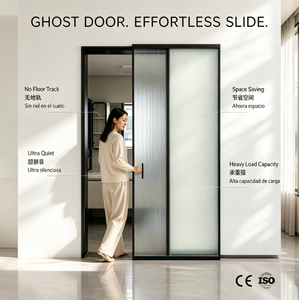
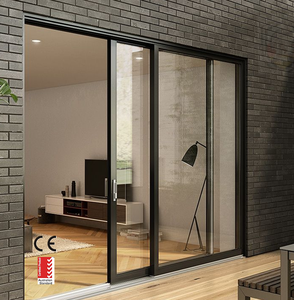
Modern high-end residential and commercial architecture prioritizes maximum clear view glazing. Procurement is rapidly shifting toward minimal-frame sliding system architectures with interlocking stile widths under 20mm. These ultra-slim profiles transfer dead load directly to concealed stainless steel floor tracks while utilizing structural silicone sealant (ASTM C1184 compliance) for glass-to-aluminum load transmission.
2. Low-Carbon Recycled Aluminium & EPD Auditing
Carbon border adjustment mechanisms (such as the EU CBAM) demand verified supply chain sustainability. Top Chinese factories are adopting low-carbon primary aluminum smelted via hydroelectric power alongside post-consumer recycled aluminum alloys (≥75% recycled scrap content). Leading suppliers now provide third-party verified Environmental Product Declarations (EPD).
3. Smart Automation & Building System Integration
Commercial doors are transitioning into connected building envelope components. Next-generation glazed door orders increasingly mandate motorized drive units with brushless DC motors, obstacle sensing radars, rain sensors, and seamless integration into smart building protocols (KNX, Zigbee, BACnet). Electric heavy-duty sliding and sectional doors lead this growth sector.
4. Extreme Climate Resiliency & Impact Certification
Rising frequency of extreme weather events requires severe windstorm and hurricane certification. Global importers require missile impact testing compliance (TAS 201/202/203, ASTM E1886/E1996) for coastal developments. Advanced Chinese factories utilize laminated PVB/SGP interlayers and reinforced corner crimping to meet these stringent structural demands.
B2B Technical Benchmark
Aluminium Glazed Door System Performance Comparison
Comparative physical properties matrix for specifying architectural door systems according to project exposure and building code compliance.
| System Classification | Thermal Transmittance (U-Value) | Acoustic Insulation (Rw/STC) | Wind Load Resistance (Design Pressure) | Water Tightness (Pa) | Target Architectural Application |
|---|---|---|---|---|---|
| Heavy-Duty Thermal Break Sliding Door | 1.4 - 1.8 W/m²K | 35 - 40 dB | 3.5 - 5.0 kPa (Class 9A) | 600 - 900 Pa | Luxury Residential Balconies, Coastal Villas, High-Rise Penthouses |
| Hurricane Impact Laminated Sliding Door | 1.8 - 2.2 W/m²K | 38 - 45 dB | 5.0 - 7.5 kPa (Severe Storm) | 750 - 1050 Pa | Coastal Hurricane Zones, Tropical Resort Developments |
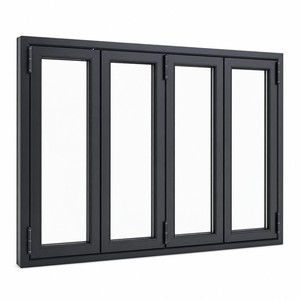
| Multi-Panel Bi-Fold / Folding Door | 1.6 - 2.0 W/m²K | 32 - 38 dB | 2.5 - 3.5 kPa | 450 - 600 Pa | Cafes, Commercial Terraces, Indoor-Outdoor Patio Openings |
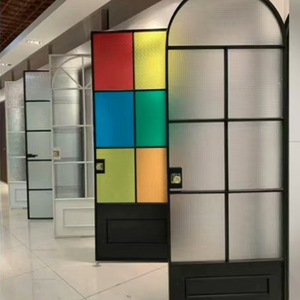
| Slim-Frame Interior Pocket / Barn Door | N/A (Non-Thermal) | 28 - 34 dB | 1.0 - 1.5 kPa | N/A (Interior Use) | Executive Offices, Luxury Hotel Suites, Interior Partitioning |
| Electric Glass Sectional Garage / Commercial Door | 2.0 - 2.5 W/m²K | 25 - 30 dB | 2.0 - 3.0 kPa | 350 - 500 Pa | Modern Residential Garages, Showrooms, Automotive Dealerships |
Manufacturing Rigor & E-E-A-T Capabilities
Why Changsha Wincraft Leads the Fenestration Export Industry
Built on over two decades of engineering precision, standardized quality control, and direct B2B supply chain integration for architects, wholesalers, and general contractors globally.
As an industry-leading manufacturer headquartered in Changsha, China, Changsha Wincraft Aluminum Window Tech Co., Ltd. operates an advanced 20,000 square meter intelligent production base. Integrating custom profile extrusion, CNC precision machining, insulated glass unit fabrication, automated assembly, and strict dry-fit pre-delivery testing, Wincraft ensures every order conforms exactly to architectural shop drawings.
20+
Years Manufacturing Excellence
20,000㎡
Intelligent Production Facility
80+
Global Export Markets
24h
CAD/BIM Turnaround Time
24-Hour CAD Rendering & BIM Support
Our specialized in-house engineering team translates architectural concepts into accurate shop drawings, structural wind load calculations, and BIM models within 24 hours of inquiry, minimizing project approval timelines.
14-Stage Quality Assurance
From raw ingot alloy spectrographic analysis to corner crimping pull-tests, powder coating thickness checks (EN ISO 2360), and 100% water tightness testing under pressurized spray rigs, zero defects leave our factory floor.
Turnkey Global Export Logistics
All doors undergo protective film wrapping, corner guards, and rigid fumigated wooden crate or steel-rack packing. We handle full container loading (FCL/LCL), customs clearance, and door-to-door delivery worldwide.
B2B Sourcing FAQ
Frequently Asked Questions by Global Importers & Contractors
Direct answers regarding OEM/ODM capabilities, lead times, international building certifications, and customized profile development.
What is the standard production lead time for customized aluminium glazed door orders?
Standard customized orders typically require approximately 4 weeks from shop drawing sign-off and deposit confirmation. For large-scale commercial or multi-family residential developments, production schedules are broken into staged containerized shipments according to the general contractor's site installation plan.
Do you support full OEM and ODM cooperation for architectural brand owners?
Yes. We offer extensive OEM/ODM support including private-label protective films, customized aluminum profile dies, dedicated hardware branding, custom powder coating colors (RAL match), and bespoke structural system development based on client CAD/BIM specifications.
How do you ensure your door systems comply with local building codes in target markets?
Prior to engineering approval, our technical department evaluates your local design wind pressure requirements (kPa), energy codes (U-factor and SHGC limits), and safety glazing standards (e.g., AS/NZS 2208, ANSI Z97.1, EN 12150). Profile cross-sections, thermal strips, glass thickness, and lock mechanisms are specified to guarantee full compliance.
Can you provide technical shop drawings and renderings prior to contract finalization?
Absolutely. Our structural engineering department provides preliminary 2D CAD shop drawings, elevation schematics, and 3D architectural renderings within 24 hours of receiving your project schedule and architectural layout drawings.
What surface treatment options are available for coastal or high-corrosion environments?
For coastal installations exposed to severe salt spray, we recommend PVDF (polyvinylidene fluoride) fluorocarbon coatings or Qualicoat-certified class 2 anodized finishes (film thickness ≥ 25 microns). Coupled with 316-grade stainless steel hardware and fasteners, these systems resist pitting, fading, and oxidation for decades.
How are fragile glass and large door frames protected during international sea freight?
We utilize heavy-duty export packaging protocols. Profiles are protected with polyethylene film and cardboard corner protectors. Assembled units or pre-glazed panels are secured inside fully enclosed plywood crates or custom-built steel A-frame racks equipped with shock-absorbing foam cushions and moisture-desiccant packs.
Ready to Elevate Your Architectural Fenestration Sourcing?
Connect directly with our engineering and export team for detailed system catalogs, factory-direct wholesale pricing, and 24-hour shop drawing support.
Send an Inquiry