B2B Fenestration Technical Whitepaper

China Top Aluminium Grill Door Factories & Factory Procurement Guide

An Engineering-Grade Analysis of Custom Architectural Security Grill Doors, Thermal Break Systems, 6063-T6 Extrusion Profiles, and Global OEM/ODM Manufacturing Audits

Factory Direct Supply

High-Performance Aluminium Door & Window Systems

Engineered to order for importers, project developers, and architectural contractors worldwide. Configured with precision thermal breaks, impact glass, and security grill options.

Engineering Excellence in China Aluminium Grill Door Manufacturing: Technical Benchmarks

In the global architectural fenestration sector, sourcing high-performance security grill doors and custom aluminum systems from China requires a rigorous understanding of metallurgical standards, thermal break mechanics, structural load capacities, and security mesh integration. Modern B2B buyers—ranging from commercial contractors in North America to luxury residential developers in Australia and the Middle East—are moving away from generic off-the-shelf doors toward custom OEM/ODM solutions engineered specifically for localized environmental and security challenges.

1. Metallurgical Profiles & Alloy Tempering (6063-T5 vs. 6063-T6)

The structural backbone of any high-durability aluminium grill door lies in its profile extrusion alloy grade. Leading Chinese manufacturing plants utilize primary-grade 6063 architectural aluminum alloy, heat-treated to either T5 or T6 tempers. While standard residential profiles rely on 6063-T5 for ease of complex extrusion design, security grill doors and heavy-duty commercial storefront doors require 6063-T6 temper, providing tensile strength exceeding 205 MPa and yield strength over 180 MPa. This ensures structural resistance against forced entry, heavy wind loads, and thermal expansion distortions across extreme climate zones.

2. Integrated Security Grill Mesh Mechanics & Intrusion Protection

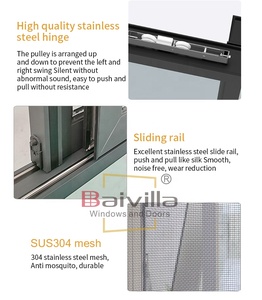
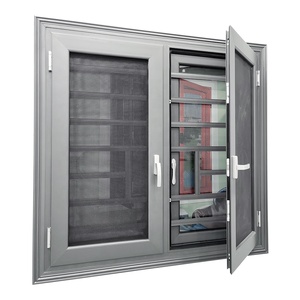
Unlike traditional decorative wrought iron doors that add excessive dead load to building frames, modern aluminum grill doors seamlessly integrate high-tensile 304 or 316 marine-grade stainless steel wire mesh directly into the aluminum extrusion sash using concealed clamping channels. Key technical parameters include:

  • Wire Diameter & Mesh Gauge: Standard anti-theft security mesh ranges from 0.70mm to 1.00mm wire diameter woven in 11x11 or 14x14 mesh counts per inch.
  • Shear & Impact Resistance: Quality-tested security grills withstand dynamic impact energy up to 100 Joules and knife-shear testing under AS5039 / EN 1627 RC2 standards.
  • Concealed Multi-Point Transmission Locks: Integrated multi-point locking gear systems engage stainless steel shoot-bolts into the frame at top, center, and bottom, creating an impenetrable physical barrier while maintaining minimalist architectural sightlines.

3. Thermal Insulation & Acoustic Soundproofing Mechanics

To comply with stringent energy codes such as US NFRC, European CE EN 14351-1, and Australian WERS standards, China's top factories utilize structural polyamide thermal break strips (PA66GF25 - 25% glass fiber reinforced). These thermal breaks physically separate the interior and exterior aluminum extrusions, dramatically reducing thermal conduction.

When combined with double or triple Insulated Glass Units (IGU) containing low-emissivity (Low-E) coatings and Argon gas fill, high-tier aluminum grill doors achieve thermal U-values as low as 1.2 to 1.6 W/m²K and Sound Transmission Class (STC) ratings between 35 dB and 42 dB, ensuring energy conservation and acoustic privacy in high-density urban settings.
Data Visualization

Architectural Aluminium System Performance Matrix

A comparative technical overview of primary product classes manufactured by top-tier Chinese fenestration factories.

System Category Alloy & Temper Wall Thickness Burglar Rating Thermal U-Value STC Rating Recommended Application
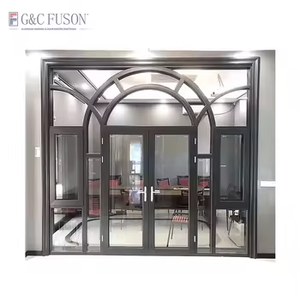
Security Grill Casement Door 6063-T6 Primary 2.0mm - 2.5mm EN 1627 RC2 / RC3 1.4 - 1.8 W/m²K 38 - 42 dB Luxury Villas, High-Security Residential Main Entrances
Hurricane Impact Storefront 6063-T6 Commercial 2.5mm - 3.0mm ASTM E1996 Impact 1.8 - 2.2 W/m²K 35 - 38 dB Commercial Stores, Retail Outlets, Coastal Complexes
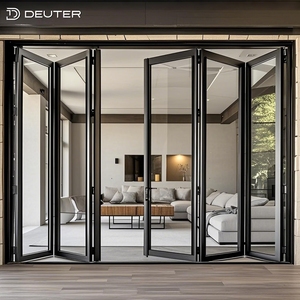
Thermal Break Bifold Door 6063-T5 Architectural 2.0mm - 2.2mm PAS 24 Security 1.3 - 1.6 W/m²K 36 - 40 dB Panoramic Patio Enclosures, Indoor-Outdoor Terraces
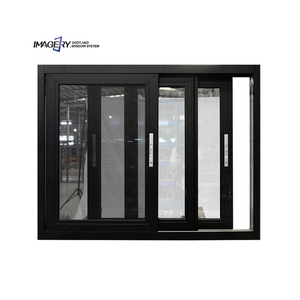
3-Track Security Sliding Window 6063-T5 Standard 1.4mm - 1.8mm Standard Anti-Pry 1.6 - 2.0 W/m²K 32 - 36 dB Multi-Family Residential, Apartments, Modern Balconies
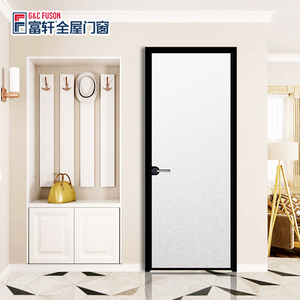
Slimline Interior Glass Swing 6063-T5 Minimalist 1.2mm - 1.4mm Interior Latch N/A (Interior) 30 - 34 dB High-End Hotel Guestrooms, Executive Offices, Bedrooms
Strategic Market Insights

Future Procurement Trends in Aluminium Grill Door Sourcing

Key shifts reshaping the global supply chain for B2B importers, architects, and volume distributors over the next decade.

1. Smart Biometric & Smart Home System Integration

The global B2B market is rapidly transitioning from mechanical key locks to integrated electronic access control. Leading Chinese factories are now pre-engineering aluminum grill door sashes with embedded wiring conduits, biometric fingerprint scanners, face-recognition cameras, and motorized multi-point locks compatible with Zigbee and Tuya smart home ecosystems.

  • Pre-wired magnetic lock pre-cutouts
  • Fail-safe motorized deadbolts
  • Remote smartphone access compatibility

2. Ultra-Narrow Sightlines with "Invisible Mesh"

Architectural preferences have shifted heavily toward minimalism. Modern buyers demand maximum glass surface area without compromising personal safety. Top manufacturers are pioneering ultra-slim aluminum profiles (interlock sightlines as narrow as 18mm to 25mm) paired with black electro-coated high-translucency 316 stainless steel mesh that appears virtually invisible from a distance.

  • Narrow 20mm interlock profiles
  • High-translucency 0.8mm 316 mesh
  • Unobstructed view aesthetics

3. Low-Carbon Aluminum & EPD Environmental Certification

Driven by green building certification schemes such as LEED, BREEAM, and Green Star, institutional developers require documented carbon footprints for all structural components. Procurement teams favor Chinese factories utilizing hydroelectric-smelted low-carbon aluminum ingot inputs and supplying certified Environmental Product Declarations (EPD).

  • Hydroelectric low-carbon alloy extrusion
  • LEED & BREEAM compliance support
  • Fluorocarbon PVDF chrome-free pre-treatment
20+
Years Industry Experience
20,000 m²
Modern Production Base
80+
Global Export Markets
24 Hours
CAD & Rendering Turnaround

Enterprise Manufacturing Capacity & Quality Control Protocol

Changsha Wincraft Aluminum Window Tech Co., Ltd. operates as an integrated manufacturer and international exporter of custom aluminum doors, windows, sunrooms, and garden pavilions. Our production infrastructure combines automated CNC machining, high-precision corner crimping, automated glass sealant robot lines, and continuous quality inspection systems designed to eliminate dimensional errors prior to container loading.

Full-Process Quality Assurance Lifecycle

To guarantee long-term field reliability, every batch of architectural aluminum grill doors undergoes four mandatory testing checkpoints before export authorization:

  • Spectrometer Raw Material Verification: Testing aluminum billets to confirm chemical composition complies strictly with GB/T 5237 / ASTM B221 alloy standards.
  • Hydrostatic Water Tightness & Wind Pressure Testing: Mock-up chamber testing of finished sashes under simulated typhoon wind pressures exceeding 3.0 kPa and heavy rain conditions.
  • Corner Joint Crimping Tensile Test: Checking hydraulic corner crimp joints with injected 2-component structural corner adhesive to prevent sag or corner separation over decades of operation.
  • Surface Finish Salt-Spray Audit: Continuous 1000-hour neutral salt spray testing (ASTM B117) ensuring fluorocarbon PVDF and powder-coated finishes resist blistering, peeling, or chalking in severe coastal environments.
Direct Sourcing Guide

Frequently Asked Questions (FAQ) for B2B Procurement

Clear technical and commercial answers for project importers, wholesale distributors, and architectural buyers.

Do you accept custom OEM and ODM orders for aluminium grill doors and window systems?
Yes. We provide complete OEM and ODM cooperation models for overseas B2B clients. This includes custom extrusion profile die tooling, private labeling, customized hardware brand integration (e.g., Siegenia, Hoppe, GU, or customized local brands), specialized powder coating colors (RAL / Dulux color matching), and custom packaging designed for distributor resale or job-site staging.
What is the standard manufacturing lead time for containerized project orders?
Standard customized orders are typically produced and quality-checked within 4 weeks (approximately 25 to 30 calendar days) after final shop drawing sign-off and deposit confirmation. For large-scale multi-tower commercial developments or custom extrusions requiring new die creation, batch production schedules are coordinated to align directly with your construction site installation milestones.
Can your engineering team provide structural design proposals and shop drawings prior to production?
Yes. Our in-house fenestration engineering department works directly with your architectural drawings, elevation plans, and project specifications. We deliver initial 3D renderings and structural design proposals within 24 hours. Upon contract signing, detailed 2D Auto-CAD shop drawings showing exact wall installation details, glass build-ups, and thermal break profiles are submitted for formal architect sign-off.
How do you package and protect heavy aluminum grill doors during ocean container transit?
All export orders undergo heavy-duty export packaging protocols. Individual door sashes and frames are wrapped with PE protective film, reinforced with blue scratch-resistant edge corner guards, and enclosed in multi-layer bubble wrap. Fully glazed units are packed into fumigation-free, fully enclosed plywood crates with internal rubber shock-absorbing spacers to ensure zero glass breakage or frame abrasion during long-distance ocean transport.
Can your aluminum grill door systems meet building codes in Australia, North America, and Europe?
Our products are engineered to conform with major international fenestration standards. By sharing your project's design wind load (Pa), energy U-value target, and acoustic STC requirements, our technical team configures the ideal profile depth, thermal break width, glass thickness, and hardware locking points to satisfy Australian AS2047/AS1288, American AAMA/NFRC, or European CE EN 14351-1 compliance criteria.
What is the difference between Anodizing, Powder Coating, and PVDF Fluorocarbon finishes for coastal projects?
Powder coating (standard 60-80 microns) offers a wide variety of colors and textures suitable for normal inland urban climates. For coastal regions within 1 km of ocean salt-spray, we strongly recommend PVDF (Fluorocarbon) coating or hard Anodizing (Class 25). PVDF coating utilizes 2-coat or 3-coat fluoropolymer resins (Kynar 500) that deliver exceptional resistance to UV degradation, salt fog corrosion, and industrial pollution, backed by 15 to 25-year color retention warranties.

Ready to Upgrade Your Next Project's Fenestration Specification?

Consult with our senior fenestration engineers today. Submit your CAD drawings, schedule of windows and doors, or project tender requirements for a comprehensive technical review and competitive factory-direct proposal within 24 hours.

Get a Quote