Precision-Engineered Wholesale Aluminium Door Systems
Direct factory supply manufactured to international building codes (CE, AS2047, NFRC, ASTM) for commercial developers, importers, and architectural projects worldwide.
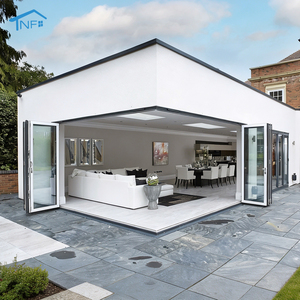
- Alloy Grade: 6063-T5 Thermal Break
- Heavy Duty Stainless Steel Bottom Roller
- Applications: Hotel Kitchens, Commercial Patios
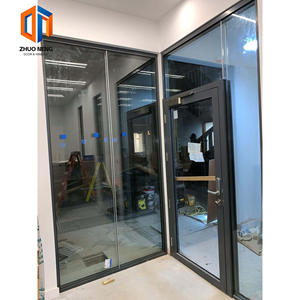
- Fire Resistance Rating: EI30 / EI60
- Acoustic Insulation: STC up to 42 dB
- Multi-Point Security Locking Mechanism
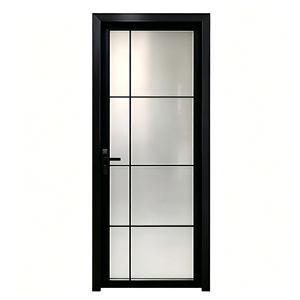
- Anodized Matte Black Surface Coating
- Tempered Privacy Frosted Double Glass
- 100% Moisture Proof & Anti-Corrosion
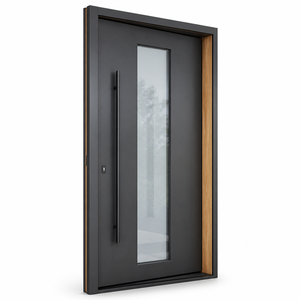
- Structural Hybrid: Exterior Alu + Interior Solid Timber
- Thermal Transmittance: U-Value < 1.2 W/m²K
- Low-E Argon Gas Filled Double Glazing
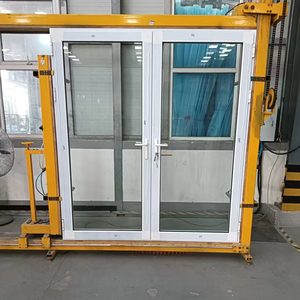
- Classic Double Panel Swing Mechanism
- Dual-Sealed EPDM Weatherstripping
- Heavy-Duty German Friction Hinges
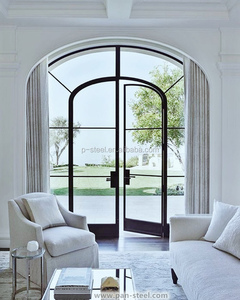
- Ultra-Slim Crittall-Style Profile Lines
- High Structural Load Resistance
- Customized Architectural Grid Options
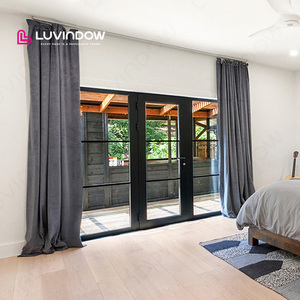
- Ornamental Wrought Aluminum Artistry
- Dual-Pane Security Safety Glass
- Zero Rust Maintenance Guaranteed
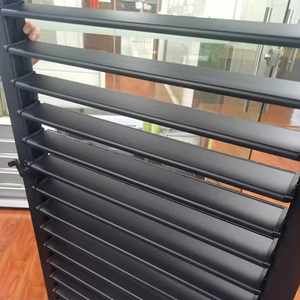
- Adjustable Aerofoil Louver Blades
- Storm-Proof Ventilation Engineering
- Powder-Coated Weather Endurance
Executive Sourcing Guide: Wholesale Aluminium Designer Doors from China
The global architectural fenestration market is undergoing a seismic structural transition driven by strict carbon neutrality mandates, rising energy cost structures, and an unprecedented demand for ultra-minimalist, high-clarity indoor-outdoor living boundaries. As real estate developers, contractors, and wholesale distributors seek high-performance facade solutions, China has established itself as the undisputed epicenter of precision aluminum extrusion, structural thermal-break engineering, and custom designer door manufacturing.
Sourcing designer aluminium doors directly from tier-one Chinese manufacturers offers overseas procurement entities distinct competitive advantages: access to advanced alloy metallurgies (such as 6063-T5/T6), automated multi-chamber thermal insulation profiles, world-class surface treatment choices (PVDF, Anodizing Class 20, AkzoNobel powder coatings), and structural hardware integration—at unit economics that maximize project ROI without sacrificing architectural rigor.
Future Sourcing Trends in Wholesale Aluminium Designer Doors (2025–2030)
Procurement teams navigating the next decade of architectural supply chain dynamics must evaluate four macro trends transforming the custom door industry:
1. Deep Thermal Insulation & Passive House Compliance
With international energy conservation standards (such as Europe's EN ISO 10077 and North America's NFRC guidelines) tightening performance thresholds, standard non-thermal profile doors are rapidly being phased out for main exterior envelopes. Modern aluminium designer doors now integrate multi-cavity Polyamide nylon (PA66-GF25 reinforced with 25% glass fiber) thermal break strips. When coupled with argon-filled triple-pane Low-E insulated glazing units (IGUs) featuring warm-edge composite spacers, wholesale suppliers can achieve thermal transmittance levels below $0.8\text{ W/m}^2\text{K}$, enabling passive house certification across extreme climates.
2. Ultra-Slim Sightlines and Flush Floor Transitions
Modern luxury architecture demands maximum visual openness. The market is shifting towards hidden-frame sliding systems, narrow-stile swing doors (sightlines under $20\text{mm}$), and zero-threshold flush track integration. Achieving structural stability with such slim profiles requires high-tensile 6063-T6 or 6060-T66 aluminum alloys, along with engineered steel or titanium internal stiffeners capable of withstanding severe gust loads in high-rise coastal villas and penthouses.
3. Biometric & Smart-Home Ecosystem Integration
Designer entry doors are no longer isolated mechanical barriers; they are intelligent access nodes. Enterprise buyers increasingly request factory-installed micro-motorized multi-point locks, integrated biometric fingerprint scanners, facial recognition cameras, and hidden wireless power transfer units compatible with KNX, Zigbee, or Control4 automation systems.
4. Circular Economy & Low-Carbon Recycled Aluminum Billets
Institutional buyers and global developers operating under ESG governance models require verified Environmental Product Declarations (EPDs). Leading Chinese manufacturers are transitioning from primary aluminum smelting to recycled billet casting utilizing clean hydro-electric energy. This process lowers embodied carbon footprint by up to 85% while matching identical structural yield strengths ($\ge 170\text{ MPa}$).
Engineering Performance Matrix: Profile & System Comparison
To assist enterprise purchasing agents in standardizing tender specifications, the matrix below outlines core engineering benchmarks across primary door typology options:
| Door System Typology | Alloy Grade & Profile Width | Thermal Strip System | Typical Glazing Build-Up | U-Factor Range ($W/m^2K$) | Max Panel Height / Weight |
|---|---|---|---|---|---|
| Heavy-Duty Lift & Slide | 6063-T6 / 140mm–220mm frame | 24mm–34mm PA66-GF25 | 6mm Low-E + 16Ar + 6mm Tempered | 1.2 – 1.6 W/m²K | 4,500mm / 400kg per panel |
| Thermal Bifold Accordion | 6063-T5 / 75mm–90mm frame | 20mm–28mm Multi-Cavity | 5mm Low-E + 12Ar + 5mm Tempered | 1.4 – 1.8 W/m²K | 3,500mm / 150kg per panel |
| Slim-Stile Glass Pivot | 6063-T6 / Reinforced Stile | Custom Perimeter Thermal Isolator | 8mm Laminated + 12Ar + 8mm Low-E | 1.5 – 2.0 W/m²K | 6,000mm / 500kg per panel |
| Structural French Swing | 6063-T5 / 70mm–85mm frame | 24mm PA66-GF25 Insulated Bar | 6mm + 12Ar + 6mm Double Low-E | 1.3 – 1.7 W/m²K | 3,000mm / 120kg per panel |
| Interior Narrow-Frame Ghost/Slide | 6063-T5 / 16mm–30mm Minimalist | Non-Thermal / Slim Divider | 8mm–10mm Single/Double Monolithic | N/A (Interior Acoustic) | 3,000mm / 100kg per panel |
Material & Metallurgical Standards: The Anatomy of Durability
When ordering wholesale aluminium designer doors from China manufacturers, inspecting raw material credentials prevents premature degradation, frame warping, or surface color chalking. High-standard specifications require strict compliance across three engineering pillars:
A. Extrusion Quality & Alloy Composition
Aluminium extrusions must strictly conform to GB/T 5237 or ASTM B221 standards. Premium suppliers use 100% pure aluminum ingots alloyed with precise ratios of Magnesium ($0.45\% - 0.9\%$) and Silicon ($0.2\% - 0.6\%$). The artificial aging treatment (T5 or T6 temper) ensures Webster hardness levels above 12 to 14 HW, guaranteeing that wide spans remain structurally rigid under extreme wind uplift conditions.
B. Surface Coating & Weatherability Metallurgy
Surface treatment dictates the visual aesthetic and life cycle duration of custom doors exposed to coastal salt spray, severe UV radiation, or industrial pollution. Sourcing directors should select surface specifications tailored to project microclimates:
- Fluorocarbon (PVDF) Spraying: 3-coat or 4-coat PPG/Kynar 500 resin coatings (layer thickness $\ge 40\mu m$) providing superior resistance to acid rain and chalking. Essential for coastal resorts and high-rise developments with 20+ year performance guarantees.
- Qualicoat Class 2 Powder Coating: Utilizing architectural polyester powders (such as AkzoNobel or Tiger Drylac) cured at high temperatures. Delivers exceptional scratch resistance, vibrant matte/satin finishes, and zero VOC emissions.
- Architectural Anodizing (Class 20): Creates an integral aluminum oxide layer (film thickness $\ge 20\mu m$) that will never peel or flake, offering a metallic finish ideal for modern industrial or minimalist luxury architecture.
- 3D Vacuum Heat Transfer Wood-Grain: Combines the warmth of natural timber with the structural longevity of metal—ideal for luxury villa entry doors exposed to humid weather.
C. Gasket Sealing & Hardware Durability
Air permeability and water resistance rely heavily on continuous sealing systems. Top manufacturers utilize co-extruded EPDM (Ethylene Propylene Diene Monomer) or silicone foam gaskets rather than cheap PVC strips. EPDM preserves elasticity from $-40^\circ\text{C}$ to $+120^\circ\text{C}$ without shrink-cracking. For hardware, top-tier Chinese factories collaborate with premier global brand partners—such as German Siegenia, ROTO, GU, or CMECH—guaranteeing multi-point gearboxes and stainless steel rollers rated for over 100,000 continuous operation cycles.
Why Sourcing Directors Partner with Changsha Wincraft Tech
Integrated manufacturing, structural engineering support, and end-to-end quality control engineered specifically for overseas project success.
Custom CAD & 3D Engineering
Our in-house structural engineering unit converts client architectural elevation blueprints into precise shop drawings, wind-load calculation books, and 24-hour photorealistic 3D renderings for instant project approval.
Rigorous Factory QA Protocols
Every custom door undergoes strict quality audits before packing: 100% dimensional checks, corner crimping pull tests, zero-water-leakage chamber testing under continuous hydrostatic spray, and hardware cycle verification.
Export Wooden Crate Packaging
To eliminate maritime shipping damage, all door panels are wrapped in protective PE scratch films, corner-shielded, and vacuum-sealed inside ISPM-15 compliant fumigated plywood crates with integrated lifting straps.
Frequently Asked Sourcing & Technical Questions (FAQ)
Direct technical answers addressing common procurement, quality compliance, shipping, and engineering concerns for wholesale buyers.
Partner with a Leading China Wholesale Aluminium Door Manufacturer
Accelerate your project schedule with direct-factory pricing, certified thermal performance, and engineering support. Send us your architectural drawings or schedule a consultation today.