Engineered Aluminium Doors & Windows Systems
Explore our core export-grade architectural aluminum solutions manufactured under strict ISO 9001 and international fenestration standards.
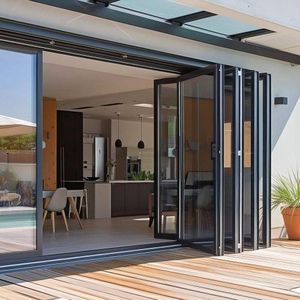
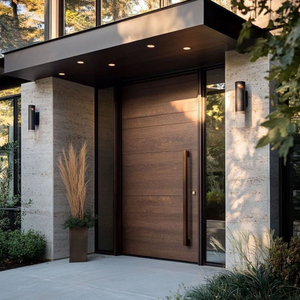
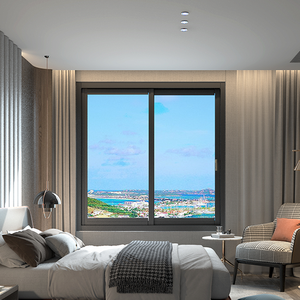
Engineering Specifications & Performance Dynamics of Aluminium Laundry Doors
A comprehensive analysis for architectural specifiers, general contractors, and bulk procurement officers evaluating utility fenestration systems.
The Utility Micro-Climate Challenge
Laundry rooms, utility zones, and service balconies represent severe micro-climates within modern residential and commercial buildings. Characterized by intermittent relative humidity spikes (often exceeding 85% RH), concentrated chemical vapors from detergents and softeners, and thermal fluctuations driven by high-efficiency heat-pump or gas clothes dryers, these spaces rapidly degrade inferior building materials. Traditional solid timber doors warp due to differential hygroscopic expansion, while cheap PVC frames exhibit thermal embrittlement and structural creep over repeated thermal cycles.
Alloy Metallurgy: 6063-T5 vs. 6063-T6
Extruded aluminium alloy 6063 serves as the backbone for high-performance architectural fenestration. Engineered with precise magnesium (0.45–0.9%) and silicon (0.2–0.6%) stoichiometry, 6063 provides superior surface finish quality, high extrudability, and excellent corrosion resistance. For laundry door applications, profiles artificially aged to T5 temper offer an optimal balance of tensile strength (≥160 MPa) and ductility, allowing micro-precision corner crimping and gasketing. In heavy-duty commercial installations, T6 temper profiles provide elevated yield strength (≥210 MPa) to withstand high-cycle operations in hospitality or communal laundry hubs.
Aerodynamics of Louver Ventilation
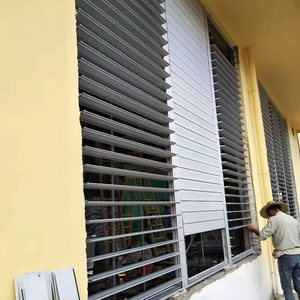
Proper airflow is paramount in laundry fenestration to prevent mold colonization and moisture entrapment. Fixed or adjustable louvers integrated into aluminium laundry doors are engineered with a 45-degree shedding angle. This geometric profile maximizes the net free ventilation area (typically 65% to 75% of total opening area) while effectively blocking direct line-of-sight visual penetration and preventing wind-driven rain ingress during storm conditions on service balconies.
Surface Pre-Treatment & Powder Coating
To resist chemical corrosion from alkaline detergent mists, aluminium laundry profiles undergo multi-stage surface passivation. Applying a Qualicoat-certified thermosetting architectural powder coating creates a 60–80 micron protective barrier. Alternatively, Class 15/25 anodization seals the metal under a crystalline aluminum oxide layer, providing zero-chalking durability and superior resistance to scratching from laundry baskets and utility equipment.
Acoustic Dampening & STC Ratings
High-spin commercial washing machines generate structural and airborne noise up to 75-80 dB. Standard hollow core doors fail to contain low-frequency vibration. By utilizing thermal break polyamide strips (PA66GF25) combined with double-sealed EPDM perimeter gaskets and insulated solid aluminium sandwich panels or laminated glass infills, engineered aluminium laundry doors achieve Sound Transmission Class (STC) ratings between 32 dB and 38 dB.
Engineering Performance Comparison Matrix: Laundry Door Systems
Selecting the optimal architectural configuration based on space utilization, thermal envelope, and ventilation requirements.
| Door System Type | Airflow Capacity (CFM) | Water Tightness (Pa) | Acoustic Isolation (STC) | Space Efficiency | Ideal Application |
|---|---|---|---|---|---|
| Aluminium Louvered Swing Door | Maximum (800+ CFM) | 150 Pa (Moderate) | 18 - 22 dB (Low) | Standard Clearance | Interior utility rooms, high-humidity laundry closets |
| Thermal Break Bifold Glass/Louver Door | Adjustable (400-600 CFM) | 350 Pa (High) | 30 - 34 dB (Medium-High) | High (90% clear opening) | Transition zones between kitchen/laundry & service yards |
| Slim-Frame Aluminium Pocket Sliding Door | Sealed (Passive) | 250 Pa (Medium) | 32 - 36 dB (High) | Maximum (Concealed in wall) | Micro-apartments, narrow residential utility corridors |
| Heavy-Duty Flush Aluminium Panel Door | Zero (Fully Airtight) | 600+ Pa (Severe Storm) | 36 - 40 dB (Maximum) | Standard Clearance | Exterior service entry, commercial laundry facilities |
Future Procurement & Global Industry Trends in Utility Fenestration
Key market drivers shaping international sourcing, architectural specifications, and sustainable manufacturing.
Trend 1: Smart Ventilation & Automated Environmental Controls
As smart home ecosystems become baseline expectations in luxury high-rise developments, the traditional passive laundry door is evolving into an active climate-management component. Advanced procurement specs now call for integrated motorized louvers equipped with humidity and micro-particle sensors. When internal laundry humidity crosses 70% RH during dryer cycles, actuators automatically open louver blades or trigger integrated low-wattage brushless DC exhaust fans embedded within the door frame itself. This seamless automation protects adjacent living areas from humidity migration without requiring manual window operation.
Trend 2: Ultra-Slim Architectural Profiles
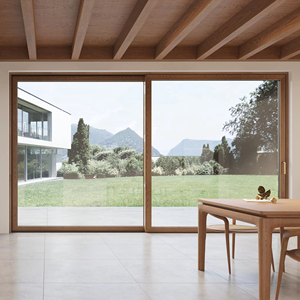
Modern minimalist interior design has driven demand for ultra-concealed aluminium frames. Sightlines have been compressed from traditional 80mm profiles down to narrow 16mm–25mm visible frames. These micro-frame sliding and pocket laundry doors utilize cold-drawn architectural aluminium alloys with elevated yield strength, allowing large-format glass or louvered panels without compromising wind-load resistance or structural rigidity.
Trend 3: Circular Sourcing & Low-Carbon Eco-Alloys
With global green building standards such as LEED v4.1, BREEAM, and Green Mark enforcing strict embodied carbon limits, global B2B buyers are prioritizing suppliers using recycled aluminium billets. Hydroelectric-smelted low-carbon aluminium (producing <4.0 kg CO2e per kg of Al) and post-consumer recycled extrusion profiles are becoming mandatory criteria in commercial tenders across Europe, North America, and Australia.
Why Partner with Changsha Wincraft Aluminum Window Tech Co., Ltd.
Integrated design, precision manufacturing, and direct export capabilities engineered for international B2B distributors, contractors, and developers.
20,000㎡ Modern Manufacturing Hub
Our state-of-the-art facility in Changsha houses automated CNC extrusion machining centers, double-headed precision saws, corner crimping equipment, and zero-emission powder coating lines. We maintain total quality control over every production phase, ensuring zero-defect manufacturing for high-volume orders.
24-Hour CAD & Rendering Support
Our dedicated engineering office collaborates directly with architects and procurement managers. Send us your project floor plans or specification sheets, and our team will generate precise Shop Drawings (DWG/DXF format) and 3D architectural renderings within 24 hours, dramatically accelerating project approval timelines.
Rapid 4-Week Production Lead Time
Equipped with lean manufacturing workflows and strategic raw material safety stocks, standard customized door and window packages are manufactured, inspected, and crated for export within 28 days. Large-scale residential developments benefit from staggered batch scheduling aligned with jobsite installation sequences.
Full-Lifecycle Quality Assurance & Global Certification Compliance
Every batch of aluminium laundry doors leaving our factory undergoes rigorous structural and environmental testing. Our internal QA lab executes continuous compliance checks covering:
- Spectrometric Alloy Verification: Chemical composition validation of 6063 aluminium raw billets prior to extrusion.
- Hydrostatic Water Tightness & Air Infiltration: Pressure chamber testing conforming to ASTM E331 and EN 12208 standards.
- Salt Spray Accelerated Corrosion (ASTM B117): 1,000-hour continuous salt fog chamber exposure ensuring zero coating blistering or filiform corrosion.
- Cycle Life Mechanical Testing: Hinge, roller, and louver mechanism endurance testing up to 100,000 continuous operation cycles.
Frequently Asked Questions for Bulk B2B Sourcing
Direct technical and commercial answers for importers, wholesalers, hardware distributors, and project procurement managers.
Do you accept OEM and ODM custom sizing for laundry doors?
Yes, absolutely. As a direct factory manufacturer, 100% of our production is tailored to client specifications. We fabricate custom frame depths, glass thickness combinations, louver blade densities, hardware brands, and custom RAL powder coat finishes according to your CAD drawings or physical samples.
What is the standard production lead time for export containers?
Our standard production turnaround is approximately 4 weeks (28 calendar days) following shop drawing sign-off and deposit confirmation. For mega-scale project deployments, we coordinate staged container shipments matched to your construction site delivery schedule.
How are aluminium laundry doors packaged to prevent maritime freight damage?
Export shipments utilize heavy-duty multi-layer protection. Profiles are wrapped in protective PE anti-scratch film, cushioned with corner plastic guards, encased in high-density bubble wrap, and loaded into fully enclosed, fumigated ISPM-15 compliant plywood crates or steel-banded A-frame racks for safe container loading.
Can your door systems meet local building codes in Australia, North America, or Europe?
Yes. Our engineering team designs fenestration systems to satisfy rigorous international codes, including Australian AS2047/AS1288, American NFRC/AAMA, and European CE/EN 14351-1 standards. We provide certified structural calculation reports and glass performance ratings upon request.
What hardware options are integrated into your aluminium utility doors?
We partner with world-class hardware manufacturers including HOPO, Siegenia, Roto, and Kinglong. Hardware packages feature SUS304/SUS316 stainless steel hinges, heavy-duty silent nylon rollers, concealed multi-point locksets, and ergonomic anti-microbial door handles engineered for high-moisture utility environments.
What is your Minimum Order Quantity (MOQ) for commercial orders?
Our flexible manufacturing system supports both project orders and containerized wholesale distribution. While our standard MOQ starts at 50 square meters for custom extruded profiles, we easily accommodate smaller sample orders for hotel mock-ups or villa prototypes when paired with existing project runs.
Ready to Elevate Your Architectural Sourcing Strategy?
Consult directly with our senior fenestration engineers to receive detailed CAD shop drawings, technical specifications, and factory-direct wholesale pricing within 24 hours.