Architectural Engineering Blueprint & Technical Sourcing Guide
An authoritative analysis of high-performance aluminium side door manufacturing, structural profile alloy metallurgy, thermal performance standards, and commercial procurement strategies.
In modern architectural fenestration, the specification of aluminium side doors (encompassing utility side entries, villa side patio doors, commercial service doors, and integrated residential access systems) represents a critical juncture balancing structural integrity, thermal efficiency, and security performance. As global building codes tighten around energy efficiency targets (such as EU NZEB standards and US ASHRAE 90.1 energy mandates), wholesale buyers and project developers are shifting away from traditional uninsulated profiles toward advanced thermal break architectural aluminium systems.
As a primary industrial factory and global exporter based in Changsha, Hunan, China, Changsha Wincraft Aluminum Window Tech Co., Ltd. delivers direct manufacturing solutions engineered to eliminate supply chain intermediaries. This whitepaper provides a comprehensive technical overview of profile alloy specification (6063-T5 vs. 6063-T6), polyamide PA66 GF25 thermal barrier technology, surface coating durability (PVDF vs. Architectural Anodizing), hardware load-bearing mechanics, and strategic procurement frameworks designed for high-volume B2B importers.
Core Architectural Product Series
Factory-engineered fenestration solutions compliant with global structural and thermal standards.
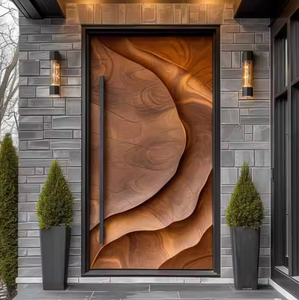
Suitable Villas Luxury 3D Design Carved Cast Aluminum Entrance Modern Finished Exterior Front Door Unique Outdoor Security Door
View Product Details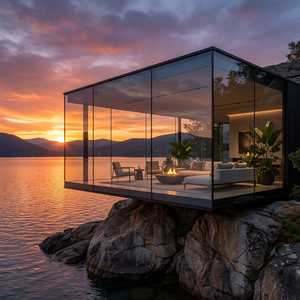
Modern Aluminum Alloy Ultra Clear Double Tempered Glass Waterproof Sunroom With Flush Floor Track Doors For Garden Villa
View Product Details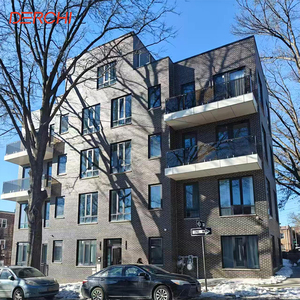
DERCHI NFRC American Apartment Project Anti-Impact Aluminium Casement Windows Soundproof Swing Double Glazed Windows and Doors
View Product Details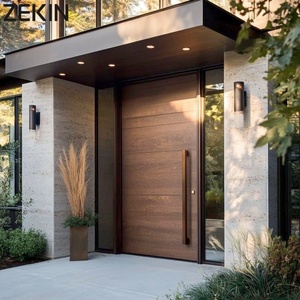
ZEKIN Modern American Design House Heat Insulation Fire Prevention Luxury Entrance Pivot Door House Front Entry Doors
View Product Details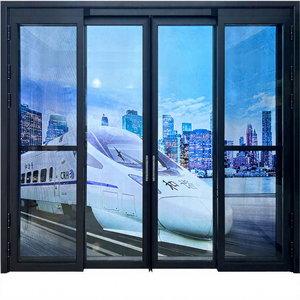
Modern Multi-functional Stacked Double-glazed Aluminum Sliding Door PT/PD Door with Both Swing and Sliding Opening Modes
View Product Details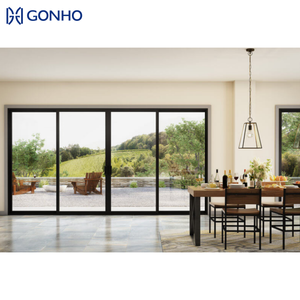
GONHO Narrow Frame Tempered Aluminumdoor Glass Pocket Slide Doors Double Triple Glazed Door With Screen
View Product Details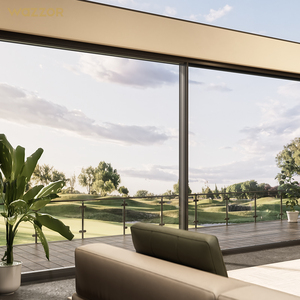
Wazzor Nfrc Heavy Duty Large Double Tempered Glass Noiseless Sliding Door and Windows Exterior Balcony Patio Glass Aluminum Door
View Product Details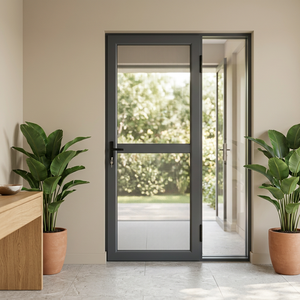
Aluminum Security Screen Door, Alu Frame 304 Stainless Steel Diamond Mesh, AntiTheft Lockable Custom Size for House Villa
View Product DetailsMaterial Metallurgy & Thermal Structural Engineering
Understanding profile alloy selection, thermal break technology, and weatherproofing sealing chemistry.
6063-T5 vs. 6063-T6 Extrusions
Architectural aluminium side doors demand precise dimensional stability and shear resistance. We specify 6063-T5 and T6 primary aluminum billets. T5 tempers offer optimal surface smoothness for architectural anodizing and powder coating, while T6 artificial aging delivers higher tensile strength (≥205 MPa) required for oversized high-wind utility side doors and hurricane-rated exterior entry systems.
Polyamide PA66 GF25 Thermal Breaks
Aluminum is a natural thermal conductor. To achieve U-factors below 1.4 W/m²K, our side door profiles incorporate PA66 GF25 (Polyamide 66 reinforced with 25% glass fiber) thermal barrier strips. This structural composite exhibits linear thermal expansion matching aluminum alloy, preventing frame warping, thermal bridge degradation, and interior condensation under severe freeze-thaw cycles.
Triple-Sealed EPDM Gasket Engineering
Air filtration and water ingress represent the most common failures in low-grade commercial side doors. Our side door assemblies feature continuous EPDM (Ethylene Propylene Diene Monomer) vulcanized rubber seals arranged in a triple-cavity pressure-equalized drainage architecture, guaranteeing superior airtightness (Class 4 ASTM E283) and watertightness (1050 Pa ASTM E331).
Side Door Performance Engineering Matrix
Empirical testing data and international standard compliance specs for project engineering verification.
| Performance Benchmark | International Standard Test Method | Wincraft Factory Specification | Engineering & Project Impact |
|---|---|---|---|
| Thermal Transmittance (U-Value) | ISO 10077-2 / NFRC 100 | Uw = 1.1 - 1.5 W/m²K (0.19 - 0.26 BTU/h·ft²·°F) | Reduces HVAC cooling/heating thermal loss by up to 42% in commercial build-outs. |
| Air Permeability / Leakage | ASTM E283 / EN 12207 | Class 4 (< 0.05 cfm/ft² at 75 Pa) | Prevents wind-driven dust, draft leakage, and unconditioned air intrusion. |
| Water Penetration Resistance | ASTM E331 / EN 12208 | 750 Pa - 1050 Pa (Static pressure head) | Eliminates rainwater leakage during severe typhoon-grade storm events. |
| Structural Wind Load | ASTM E330 / EN 12210 | Design Load: ±4500 Pa (Class C5 / P3) | Resists high-altitude dynamic wind loads in high-rise coastal developments. |
| Acoustic Sound Transmission | ASTM E90 / ISO 140-3 | STC 38 - 45 dB (With laminated insulated glass) | Attenuates urban traffic noise, industrial ambient sound, and airport perimeter noise. |
| Forced Entry / Security | PAS 24 / EN 1627 RC2 - RC3 | Multi-point steel gear hook locks & anti-drill plates | Provides high-level intruder protection for commercial and high-end residential side entries. |
Factory Advantage & OEM/ODM Integration
Why Tier-1 contractors, architects, and B2B distributors select Changsha Wincraft as their primary manufacturing partner.
20,000 m² Digital Production & CNC Machining
Our facility houses precision 5-axis CNC profile machining centers, automated double-head cutting saws, continuous corner-crimping units, and digital glass assembly bays. Every side door profile undergoes automated tolerance checks within ±0.2mm, guaranteeing seamless corner alignment, leak-proof structural joints, and zero field adjustment delays during site erection.
- Automated corner injection with dual-component structural sealant
- Integrated hardware milling for hidden hinges & multipoint mortise locks
- Clean-room automated insulated glass unit (IGU) line
24-Hour CAD Renderings & Engineering Support
We bridge the communication gap between architectural design and industrial production. Our in-house engineering squad reviews client project drawings, structural wind load calculations, and local thermal compliance codes to issue complete 24-hour CAD shop drawings and 3D bim renderings before die-cutting or profile extrusion.
- Custom profile die design & structural engineering validation
- Systemized color matching (AkzoNobel & Tiger PVDF finishes)
- Batch shipping schedules synchronized with site installation milestones
Future Procurement & Sourcing Trends (2025–2030)
Key technological shifts reshaping the global procurement landscape for aluminium side doors and fenestration systems.
1. Low-Carbon "Green" Aluminium Billets
With the implementation of the European Union CBAM (Carbon Border Adjustment Mechanism) and global ESG standards, importers are demanding low-carbon primary aluminium smelted using renewable hydropower. Wincraft offers certified low-carbon aluminium extrusions, reducing embodied carbon footprints across commercial build-outs.
2. Ultra-Narrow Sightline Architectures
Architectural design continues to favor minimalist aesthetic profiles with ultra-narrow frame sightlines (down to 15mm-25mm visible width) without sacrificing structural load capability. Sourcing strategies are prioritizing side doors with concealed outer frames, hidden drainage systems, and embedded track hardware.
3. Smart Sensor & Access Integration
Modern commercial side doors and high-end residential access entries are transforming into smart access hubs. Pre-wired profiles accommodating motorized multi-point lock actuators, hidden biometric scanners, face-recognition modules, and building management system (BMS) connectivity are seeing a 35% annual surge in wholesale specifications.
Manufacturing Development & Innovation Roadmap
How technical advancements in surface treatment, glass chemistry, and structural joining elevate product service life.
Surface Durability: Architectural PVDF vs. Anodizing Standards
Aluminum profile degradation in harsh coastal salt-spray or industrial environments is mitigated through advanced surface engineering. Changsha Wincraft employs two primary surface passivation technologies compliant with international quality norms:
Fluorocarbon PVDF Spray Coating (AAMA 2605)
Utilizes 70% Kynar 500 resin system applied in a multi-coat electro-static liquid line. Delivers exceptional resistance to intense ultraviolet radiation, acid rain, chemical pollutants, and color chalking. Backed by a 20-to-30-year warranty for high-exposure side entry installations.
Architectural Anodizing (Class I - 18μm+)
An electrochemical oxidation process that converts the aluminum surface into an integral metallic oxide layer. Provides extreme scratch resistance, metallic depth, and non-peeling performance in high-traffic commercial side doors subjected to heavy physical impact.
Comprehensive B2B Sourcing & Procurement FAQ
Direct answers from our engineering and export trade directors regarding orders, compliance, and logistics.
Ready to Source High-Performance Aluminium Side Doors Directly from China?
Connect directly with our engineering sales specialists. Receive customized project estimates, profile technical datasheets, sample kits, and 24-hour CAD shop drawings tailored to your procurement schedule.
Contact Us