Featured Custom OEM Glazed Doors & Architectural Windows
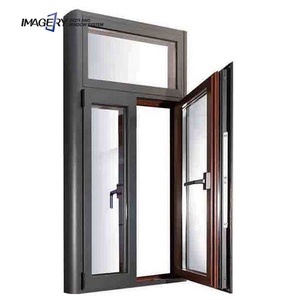
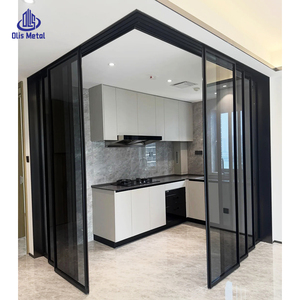
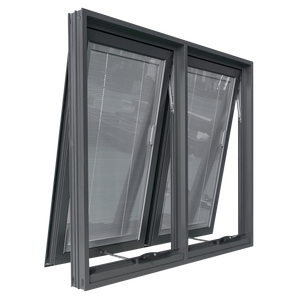
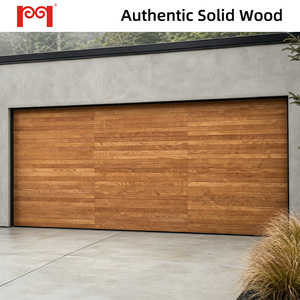
Explore our curated portfolio of heavy-duty aluminum glazed doors, acoustic window systems, and structural skylights engineered directly for global importers, trade distributors, and commercial contractors. Every unit is fully customizable across aluminum profile alloy grades, thermal break configurations, surface treatments, and high-performance insulated glass units (IGUs).
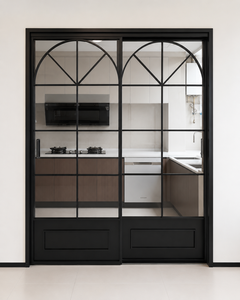
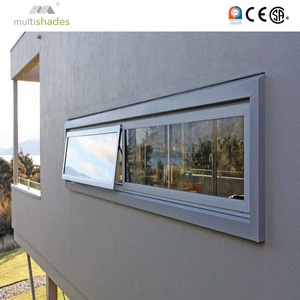
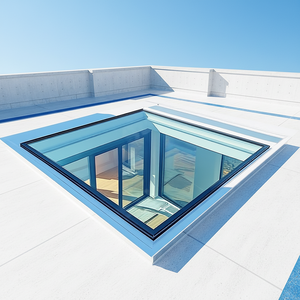
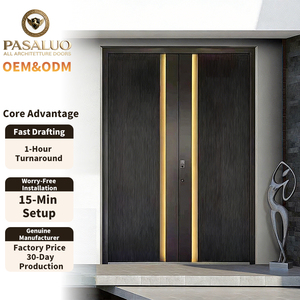
Global Procurement Trends in Custom OEM Aluminum Glazed Doors (2026–2030)
The international commercial fenestration sector is experiencing a structural pivot. Driven by dynamic building performance codes such as the European Union’s revised Energy Performance of Buildings Directive (EPBD) and North America’s IECC 2024 updates, architectural specifications for glazed doors have evolved beyond aesthetic structural framing. Modern overseas procurement managers, general contractors, and real estate developers now prioritize structural thermal integrity, carbon intensity metrics, wind-load pressure resilience, and supply chain transparency.
1. Decarbonization & Extreme Thermal Break Efficiency (PA66 GF25 Integration)
Standard aluminum extrusions exhibit high thermal conductivity ($k \approx 200 \text{ W/m}\cdot\text{K}$). To meet global net-zero operational standards, leading OEM glazed door factories utilize multi-cavity thermal break profiles insulated with 25% Glass Fiber Reinforced Polyamide (PA66 GF25) techno-polymer struts. These structural barriers reduce frame thermal transmission to lower system U-factors below $1.2 \text{ W/m}^2\cdot\text{K}$. Advanced configurations integrate bio-based expanded polyolefin foam insulation inserts within profile chambers to combat convection heat losses in sub-zero and tropical climate zones alike.
2. Ultra-Slim Sightlines & Architectural Mega-Panel Glazing
Contemporary architectural design demands maximum natural light penetration and visual continuity between indoor and outdoor spaces. The market has shifted heavily toward ultra-slim aluminum sliding and pivot doors featuring interlock sightlines as narrow as 18mm to 24mm. Achieving structural stability with minimal frame reveal requires high-tensile 6063-T6 or 6005A-T6 aluminum alloys capable of holding massive double or triple glazed insulated units (IGUs) weighing upwards of 400 kg per panel. Premium OEM exporters incorporate concealed stainless steel roller tracks and heavy-duty bogie carriages to deliver effortless sliding operation despite extreme mass.
3. Smart Fenestration & Automated Hardware Integration
Commercial and high-end residential developments are rapidly digitizing door operations. OEM door manufacturers are now tasked with integrating motorized concealed actuators, electromagnetic multi-point locks, access control keypads, and smart-home sensor systems directly inside aluminum profile extrusions during factory assembly. Furthermore, smart glass technologies—such as Electrochromic (EC) smart tinting and Polymer Dispersed Liquid Crystal (PDLC) switchable privacy glazing—are increasingly specified for executive boardrooms, luxury residential partition doors, and exterior patio portals.
4. Supply Chain De-risking & Direct Factory OEM Engineering
Relying on intermediary distributors often inflates fenestration sourcing budgets by 30% to 50% while adding communication latency for custom architectural modifications. Global buyers are increasingly forming direct OEM/ODM partnerships with vertically integrated Chinese factories capable of producing proprietary extrusion dies, executing precision 5-axis CNC machining, applying AAMA 2605 fluorocarbon finishes, and performing full unitized assembly under one roof.
Material Engineering & Quality Control Matrix for Custom Glazed Doors
Evaluating an OEM factory's manufacturing capabilities requires an understanding of metallurgical specifications, glass coating technologies, weather-sealing polymers, and surface coating standards. Below is a comprehensive engineering comparison detailing the technical parameters applied by elite aluminum glazed door exporters.
| Performance Parameter | Standard Commercial Grade | Architectural High-Performance OEM Grade | Impact / Extreme Climate OEM Grade |
|---|---|---|---|
| Aluminum Alloy Profile | 6063-T5 (Wall thickness: 1.4mm - 1.6mm) | 6063-T6 / 6005A-T6 (Wall thickness: 2.0mm - 3.0mm) | 6061-T6 High-Tensile Structural Alloy (3.0mm+) |
| Thermal Barrier System | Standard PVC Strips (14.8mm - 20mm) | PA66 GF25 Polyamide Struts (24mm - 34mm) | Multi-Chamber PA66 GF25 + Aerogel Foam Fillers |
| Insulated Glass Unit (IGU) | 5mm + 9A + 5mm Double Clear Tempered | 6mm Low-E + 12Ar (Argon) + 6mm Triple Glazed | 8mm SGP Laminated Impact Glass + Low-E IGU |
| System Thermal Value (U-Factor) | $2.4 - 3.0 \text{ W/m}^2\cdot\text{K}$ | $1.1 - 1.6 \text{ W/m}^2\cdot\text{K}$ | $< 0.8 \text{ W/m}^2\cdot\text{K}$ (Passive House Standard) |
| Acoustic Insulation (STC Rating) | 28 dB - 32 dB | 38 dB - 42 dB (Acoustic Interlayer) | 45+ dB (Asymmetric Laminated Vacuum Glass) |
| Surface Finishing Compliance | Standard Powder Coating (AAMA 2603) | Super Durable Powder / Anodized (AAMA 2604 / Class 15) | PVDF Fluorocarbon 3-Coat (AAMA 2605 / 20-Yr Coastal) |
| Water Tightness & Air Infiltration | 300 Pa / Class 2 | 600 Pa / Class 4 (ASTM E331 & E283) | 700+ Pa Hurricane Waterproof Threshold Seal |
Why Engineering Procurement Teams Partner with Changsha Wincraft
Changsha Wincraft Aluminum Window Tech Co., Ltd. operates as a specialized manufacturer and global exporter of high-precision aluminum fenestration systems. We combine digital architectural engineering with lean automated production to supply bespoke project orders across 80+ countries.
24-Hour BIM & CAD Shop Drawings
Our in-house facade engineering group analyzes architectural elevation plans and delivers technical CAD cross-sections, structural wind load calculations, and 3D BIM models within 24 hours to accelerate client project approvals.
Full Compliance & Global Certifications
Wincraft door and window systems are tested to meet rigorous international building codes, including Florida Product Approval (TAS 201/202/203 Impact Testing), Australian AS2047 standard, European CE mark, and NFRC energy ratings.
Proprietary Die & Tooling OEM Development
We provide full ODM support for custom architectural systems, developing custom profile extrusion dies, specialized weather-stripping channels, and unique hardware mounting geometry tailored to client private-label specifications.
Rigorous 100% Quality Assurance
Every manufactured unit undergoes strict dimensional checks, corner-weld torque testing, air/water chamber pressure testing, and surface finish thickness audits prior to protective export crating.
Streamlined Global Logistics & Lead Times
With a standardized ~4-week production lead time for customized orders, we manage complete export packaging, ocean container loading, customs paperwork, and door-to-door delivery logistics across major global ports.
Frequently Asked Questions by B2B Buyers & Procurement Engineers
Here are comprehensive answers to the most critical technical and operational questions asked by overseas developers, architects, and fenestration importers evaluating custom aluminum glazed door factories.
Q: What distinguishes custom OEM extrusion profiles from off-the-shelf commercial aluminum profiles?
Custom OEM profiles are engineered around structural load requirements, specific glazing pocket depths, thermal break geometry, and regional weather extremes. Unlike off-the-shelf profiles—which offer fixed wall thicknesses (often sub-standard 1.4mm) and generic seal grooves—custom OEM extrusions utilize high-tensile 6063-T6 or 6005A-T6 alloys with reinforced wall profiles (up to 3.0mm+ at structural connection points). This enables precise integration of multi-point locking systems, concealed hinges, heavy-duty rollers, and multi-chamber PA66 GF25 polyamide thermal barriers tailored to the project's exact structural engineering calculations.
Q: How do custom OEM aluminum glazed door factories achieve high Acoustic STC ratings for urban developments?
Acoustic attenuation (measured via Sound Transmission Class, STC) is achieved through a combination of profile mass, double/triple EPDM continuous weather-stripping gaskets, and specialized Insulated Glass Unit (IGU) construction. To achieve ratings above STC 40 dB, our factory utilizes asymmetric glass thickness build-ups (e.g., 6mm outer pane + 12mm Argon space + 8.76mm acoustic PVB laminated inner pane). The asymmetric glass panes disrupt soundwave resonance across different frequency bands, while multi-seal compression profiles eliminate airborne sound leaks around door perimeter sashes.
Q: What surface treatment specification is recommended for aluminum doors installed in extreme coastal zones?
For coastal installation within 5 km of salt water, standard powder coating (AAMA 2603) is prone to filiform corrosion and chalking under UV exposure. We mandate AAMA 2605 compliant Fluorocarbon PVDF (Polyvinylidene Fluoride) 3-coat coating systems or Class 20 Anodized finishes (film thickness $\ge 20 \mu\text{m}$). PVDF coatings consist of 70% fluoropolymer resins, providing outstanding resistance to salt spray (tested past 4,000 hours under ASTM B117 standards), chemical atmospheric pollutants, and extreme thermal expansion cycle cracking.
Q: How does Changsha Wincraft calculate structural wind pressure load compliance for hurricane zones?
Our engineering team performs structural finite element analysis (FEA) based on the project's design wind pressure requirements (e.g., ASCE 7-22 in North America or Eurocode 1). We analyze profile moment of inertia ($I_x$, $I_y$), mullion deflection limits ($L/175$ or $L/240$), glass center-of-glass stress, and anchor point fastener shear capacity. For hurricane-prone territories like Florida or the Caribbean, we supply structural steel-reinforced mullions and laminated impact glass rated to withstand Design Pressures exceeding 5,000 Pa (DP50 to DP90+ ratings).
Q: What is the standard procedure and lead time for developing proprietary OEM profile extrusion dies?
Developing proprietary OEM extrusion dies follows a 4-step technical workflow: (1) 24-hour CAD drawing cross-section optimization and sign-off; (2) Precision CNC die cutting and hardening (typically takes 10 to 14 calendar days); (3) Initial extrusion sample pressing, surface finishing, and laboratory dimensional testing; (4) Sample shipment to the client for physical approval. Once the die sample is approved, mass profile extrusion enters our main production pipeline, maintaining our standard ~4-week order turnaround time.
Q: What glass thermal insulation configurations achieve system U-factors below 1.0 W/m²K?
To break the $1.0 \text{ W/m}^2\cdot\text{K}$ threshold (equivalent to Passive House performance), door systems require a triple-glazed double-cavity IGU configured with two soft-coat Low-E surfaces (Positions #2 and #5), warm-edge composite glass spacers (e.g., Technoform or Swiss-spacer), 90%+ Argon gas chamber fills, and a thermal-break aluminum profile featuring a minimum 34mm PA66 GF25 insulation zone filled with expanded polyolefin insulation foam.
Q: How does direct factory-direct OEM procurement reduce commercial project costs compared to local fabricators?
Local regional fabricators typically purchase raw profile lengths, hardware kits, and glass panels from multiple tier-3 distributors, compounding markups at each stage. By sourcing directly from an integrated OEM manufacturer like Wincraft, you eliminate middleman margins while leveraging our bulk purchasing power for primary aluminum ingots, German-engineered hardware (Roto, Siegenia, HOPPE), and processed glass. Furthermore, pre-assembled unitized frames drastically cut down expensive site labor installation hours for project contractors.
Q: What export packaging standards are implemented to eliminate sea freight glass breakage and profile scratching?
Every finished door frame and glass panel is wrapped in protective polyethylene anti-scratch films, edged with high-density EPDM corner guards, and vacuum-sealed in moisture-barrier plastic wrap. Heavy units are secured inside fully enclosed heat-treated ISPM-15 compliant plywood crates or steel-stillages equipped with rubber isolation pads. Crates are anchored within ocean containers using heavy-duty nylon webbing and steel turnbuckles to prevent load movement during long-distance maritime transport.
Ready to Optimize Your Project's Fenestration Specification?
Partner with Changsha Wincraft Aluminum Window Tech Co., Ltd. Share your architectural drawings, elevation schedules, or tender requirements with our senior engineering team to receive a detailed technical proposal and factory-direct quote within 24 hours.
Get a Quote