Engineered Aluminum Window & Door Solutions
Explore our precision-extruded aluminum pocket sliding systems, thermal break windows, and architectural glass partitions built to international building codes.
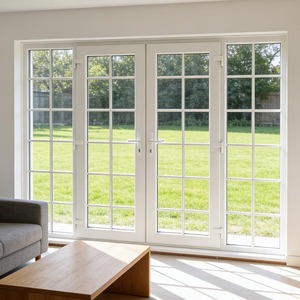
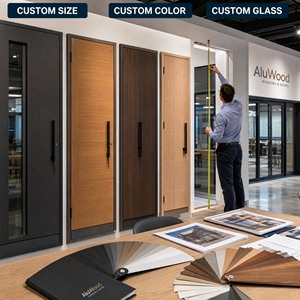
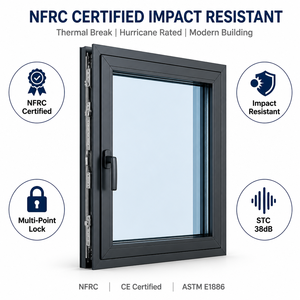
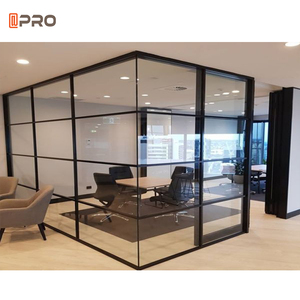
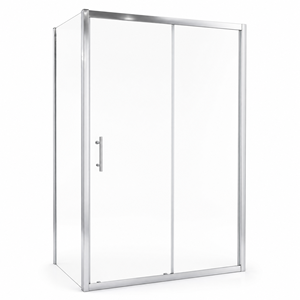
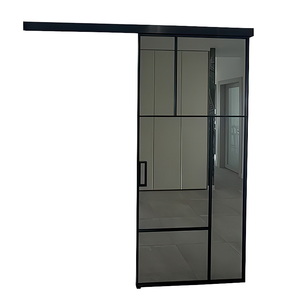
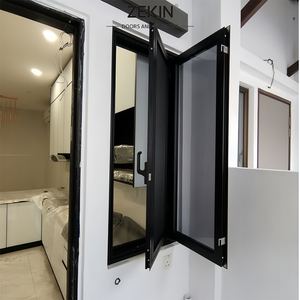
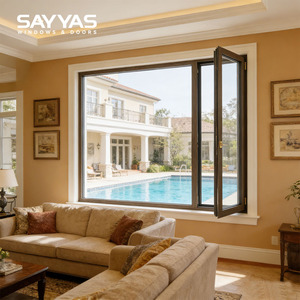
Architectural Engineering Whitepaper: Custom OEM Aluminum Pocket Door Fabrication & Global Sourcing
Modern architectural design is increasingly defined by spatial fluidity, structural minimalism, and invisible transitions between indoor and outdoor environments. At the core of this movement is the custom OEM aluminum pocket door system—an advanced fenestration mechanism that allows massive sliding glass leaves to disappear entirely into cavity walls. For B2B buyers, architectural specifiers, real estate developers, and fenestration importers, selecting a qualified manufacturing exporter requires an in-depth understanding of structural extrusion alloys, hardware kinetic fatigue ratings, cavity weatherization engineering, and thermal barrier integrity.
1. Metallurgy & Structural Extrusion Physics (6063-T5 vs. 6061-T6)
The structural stability of custom pocket doors depends primarily on the quality of aluminum alloy extrusions. Standard residential doors frequently utilize lower-grade alloys that warp under wind loads or thermal expansion. Leading export manufacturers mandate 6063-T5 or 6061-T6 architectural grade aluminum extrusions with profile wall thicknesses ranging from 2.0mm to 3.0mm depending on opening span requirements.
Aluminum 6063-T5 offers exceptional surface finishing capabilities, ideal for complex anodizing ($\ge 15\mu m$) and electrostatic powder coatings ($\ge 60\mu m$). For ultra-large panoramic pocket doors exceeding 3.5 meters in height, 6061-T6 extrusions are specified due to their superior tensile strength (yield strength $\ge 240\text{ MPa}$), preventing structural deflection ($L/175$ limit under severe wind loads) when configured with triple-pane insulated glass units (IGUs).
2. Pocket Cavity Engineering & Thermal Barrier Insulation
Unlike standard surface-mounted sliding doors, pocket door systems require integrated framing within the structural wall cavity. This introduces critical engineering challenges regarding thermal bridging, air infiltration, and acoustic transmission. Premium OEM pocket door factories utilize multi-chambered thermal break profiles featuring PA66GF25 (Polyamide 66 reinforced with 25% glass fiber) insulating strips.
By structurally separating the interior and exterior aluminum profiles, thermal conductivity ($U$-value) is reduced from over $5.0\text{ W/m}^2\text{K}$ in uninsulated frames down to $\le 1.4\text{ W/m}^2\text{K}$. Furthermore, pocket cavities are vulnerable to draft passage; OEM suppliers solve this by integrating continuous triple EPDM (Ethylene Propylene Diene Monomer) gasket seals, magnetic weatherstripping, and integrated brush seals along the pocket jamb to maintain airtightness (ASTM E283 compliance).
Technical Performance & Specification Comparison Matrix
To assist international procurement managers and project engineers, the matrix below details technical performance benchmarks across primary OEM aluminum door and window configurations manufactured by export-focused Chinese factories.
| System Category | Profile Wall Thickness | Glazing Configuration | Acoustic Rating (STC) | Thermal Transmittance ($U$-value) | Standard Compliance |
|---|---|---|---|---|---|
| Minimalist Aluminum Pocket Door | 2.0mm – 3.0mm (6063-T5) | 8mm + 12Ar + 8mm Double Tempered | STC 38 – 42 dB | 1.4 – 1.8 W/m²K | CE / ISO9001 / NFRC |
| Thermal Break Casement Window | 1.4mm – 2.0mm (6063-T5) | 5mm + 16Ar + 5mm Low-E Glazed | STC 35 – 40 dB | 1.1 – 1.5 W/m²K | NFRC / CE / AS2047 |
| Heavy-Duty Architectural Pivot Door | 3.0mm – 4.0mm (6061-T6) | 10mm + 14Ar + 10mm Laminated | STC 40 – 45 dB | 1.6 – 2.0 W/m²K | ANSI / CE Certified |
| PHI Certified Composite Alu-Wood | 2.2mm Aluminum + Solid Wood | 4mm + 18Ar + 4mm + 18Ar + 4mm Triple | STC 42 – 48 dB | 0.79 – 1.0 W/m²K | PHI (Passivhaus Institute) |
| Hurricane Impact Sliding Window | 2.5mm Reinforced (6063-T6) | 6mm + 1.52PVB + 6mm Laminated | STC 36 – 40 dB | 1.8 – 2.2 W/m²K | ASTM E1886 / Florida Product Approval |
Global Sourcing & Procurement Trends (2026–2030)
The global fenestration industry is undergoing a structural transition driven by stringent energy consumption mandates, rapid urbanization, and modern architectural aesthetics. Procurement executives sourcing custom aluminum pocket doors and high-performance windows from Chinese export factories must align their product roadmaps with five critical emerging trends:
1. Ultra-Slim Sightlines & Micro-Frames
Architects are demanding vertical mullion sightlines under 20mm. OEM factories are utilizing concealed structural bonding silicone (structural glazing) to allow glass to bear structural loads while hiding framing inside wall pockets.
2. Smart Motorization & IoT Integration
Commercial and luxury residential buyers require concealed motorized drive systems with brushless DC motors, soft-start/soft-stop physics, radar safety sensors, and smart home connectivity (Zigbee/Matter/RS485).
3. Zero-Threshold Flush Floor Transitions
Universal accessibility (ADA compliance) and seamless indoor-outdoor flooring require flush threshold tracks equipped with heavy-duty stainless steel drainage channels to prevent water backflow during storm events.
Furthermore, sustainability mandates across the European Union and North America are forcing importers to verify raw material origins. Leading OEM exporters are incorporating certified low-carbon primary aluminum billets produced via hydropower extrusion plants, reducing the embodied carbon footprint from $18\text{ kg CO}_2\text{/kg Al}$ down to under $4\text{ kg CO}_2\text{/kg Al}$. Importers specifying thermal break profiles with multi-cavity insulation strips can achieve zero-energy building standards required for Passive House certification.
Key Technical Criteria for Evaluating OEM Aluminum Pocket Door Suppliers
When selecting a custom OEM manufacturing partner in China, technical audit teams must look beyond unit price and evaluate engineering reliability, factory quality assurance, and mechanical hardware fatigue limits. Pocket doors operate under dynamic shear forces and hidden mechanical tolerances; minor manufacturing flaws lead to track binding, panel sag, and costly call-backs once enclosed in drywalls.
Overhead Carrier Track & Roller Kinetic Testing
Because pocket doors suspend heavy insulated glass units inside drywall cavities, the overhead track carrier assembly is the single most important mechanical component. Professional factories specify extruded heavy-gauge aluminum top tracks paired with stainless steel carriage bodies housing precision ball-bearing rollers coated in high-molecular DuPont Delrin or Kevlar-reinforced nylon.
- Load Capacity: Top track assemblies must be rated for minimum $200\text{ kg}$ to $350\text{ kg}$ continuous static load per panel.
- Fatigue Testing: Hardware must undergo dynamic cycle testing exceeding 100,000 open/close cycles under full design load (compliant with EN 1527 and ANSI/BHMA A156.14 standards).
- Bi-Directional Soft-Closing Dampers: High-grade hydraulic soft-closers prevent panel slamming, protecting structural glass edges and preventing wall cavity vibration.
Water Management & Cavity Moisture Protection
External pocket door installations require custom floor track engineering to handle rain runoff. OEM factories must provide integrated heavy-duty sub-sill drainage pans crafted from stainless steel or heavy aluminum profiles with non-return check valves. This ensures wind-driven rain (tested to ASTM E331 at $\ge 700\text{ Pa}$) drains away from the interior pocket cavity, preventing dry-rot, mold, and flooring damage.
Enterprise Capabilities: Changsha Wincraft Aluminum Window Tech Co., Ltd.
As a specialized manufacturer and global exporter of high-end aluminum doors, windows, sunrooms, and garden pavilions, Changsha Wincraft Aluminum Window Tech Co., Ltd. provides end-to-end fenestration solutions for real estate developers, contractors, architectural firms, and wholesale importers across more than 80 countries.
Integrated OEM/ODM Engineering
From custom profile die development to custom hardware integration, our technical engineering team translates architect sketches into shop drawings and BIM models within 24 hours.
Rigorous Quality Assurance
Operating out of a modern 20,000㎡ industrial complex, every profile cut, corner crimp, EPDM seal layout, and insulated glass unit undergoes 100% full-process quality control before export packing.
Global Export Logistics
We handle heavy-duty reinforced wooden crate packaging, moisture-barrier wrapping, customs declaration, and direct container shipping with a standard 4-week production lead time.
Whether you require a single luxury villa window-door package or thousands of square meters for commercial high-rise projects, Wincraft maintains single-source accountability. By combining advanced CNC profile machining, robotic corner key insertion, automated double-seal glazing, and international certification compliance (NFRC, CE, PHI, ISO9001), we deliver architectural fenestration directly from our production floors to your job site.
Frequently Asked Questions (FAQ) for B2B Importers & Procurement Teams
Clear, direct answers regarding custom OEM manufacturing, production lead times, shipping logistics, structural engineering, and building code compliance.
Ready to Upgrade Your Fenestration Sourcing?
Partner directly with Changsha Wincraft Aluminum Window Tech Co., Ltd. for factory-direct custom OEM/ODM pocket doors, thermal break windows, and architectural glass systems. Send your project architectural drawings or product specifications to our engineering team today.