Featured OEM/ODM Large-Format Aluminium Systems
Engineered for commercial high-rises, luxury villa developments, and architectural projects requiring extreme structural loads and superior energy efficiency.
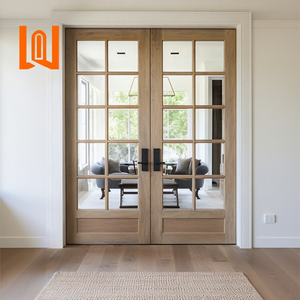
Wholesale Resort French Doors & Aluminium Wood Casement Systems
- Thermal Break Al-Wood Composite Profiles
- Multi-Point German Siegenia Locking Hardware
- Triple EPDM Weatherstrip Seal Integrity
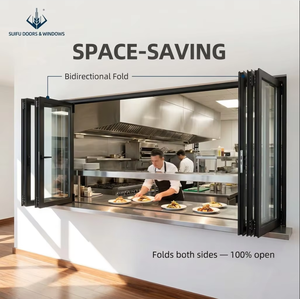
Kitchen Servery Horizontal Folding Seamless Window System
- Space-Saving Folding Sash Mechanism
- Heavy-Duty Top Guide & Stainless Steel Rollers
- Double Tempered Low-E Insulated Glazing
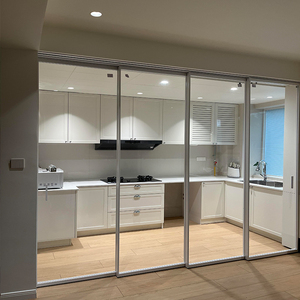
Ultra Slim Multi-Panel Linked Aluminium Sliding Door System
- 20mm Minimalist Interlock Sightline Profile
- Waterproof & Windproof Track Drainage
- Linked Telescopic Synchronized Sash Action
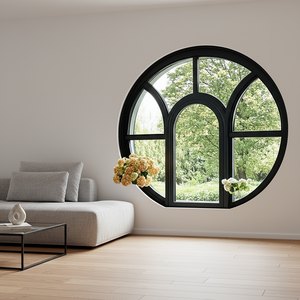
Custom Double Tempered Arch & Round Picture Windows
- Precision Curved Extrusion Bending Tech
- Structural Argon-Filled Double/Triple Glazing
- Architectural Villa Facade Specification
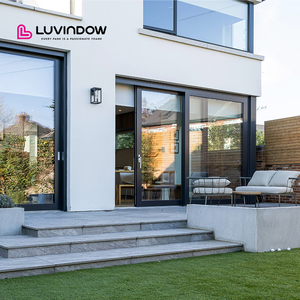
Energy-Efficient Black Alloy Sliding Patio Door System
- Matte Black Fluorocarbon PVDF Finish
- Polyamide PA66 GF25 Insulation Thermal Break
- High Structural DP Wind Load Resistance
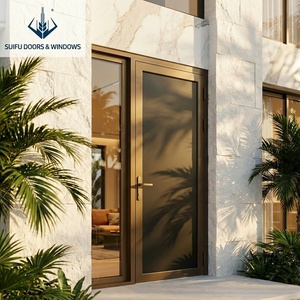
AS2047 Certified Hurricane-Proof Aluminium Entry Doors
- Compliant with AS2047 & NFRC Standards
- SGP Laminated Impact-Resistant Safety Glass
- Heavy-Duty 3D Adjustable Hinge Bearings
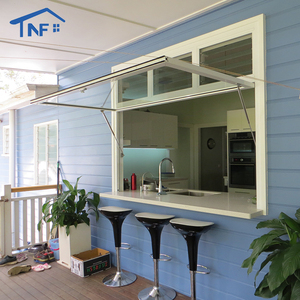
Gas Strut Counterbalanced Awning Window System
- Pneumatic Gas Strut Opening Assist
- 90-Degree Full Clear Opening View
- Concealed Multi-Point Compression Latching
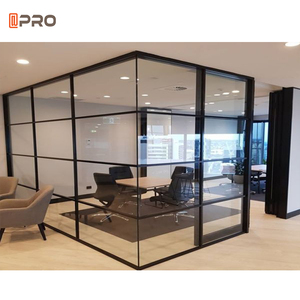
Custom Acoustic Mobile Aluminium Glass Partition Walls
- Acoustic STC Rating Up to 48 dB Isolation
- Modular Floor-to-Ceiling Track System
- Anodized 6063-T6 Structural Aluminium Frame
Engineering Large-Span Architectural Glass: Structural Dynamics, Thermal Physics & Manufacturing Precision
In high-end architectural design, the global demand for OEM/ODM aluminium big windows and floor-to-ceiling glass wall systems has grown rapidly. Modern luxury residential villas, commercial towers, and coastal hospitality resorts increasingly specify expansive glazed spans that maximize natural daylighting and deliver unobstructed panoramas. However, scaling aluminium fenestration to heights exceeding 3.5 meters and widths beyond 6 meters presents immense structural engineering, thermodynamic, and mechanical challenges.
As a premier global exporter, Changsha Wincraft Aluminum Window Tech Co., Ltd. integrates structural finite element analysis (FEA), advanced thermography, and precision alloy extrusion to produce fenestration systems that exceed international building standards (including AS2047, NFRC, and CE certifications). This technical whitepaper delves into the engineering principles governing large-span architectural windows.
When glass surface area expands exponentially, wind load pressure (Design Pressure / DP rating) generates massive bending moments across vertical mullions and horizontal transoms. To avoid structural failure or seal degradation, our engineers utilize high-tensile 6063-T6 and 6060-T66 aluminium extrusions reinforced with internal steel stiffeners. By optimizing profile cross-sectional geometries, we achieve a Moment of Inertia ($I_x$) capable of maintaining deflection limits within $L/175$ under wind pressures exceeding 4500 Pa (equivalent to Category 5 hurricane force winds).
Aluminium exhibits high thermal conductivity ($\approx 200 \text{ W/m}\cdot\text{K}$). In large window formats, unmitigated metal frames create vast thermal bridges, causing rapid energy loss and interior condensation. We counter this by inserting precision-engineered Polyamide PA66 GF25 (25% glass fiber reinforced) thermal break strips ranging from 24mm to 39mm in width. Combined with multi-cavity insulation foam inserts, our big window profiles achieve frame thermal transmittance ($U_f$) values as low as $1.1 \text{ W/m}^2\cdot\text{K}$.
| Engineering Parameter | Standard Commercial Window | Wincraft Big Window OEM Specification | Architectural Impact & Benefit |
|---|---|---|---|
| Profile Alloy & Temper | Standard 6063-T5 Aluminium | High-Tensile 6063-T6 / 6060-T66 Alloy | +35% higher yield strength; prevents frame twisting under heavy loads |
| Maximum Sash Weight Capacity | 120 kg – 180 kg | 400 kg – 1000 kg (Heavy Duty Rollers) | Enables massive 4m+ height single sliding glass panels |
| Thermal Insulation ($U_w$) | 2.4 – 3.0 W/m²K | 0.8 – 1.3 W/m²K (Passivhaus Compliant) | Drastically reduces HVAC energy consumption in extreme climates |
| Acoustic Isolation (STC) | 28 dB – 32 dB | 42 dB – 48 dB (Triple Laminated IGU) | Eliminates urban traffic noise & airport low-frequency hums |
| Interlock Sightline Width | 50 mm – 85 mm | 18 mm – 25 mm Ultra-Slim Minimalist Profile | Delivers 98% uninterrupted glass transparency & modern aesthetics |
Big windows demand advanced structural glass bonding. We deploy structural silicone sealants (such as Dow Corning 983 two-component silicone) applied in climate-controlled cleanrooms to anchor double and triple-glazed Insulated Glass Units (IGUs) directly to the aluminium matrix. Additionally, our custom EPDM vulcanized continuous gasket seals provide dynamic elasticity, accommodating thermal expansion/contraction cycles ($\Delta T \ge 60^\circ\text{C}$) and seismic story drift without glass stress fractures or seal degradation.
Future Procurement Trends for Large Architectural Aluminium Systems (2025–2030)
As global building codes enforce stringent zero-carbon mandates and architects push the boundaries of minimalist aesthetics, the procurement landscape for large aluminium fenestration is undergoing a fundamental transformation. B2B buyers, project developers, and importers must align their supply chains with the following macro trends:
1. Ultra-Narrow Sightlines with Concealed Sub-Frames
Architects are phasing out bulky structural mullions in favor of fully concealed outer frames embedded within floors, ceilings, and side walls. The procurement focus is shifting toward ultra-slim interlocks ($< 20\text{mm}$) that handle immense structural wind shear while offering seamless flush threshold transitions.
2. Integrated Smart Glazing & Automated Actuation
Future big window systems are no longer passive boundaries. Commercial buyers are increasingly demanding OEM integration of electrochromic dynamic smart glass (PDLC tinting), embedded micro-sensors for humidity and wind velocity, and concealed motorized linear actuators synchronized with Smart Home / BMS platforms.
3. Low-Carbon Recycled Aluminium Extrusions
Environmental Product Declarations (EPD) and LEED v4.1 certifications are becoming non-negotiable in North American and European procurement contracts. Future-focused exporters must utilize primary aluminium smelted via hydropower or certified post-consumer recycled alloys to lower embodied carbon footprint below $4.0\text{ kg CO}_2/\text{kg Al}$.
Key Technological Developments in Big Window Manufacturing
Overcoming the physical limitations of oversized glass requires relentless innovation in materials science and hardware engineering. Key technological advancements pioneered at the factory level include:
Warm-Edge Spacer & TPS Glazing Engineering
Traditional aluminium glass spacers act as thermal drain channels at glass perimeter edges. Advanced big window manufacturing incorporates Thermo Plastic Spacers (TPS) or Swisspacer Ultimate composites infused with silicone desiccants. This technology reduces edge thermal conductivity by up to 65%, completely eliminating perimeter condensation risk.
SGP Structural Interlayer Lamination
Standard PVB interlayers can sag or delaminate when subjected to heavy, thick glass loads over time. Modern storm-resistant and hurricane-proof big doors employ DuPont SentryGlas (SGP) ionoplast interlayers. SGP is 100 times stiffer and 5 times tougher than conventional PVB, ensuring structural post-breakage glass integrity even under extreme blast or wind impacts.
Concealed Multi-Point Heavy-Duty Gearbox Locking
Securing a 4-meter-tall sash against burglar intrusion and water penetration requires high-load multi-point locking. Next-generation hardware integrates stainless steel shoot bolts and drive gears directly inside the profile c-groove cavity, distributing compression force uniformly along all four frame edges.
Why Partner with Changsha Wincraft Aluminum Window Tech Co., Ltd.?
As a recognized leader in custom architectural fenestration, Changsha Wincraft Aluminum Window Tech Co., Ltd. bridges the gap between complex architectural visions and industrial production reality. Operating a 20,000 square meter digital manufacturing plant, Wincraft serves real estate developers, contractors, and wholesale distributors in over 80 countries.
Full OEM/ODM Private Labeling
Custom die extrusion design, specialized profile wall thicknesses (1.6mm to 3.0mm+), custom powder coating (RAL color matching), anodizing, and private label box packaging tailored to your brand identity.
24-Hour Technical Rendering Turnaround
Our in-house structural engineering department communicates directly with architects, delivering accurate 2D CAD shop drawings, 3D BIM models, and structural calculation reports within 24 hours.
~4-Week Standard Production Lead Time
Streamlined production planning, automated 5-axis CNC machining, and automated double-head cutting saws enable rapid manufacturing turnarounds without compromising precision tolerances ($\pm 0.2\text{mm}$).
56-Point Factory QC Audit Protocol
Every fenestration batch undergoes air infiltration (ASTM E283), water penetration (ASTM E331), wind load structural testing (ASTM E330), and coating thickness checks before container loading.
Global Logistics & Export Packaging
Full export shipping support, including custom heavy-duty steel A-frame glass racks, moisture-barrier shrink wrapping, customs declaration clearance, and door-to-door delivery options.
Comprehensive Hardware Partnerships
Direct integration with premium global hardware brands including Siegenia, Hoppe, Sobinco, GU, and CMECH to ensure long-term mechanical reliability and smooth operational feel.
Frequently Asked Questions by Global Importers & Engineers
Key technical considerations, structural sizing limits, lead times, and customs parameters for B2B fenestration sourcing.
Do you accept complete custom OEM/ODM orders based on project architectural drawings?
How do you calculate structural mullion sizing and wind pressure ratings for big windows?
What is the typical production lead time and logistics turnaround for overseas projects?
How do thermal breaks and double Low-E IGUs perform in extreme tropical vs. sub-zero climates?
What export packaging protocols are used to guarantee glass and frame protection during ocean freight?
Can Wincraft provide local building code compliance certification (e.g., AS2047, NFRC, CE)?
Ready to Engineer Your Big Window & Architectural Door Package?
Consult directly with Changsha Wincraft's fenestration engineering team. Submit your architectural CAD drawings or project requirements to receive a full structural review, system recommendation, and factory-direct quotation within 24 hours.
Get Catalog