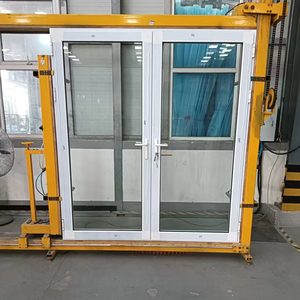
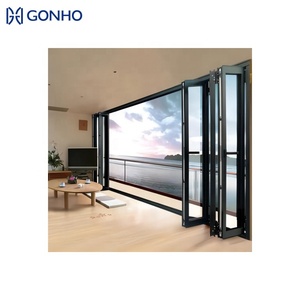
OEM/ODM Aluminium Entrance Doors Manufacturers & Supplier

Architectural Engineering Whitepaper & Global B2B Procurement Guide
Product Showcase

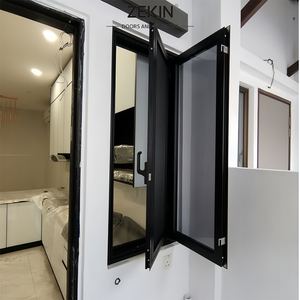
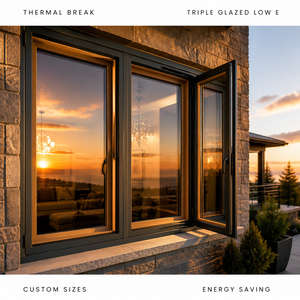
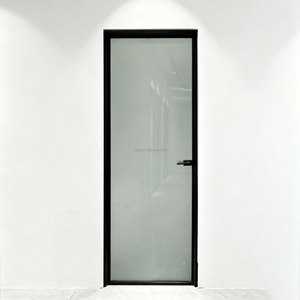
Precision-Engineered OEM/ODM Aluminium Doors & Windows

Explore our flagship architectural fenestration systems manufactured in accordance with strict international building codes (NFRC, CE, EN 14351-1, AAMA). Every system is tailored for commercial developers, contractors, and B2B importers.

Enterprise Strengths

Changsha Wincraft Aluminum Window Tech Co., Ltd.

As a leading integrated manufacturer and exporter in China, Wincraft combines cutting-edge profile extrusion, mechanical precision processing, thermal break assembly, and strict quality control under one roof.

20+
Years Industry Expertise
20,000m²
Modern Manufacturing Base
80+
Global Export Markets
24h
Shop Drawing Turnaround

Full OEM & ODM Customization

We provide comprehensive private labeling, custom profile extrusion dies, hardware integration, and specialized packaging customized to your market's aesthetic and structural standards.

Send an Inquiry

Rigorous Quality Assurance Protocol

Every fenestration unit undergoes 6-stage testing: raw material spectrographic analysis, wall thickness check, salt-spray coating validation, air/water tightness testing, and mechanical cycle tests.

Send an Inquiry

Rapid Production Lead Times

Streamlined production planning enables a standard 4-week manufacturing turn-around for custom project orders, with batch container shipping scheduled precisely to your job site schedule.

Send an Inquiry
Engineering Whitepaper

Architectural Science of Modern Aluminium Entrance Doors

An in-depth technical analysis for architects, structural engineers, and global fenestration procurement teams.

1. Material Metallurgy & Profile Extrusion Physics

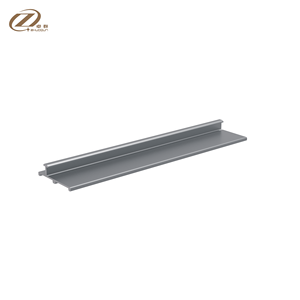
The structural performance of architectural entrance doors relies heavily on the metallurgical integrity of the extruded aluminium alloy. Premium commercial manufacturers strictly specify 6063-T5 and 6063-T6 architectural aluminium alloys. Alloy 6063 delivers superior extrusion feasibility, surface finish quality, and excellent corrosion resistance. T6 heat tempering increases ultimate tensile strength to over 205 MPa, rendering it highly resistant to dynamic wind pressures and mechanical deflection.

Wall thickness plays a critical role in system rigidity. While standard residential interior doors utilize 1.2mm to 1.4mm profiles, heavy-duty exterior entrance doors, bi-fold systems, and hurricane-impact fenestration demand nominal wall thicknesses between 2.0mm and 3.0mm in primary load-bearing profile chambers. This ensures structural compliance with international standards such as AAMA/WDMA/CSA 101/I.S.2/A440 and EN 14351-1.

2. Thermal Break Engineering & Energy Efficiency Ratings

Aluminium possesses a high intrinsic thermal conductivity ($k \approx 160-200\text{ W/m}\cdot\text{K}$). To mitigate heat transfer and prevent severe energy loss, modern entrance door systems incorporate advanced Polyamide Thermal Barriers (PA66-GF25). Reinforced with 25% glass fiber for matching thermal expansion coefficients with aluminium, these polyamide strips structurally decouple the exterior and interior aluminium profile chambers.

Thermal System Configuration Overall U-Factor Range Polyamide Strip Width Primary Application Environment
Non-Thermal Break Standard Profile 3.5 – 5.0 W/m²K N/A Interior partitions, mild climate interior doors
Standard Thermal Break (Double Glazed) 1.8 – 2.4 W/m²K 14.8mm – 24mm Standard residential & commercial entryways
High-Insulation (HI) Multi-Chamber System 1.2 – 1.6 W/m²K 28mm – 34mm Cold climates, energy-star commercial buildings
Passive House Certified (Triple Low-E + Aerogel) ≤ 0.8 W/m²K ≥ 39mm + Insulation Foam Extreme arctic climates, net-zero carbon projects

3. Acoustic Isolation & Air/Water Tightness Performance

Entrance doors in urban or hospitality environments must effectively insulate against noise pollution. Noise reduction is achieved through a multi-faceted approach: multi-chamber cavity designs, double/triple insulated glass units (IGU) featuring acoustic PVB or SGP interlayers, and triple-continuous perimeter sealing using EPDM (Ethylene Propylene Diene Monomer) synthetic rubber gaskets. Unlike lower-grade PVC seals, EPDM gaskets maintain elasticity across temperature extremes (-40°C to +120°C), guaranteeing long-term airtightness (EN 12207 Class 4) and watertightness under driving wind-rain conditions (EN 12208 Class 9A/E750).
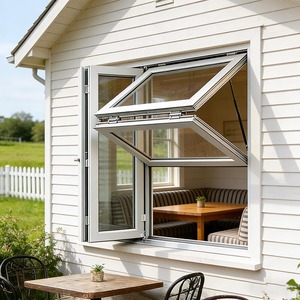
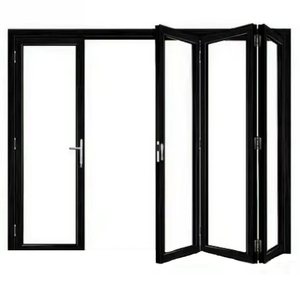
Market Insights

Future Procurement Trends in Architectural Aluminium Doors

Strategic analysis of industry shifts, technological innovations, and global procurement patterns shaping the fenestration landscape over the next decade.

1. Low-Carbon Recycled Aluminium & EPD Compliance

Global architectural specifications increasingly require Environmental Product Declarations (EPD) and Aluminium Stewardship Initiative (ASI) certification. B2B buyers are shifting procurement toward suppliers using primary aluminium smelted with renewable hydro-power or incorporating ≥75% recycled scrap to hit corporate carbon neutrality targets.

Send an Inquiry

2. Ultra-Narrow Sightlines & Heavy-Load Pivot Doors

Modern luxury architectural designs demand minimal sightlines (interlock profiles under 20mm width) combined with monumental structural dimensions. Entrance doors are shifting toward heavy-duty, offset pivot hardware capable of supporting single door leaf weights up to 500kg and heights exceeding 4 meters with effortless manual or motorized operation.

Send an Inquiry

3. Smart Access & Mechatronic Lock Integration

Traditional mechanical locking mechanisms are rapidly giving way to motorized multi-point locks integrated into smart home automation protocols (Zigbee, Matter, KNX). Modern OEM entrance doors come pre-wired for biometric fingerprint scanners, facial recognition cameras, and electronic drop-down threshold seals.

Send an Inquiry
Procurement FAQ

Frequently Asked Questions by B2B Buyers & Importers

Direct answers from our engineering and sales management team regarding custom die development, shipping logistics, quality compliance, and order workflows.

Do you accept OEM and ODM orders for custom aluminium doors and windows?
Yes. We provide complete OEM and ODM engineering services. This includes building custom extrusion dies based on your CAD/BIM drawings, custom anodizing or powder-coating finishes matched to RAL color codes, private-label protective film branding, custom hardware placement, and specialized export packaging engineered for your specific distribution channels.
What is your standard production lead time for customized export orders?
Standard customized project orders typically require approximately 4 weeks (25 to 30 calendar days) from final shop drawing sign-off and deposit receipt. For massive commercial project orders or new custom profile die creation, production schedules are broken into staged container shipments matched precisely to your job site erection milestones.
Can your engineering team provide shop drawings and structural calculations before production?
Absolutely. Our in-house structural fenestration engineers provide preliminary 2D/3D design proposals within 24 hours of receiving your architect’s elevation drawings. Once a contract is initiated, we supply detailed structural shop drawings—including cross-sectional profiles, glass build-up specs, anchor point details, and wind-load deflection calculations—for formal architectural sign-off.
How do you protect glass and aluminium profiles during container ocean transport?
We utilize heavy-duty export packaging protocols. Aluminium profiles are wrapped in scratch-resistant protective film and cushioned with PE foam sheets. Fully assembled door panels and glass units are secured onto custom fumigated wooden A-frame crates or steel pallets with corner guards and heavy-duty steel strapping. Desiccant packs are inserted to prevent moisture condensation during transit.
Can your aluminium entrance doors meet regional building codes in North America, Europe, and Australia?
Yes. Our fenestration systems are engineered to meet international standard benchmarks. We configure profile wall thicknesses, thermal break sizes, and glass specifications to satisfy NFRC energy codes and AAMA structural standards in North America, CE / EN 14351-1 standards in Europe, and AS2047 / AS1288 performance standards in Australia.
What surface treatment options and durability warranties do you offer?
We offer Qualicoat-certified architectural powder coatings (including AkzoNobel and PPG powders), Fluorocarbon (PVDF) 3-coat spray finishes for harsh marine environments, and anodized finishes up to 25 microns thick. Surface finish warranties range from 10 to 25 years depending on the selected coating grade and environmental exposure conditions.
What is the Minimum Order Quantity (MOQ) for custom project sourcing?
For standard stock profile systems in custom colors or sizes, our MOQ starts as low as 50 square meters, making it accessible for luxury private villa projects. For completely custom profile extrusion die development, the die tooling cost is waived when order volume exceeds 5 metric tons of extruded profile.
How are hardware components and multi-point locking systems sourced?
We offer hardware systems tailored to your target budget and performance specification. We partner directly with top-tier European hardware brands (such as Siegenia, Hoppe, GU, Giesse, and Sobinco) as well as premium domestic high-precision stainless steel hardware manufacturers backed by 10-year mechanical operational warranties.

Ready to Engineer Your Custom Aluminium Door Package?

Submit your architectural drawings, elevation plans, or project specifications today. Our fenestration engineering team will deliver detailed shop drawings, thermal calculations, and factory-direct pricing within 24 hours.