Curated Architectural Door & Window Systems
Explore our flagship OEM/ODM manufactured fenestration products engineered for international commercial, residential, and industrial applications. Built to strict thermal, structural, and acoustic compliance standards.
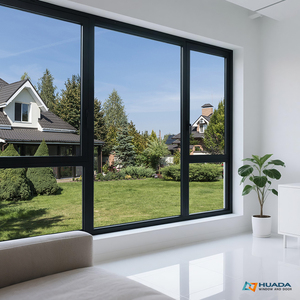
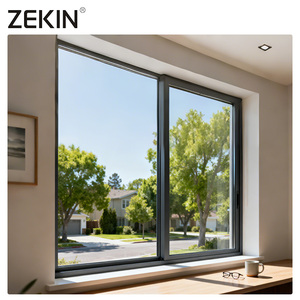
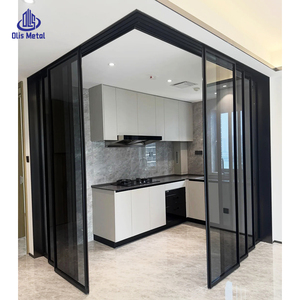
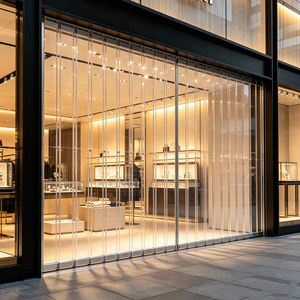
20+
Years Manufacturing Experience
20,000 m²
Modern Industrial Facility
80+
Export Nations Served
24 Hours
CAD & 3D Rendering Turnaround
Executive Summary: Sourcing OEM/ODM Aluminium Swing Door Systems
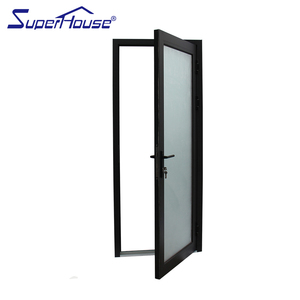
In modern architectural fenestration, the aluminum swing door remains the primary vector for building envelope security, thermal containment, and exterior aesthetic integration. As global building energy codes tighten—such as the European Union's Energy Performance of Buildings Directive (EPBD) and North America's ASHRAE 90.1 standards—the demand for precision-engineered, high-performance aluminum swing doors has shifted from generic off-the-shelf catalog sourcing to sophisticated OEM (Original Equipment Manufacturer) and ODM (Original Design Manufacturer) co-development.
Architects, facade contractors, and bulk importers face complex challenges: balancing extreme weather resistance (hurricane impact, high wind-load deflection) with ultra-slim sightlines, high acoustic attenuation, and verifiable low U-factors ($U_w \le 1.2 \text{ W/m}^2\text{K}$). Enterprise buyers require manufacturing partners who offer absolute material traceability, extrusion alloy precision, customized thermal break insertion, and multi-point locking integration, all backed by streamlined international supply logistics.
Information Gain Highlight: Unlike conventional sliding doors, heavy-duty aluminum swing doors exert continuous torque and localized cantilever stresses on frame hinges and corner cleats. Engineering an OEM/ODM swing door requires meticulous finite element analysis (FEA) of profile wall thickness, glass load distribution, and EPDM gasket compression profiles to prevent long-term frame sag and air leakage.
Structural Engineering & Material Standards for OEM Swing Doors
The structural integrity of a commercial or high-end residential aluminum swing door begins at the billet level. Leading OEM/ODM manufacturers like Changsha Wincraft Aluminum Window Tech Co., Ltd. utilize primary aluminum billets extruded under strict metallurgical controls.
1. Aluminum Alloy Extrusion Profile Selection
Standard architectural applications rely on EN AW-6063-T5 or T6 aluminum alloys due to their optimal balance of tensile strength, corrosion resistance, and surface anodizing response. For hurricane-rated storm swing doors and high-occupancy commercial storefronts, structural profiles are extruded with wall thicknesses ranging from 1.8mm to 3.0mm, exceeding basic GB/T 5237 and ASTM B221 benchmarks.
- Alloy 6063-T6: Yield Strength ≥ 170 MPa, Ultimate Tensile Strength ≥ 205 MPa. Ideal for high-traffic entry doors and large-format exterior swing doors.
- Alloy 6061-T6: Yield Strength ≥ 240 MPa. Specified for heavy-duty structural mullions, hurricane impact sub-frames, and blast-resistant assemblies.
- Profile Wall Precision: Strict tolerance control (±0.15mm) ensures tight interlocking of corner cleats, alignment pins, and continuous EPDM seals.
2. Advanced Thermal Barrier Technology (PA66GF25)
Uninsulated aluminum exhibits high thermal conductivity ($k \approx 160-200 \text{ W/m}\cdot\text{K}$), leading to thermal bridging, interior condensation, and massive HVAC energy loss. High-end OEM/ODM swing doors incorporate multi-chamber polyamide thermal break strips—specifically PA66 with 25% glass fiber reinforcement (PA66GF25).
By splitting the interior and exterior aluminum profile extrusions with 14.8mm to 34mm PA66GF25 strips, the thermal conductivity of the thermal break zone drops dramatically to $0.3 \text{ W/m}\cdot\text{K}$. Combined with polyurethane (PU) foam cavity filling and multi-cavity EPDM gaskets, thermal transmittance ($U_f$) is reduced to levels suitable for Passive House design.
Architectural Performance & Specification Comparison Matrix
When selecting systems for commercial development, hotel projects, or luxury residential estates, buyers must evaluate key engineering parameters. Below is a structural matrix comparing standard OEM swing doors against specialized storm and acoustic window-door systems:
| System Category | Thermal Break Profile | Air Infiltration (ASTM E283) | Water Resistance (ASTM E331) | Acoustic Rating (STC/Rw) | Ideal Procurement Application |
|---|---|---|---|---|---|
| Thermal Break Swing Door | 24mm PA66GF25 Multi-Cavity | < 0.10 cfm/ft² | 750 Pa (15.6 psf) | STC 38 - 42 dB | Luxury Villa Entrances, Hotel Balconies, Cold Climate Estates |
| Commercial Storm Swing Door | Heavy-Duty Reinforced 6063-T6 | < 0.05 cfm/ft² | 1050 Pa (22.0 psf) | STC 40 - 45 dB | Coastal High-Rises, High-Velocity Hurricane Zones (HVHZ) |
| Interior / French Glass Door | Non-Thermal or Slim Thermal Profile | Standard Residential | 300 Pa (6.2 psf) | STC 30 - 35 dB | Interior Partitions, Kitchen Entrances, Office Dividers |
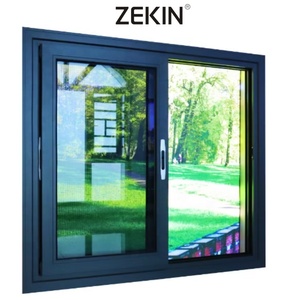
| Thermal Sliding Window & Door | 14.8mm - 20mm Polyamide Strip | < 0.15 cfm/ft² | 450 Pa (9.4 psf) | STC 32 - 38 dB | Urban Apartment Balconies, High-Density Housing |
Future Procurement & Architectural Trends (2025–2030)
The global architectural fenestration sector is undergoing rapid evolution driven by smart city infrastructure, decarbonization mandates, and minimalist architectural trends. Global B2B buyers must align their supply chains with these macro developments:
Decarbonized & Recycled Aluminum
Global developers increasingly mandate Low-Carbon Primary Aluminum (produced using hydroelectric power with < 4.0 kg CO₂e/kg Al) or Post-Consumer Recycled Content (> 75% recycled ratio). OEM buyers are requiring Environmental Product Declarations (EPD) and LEED v4 compliance certification from manufacturing suppliers.
Ultra-Slim Sightlines & Concealed Hardware
Modern architectural design prioritizes maximum visible glass area. Future swing door profiles utilize concealed heavy-duty 3D adjustable 304/316 stainless steel hinges capable of supporting sash weights up to 250 kg while maintaining ultra-narrow frame sightlines (< 45mm visible profile width).
Smart Access Control Integration
Commercial and residential doors are transitioning from mechanical cylinder locks to integrated motorized multi-point electronic locking systems. ODM developers are requesting pre-milled profile cavities to house biometric sensors, RFID readers, facial recognition units, and concealed automated swing door operators.
Extreme Weather & Impact Performance
Climate volatility has accelerated demand for hurricane impact-rated doors tested against TAS 201/202/203 and ASTM E1886/E1996. Swing doors engineered with SentryGlas® (SGP) laminated glass interlayers withstand large missile impacts and continuous cyclic pressure loads up to ±90 psf.
Enterprise OEM/ODM Manufacturing Capabilities: Wincraft Advantage
Changsha Wincraft Aluminum Window Tech Co., Ltd. is an integrated building materials manufacturer and exporter combining advanced architectural R&D, precision manufacturing, strict quality assurance, and direct international export logistics. Serving importers, contractors, and architects in 80+ countries, Wincraft delivers factory-direct solutions built around project-specific engineering requirements.
1. Comprehensive Customization (OEM & ODM Workflow)
Whether you require private-label profile systems for regional distribution or tailor-made structural fenestration packages for landmark commercial towers, our engineering infrastructure supports seamless project execution:
- Rapid CAD & 3D Renderings: Detailed design proposals and shop drawings generated within 24 hours of receiving architect floorplans or section details.
- Tooling & Profile Co-Development: In-house extrusion die design and matrix fabrication for proprietary profile geometries, thermal break configurations, and sightlines.
- Custom Surface Finishing: Automated powder coating (Qualicoat Class 1, 2 & 3; AAMA 2604 / 2605 PVDF Fluorocarbon coatings) and architectural anodizing (15 to 25 micron film thickness) offering 25+ year weatherability in coastal and high-UV environments.
- Global Hardware Integration: Factory integration of premium international hardware (Hoppe, Siegenia, GU, Roto, Sobinco, Dormakaba) or custom private-label hardware assemblies.
2. Rigorous Factory Quality Assurance & Testing
Every production batch undergoes five stages of quality verification prior to export crate packing:
1. Billet & Anodizing Check
Optical spectrum chemical analysis of aluminum billets and Webster hardness testing of aged extruded profiles.
2. Dimensional & Corner Check
Laser measurement of profile dimensions, wall thickness, and pneumatic corner crimping shear strength checks.
3. Glazing & EPDM Inspection
Continuous seal inspection of double/triple IGUs (Insulated Glass Units), argon gas fill verification, and EPDM corner gasket fit.
4. Mock-up Testing Chamber
In-factory air tightness (ASTM E283), water tightness (ASTM E331), and structural load testing (ASTM E330) on sample mockups.
B2B Procurement Risk Mitigation & Total Cost of Ownership (TCO)
For international buyers, sourcing custom fenestration products directly from overseas manufacturers involves risks related to freight damage, site installation fit, code non-compliance, and lead-time delays. Establishing a robust procurement framework mitigates these operational vulnerabilities:
Supply Chain Risk Mitigation Strategy:
1. Shop Drawing Sign-Off: Require 1:1 scale corner section drawings, anchor hole location detail, and glass build-up sign-offs before mold cutting or profile extrusion.
2. Protection & Export Packaging: Ensure products are protected with protective PE film, protective corner bumpers, vacuum moisture bags, and heavy-duty steel-banded fumigated plywood crates suitable for multi-modal ocean transportation.
3. Lead Time Optimization: Standard customized orders complete within ~4 weeks. Large multi-phase project orders are scheduled in staggered container shipments aligned with on-site installation schedules.
Frequently Asked Questions (B2B Sourcing FAQ)
Below are clear, technical answers to common questions asked by importers, architects, and trade buyers during the preliminary procurement phase.
Do you accept complete OEM and ODM orders for aluminum swing doors and window systems?
Yes. We specialize in full OEM and ODM cooperation models. This includes custom extrusion die creation, private labeling, proprietary hardware fitting, custom surface powder coating/anodizing colors, and custom packaging designed specifically for your brand or project specifications.
What is the standard production lead time for customized door and window orders?
Standard custom orders are typically produced within 4 weeks (~28 days) following finalized shop drawing sign-off and deposit receipt. For large commercial or multi-family project orders, production schedules are arranged in batched container shipments according to your site erection timeline.
Can your engineering team provide structural design proposals and CAD drawings prior to manufacturing?
Absolutely. Our engineering team communicates directly with architects, general contractors, and procurement managers. We can generate preliminary 2D CAD elevations, 3D BIM renderings, and structural performance calculations within 24 hours of receiving your project specifications.
How do you handle overseas shipping, customs documentation, and transit safety?
We deliver complete export logistics management under FOB, CIF, DDP, or DAP terms. Shipments include export-certified wooden crate packaging, customs clearance declarations, bill of lading documentation, certificate of origin, and real-time cargo container tracking.
Can your door and window systems meet local building energy and storm compliance codes in my destination country?
Yes. Provide us with your project location, target wind load pressures (Pa or psf), thermal U-factor targets, or specific certifications needed (NFRC, CE, AS2047, Florida HVHZ). Our engineers will configure the profile wall thickness, glass assembly, and hardware locks to guarantee full code compliance prior to production.