Featured Fenestration & Impact Systems
Precision-engineered aluminum doors, windows, sunrooms, and commercial shutter systems compliant with global building codes and severe weather standards.
1. Materials Science & Engineering Standards of High-Impact Aluminum Doors
In modern structural engineering, aluminum impact doors serve as the critical defense envelope for high-rise commercial structures, coastal villas, and luxury residential developments exposed to extreme meteorologic phenomena, including Category 5 hurricanes and seismic shockwaves. As an established OEM/ODM Aluminum Impact Doors Factory & Supplier, Changsha Wincraft Aluminum Window Tech Co., Ltd. engineers fenestration systems designed to survive dynamic missile impacts and violent cyclic pressure loadings up to 100 PSF (Pounds per Square Foot), matching rigid ASTM E1886/E1996 and Florida Building Code High-Velocity Hurricane Zone (HVHZ) requirements.
The structural integrity of an impact door depends primarily on three interdependent engineering components: the extruded aluminum structural profile, the polymer interlayer laminate glass matrix, and the perimeter anchor-hardware interface.
Information Gain Insight: Standard tempered glass breaks under impact, causing rapid internal building pressurization that can trigger roof blow-offs. Certified impact-resistant aluminum doors utilize structural SentryGlas® (SGP) or high-durability PVB interlayers that hold shattered glass fragments together, maintaining structural closure during continuous storm cycles.
1.1 Metallurgy & Extrusion Metallurgy (6063-T6 vs. 6060-T66)
Our factory utilizes primary high-purity aluminum billets extruded exclusively into 6063-T6 architectural alloy. With a ultimate tensile strength exceeding 205 MPa (29,700 psi) and yield strength of 170 MPa (24,700 psi), 6063-T6 provides optimal strength-to-weight ratios while retaining superior ductility required to withstand intense pressure rebounds. For severe thermal-break requirements, structural profile chambers integrate Polyamide (PA66-GF25) reinforced with 25% glass fiber. This limits thermal conduction (lowering overall system U-factors down to 0.28 BTU/h·ft²·°F) while ensuring the thermal break strut shares structural bending forces equally across the inner and outer profile aluminum extrusions.
1.2 Glass Lamination Physics: PVB vs. SGP Interlayers
The glass build-up of an impact-rated exterior door system determines its kinetic impact resistance. During ASTM E1996 testing, a 9-pound 2x4 wooden plank is fired at 50 feet per second (34 mph) directly into the fenestration glass, followed by 9,000 cycles of positive and negative air pressure loading:
- Polyvinyl Butyral (PVB) Interlayers: Standard 1.52mm (0.060") PVB interlayers provide baseline protection against windborne debris and forced entry. PVB offers 300% elongation at break, absorbing kinetic impact through elastic deformation. Ideal for residential applications outside strict HVHZ zones.
- SentryGlas® (SGP) Ionoplast Interlayers: SGP interlayers are 5 times tougher and up to 100 times stiffer than traditional PVB materials. Because SGP maintains structural stiffness even after glass fracturing, the door unit resists deflection under heavy wind loads. SGP is mandatory for oversized impact sliding doors, heavy pivot doors, and high-rise commercial facades.
2. Technical Performance Matrix: Door Systems Comparison
Below is an engineering specification index demonstrating the performance capabilities of our core OEM/ODM door configurations under standardized laboratory testing conditions (NFRC / AAMA / CSA / CE):
| Door System Class | Structural DP Rating | Thermal U-Factor (W/m²·K) | Acoustic Rating (STC) | Air / Water Tightness | Primary Commercial Use |
|---|---|---|---|---|---|
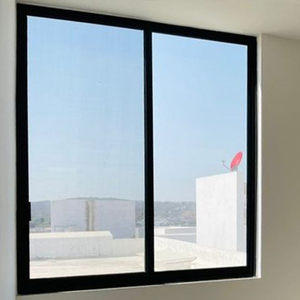
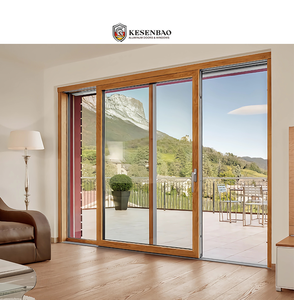
| Heavy-Duty Impact Sliding Door | DP 60 – DP 90 | 1.4 – 1.8 | STC 38 – 42 | Pa 1050 (Water) / Class 4 (Air) | Coastal Luxury Villas, High-Rise Hotels |
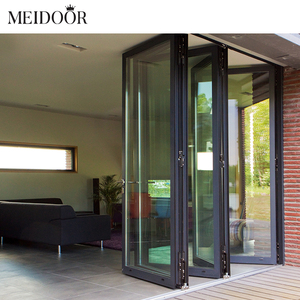
| Thermal Break Aluminum Bifold Door | DP 45 – DP 65 | 1.5 – 2.0 | STC 35 – 39 | Pa 750 (Water) / Class 4 (Air) | Resort Patios, Large Architectural Openings |
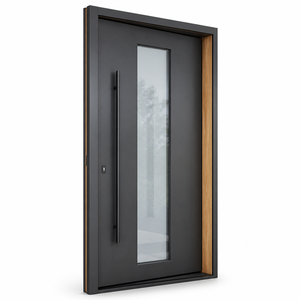
| Villa Clad-Wood Entrance Door | DP 50 – DP 75 | 1.1 – 1.4 | STC 40 – 45 | Pa 900 (Water) / Class 4 (Air) | Premium Front Entries, Cold Climate Villas |
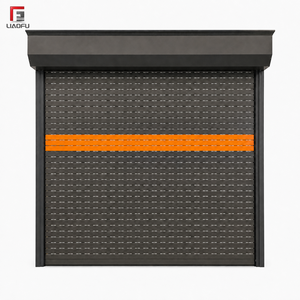
| Commercial Roll-Up Shutter Door | DP 80 – DP 110 | Non-Insulated / 2.8 | STC 28 – 32 | Pa 600 (Water) / Class 2 (Air) | Commercial Warehouses, Storefront Protection |
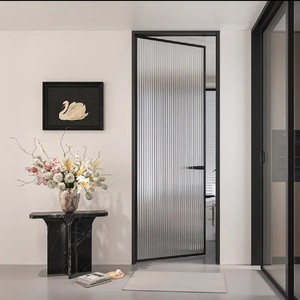
| Thermal Break Glass Swing Door | DP 40 – DP 55 | 1.6 – 2.1 | STC 34 – 38 | Pa 600 (Water) / Class 3 (Air) | Hotel Suites, Interior Balcony Entrances |
3. Global Procurement Trends & Architectural Market Evolution
The global fenestration industry is undergoing a structural shift driven by tightening carbon neutralization mandates, aggressive climate adaptation building codes, and evolving architectural aesthetics. Importers, facade contractors, and project developers are updating their purchasing criteria beyond unit cost to long-term lifecycle performance, supply chain traceability, and customized technical integration.
Trend 1: Ultra-Narrow Sightlines Combined with Extreme Structural Wind-Load Performance
Modern architectural design favors minimal aluminum profiles with maximum glass surface areas to maximize natural daylighting. Historically, slim frames compromised structural rigidity. Next-generation OEM/ODM manufacturing overcomes this through high-wall-thickness profiles (up to 3.0mm structural wall extrusions) and multi-point concealed stainless steel locking rods (SUS304/SUS316) that lock the sash directly into structural frame anchors at up to eight points along the perimeter.
Trend 2: Integrated Decarbonization & Low-E Solar Control Coatings
Energy management codes (such as California Title 24, European EN 14351-1, and Australian NCC) now enforce strict Solar Heat Gain Coefficients (SHGC). Global buyers prioritize triple-pane insulated glass units (IGU) featuring dual Low-E coatings, warm-edge silicone structural spacers, and 90% Argon gas fills. These configurations reflect far-infrared heat radiation while transmitting up to 70% visible light, dramatically reducing building HVAC energy consumption.
Trend 3: Direct OEM/ODM Factory Integration & Rapid CAD / BIM Engineering
Traditional supply chains involving multiple broker layers create specification handoff errors, lead time delays, and unaccountable quality claims. Modern B2B buyers deal directly with certified manufacturers like Changsha Wincraft Aluminum Window Tech Co., Ltd. direct-to-factory integration guarantees 24-hour CAD shop drawing turnarounds, customized extruded die development, and synchronized batch shipments that align directly with project site construction schedules.
4. Enterprise Capabilities: Why Partner with Wincraft Factory?
Changsha Wincraft Aluminum Window Tech Co., Ltd. operates an advanced manufacturing ecosystem dedicated to the design, extrusion assembly, glazing, and international export of custom fenestration products. Our factory serves commercial contractors, real estate developers, and wholesale distributors across 80+ countries.
Our engineering team translates architectural concepts into full structural CAD drawings and 3D renderings within 24 hours.
Precision cutting and surface treatments including Qualicoat-certified powder coating, PVDF coatings, and real wood-grain anodizing.
Automated sealant application, insertion of thermal break PA66 strips, and installation of certified impact glass IGUs.
Every door undergoes strict dimensional tolerance audits, corner joint strength testing, air infiltration checks, and water tightness verification.
Wrapped in protective film, corner guards, non-fumigation plywood crates, and secured with steel strapping for container transit.
Full door-to-door (DDP/DAP) or port-to-port logistics management, backed by clear installation guidelines and a 10-year structural warranty.
5. Frequently Asked Procurement Questions (B2B FAQ)
Direct technical answers to common operational, structural, and procurement queries submitted by global importers and engineering contractors.
Accelerate Your Fenestration Sourcing with Wincraft Factory Direct
Submit your project drawings, architectural schedules, or custom OEM requirements today. Receive direct engineering analysis, structural recommendations, and factory-direct quotation within 24 hours.
Send an Inquiry