OEM/ODM Aluminum Sash Window Factories & Exporter

Precision Fenestration Engineering | Architectural Systems | Global B2B Supply Chain

Whitepaper & Sourcing Guide 2025-2030

Architectural Aluminum Sash Windows: The Sourcing Standard for Global Developers

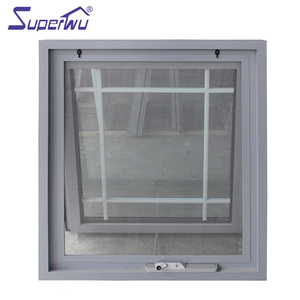
In the rapidly evolving global construction market, selecting an authoritative OEM/ODM aluminum sash window factory is no longer merely a procurement task; it is a critical engineering decision that dictates structural integrity, envelope thermal efficiency, and life-cycle compliance. Modern aluminum sash windows—encompassing vertical hung, horizontal sliding, and multi-track casement configurations—require extreme precision in alloy extrusion, thermal barrier placement, and hardware integration to satisfy demanding codes such as North America’s NFRC/AAMA standards, Australia’s AS2047, and Europe’s CE EN 14351-1.

This comprehensive technical benchmark, published by Changsha Wincraft Aluminum Window Tech Co., Ltd., delves into the engineering parameters, custom manufacturing capabilities, material advances, and market trends shaping architectural fenestration. Whether you are an importer, commercial project developer, or architectural specifier, this guide equips you with data-driven insights to mitigate supply chain risks and maximize project value.
Featured OEM/ODM Solutions

High-Performance Commercial & Residential Architectural Systems

Factory-direct engineered windows and doors compliant with international structural and thermal regulations.

20+
Years Manufacturing
20,000㎡
Production Facility
80+
Countries Exported
24 Hours
CAD/Rendering Output
Strategic Intelligence

Future Procurement Trends for OEM/ODM Aluminum Windows (2025–2030)

Navigating regulatory shifts, carbon accounting, and technological convergence in architectural procurement.

1. Low Embodied Carbon & Circular Alloys

Global developers are pivoting toward recycled aluminum extrusions (post-consumer scrap content >75%) to meet Scope 3 emissions targets. B2B contracts increasingly require Environmental Product Declarations (EPD) detailing the Global Warming Potential (GWP) of billet smelting. Leading Chinese exporters now utilize hydro-powered aluminum billets to significantly compress cradle-to-gate carbon footprints.

2. Ultra-Low U-Value Thermal Cavities

With energy codes tightening across North America (IECC 2024) and Europe (EPBD), standard aluminum frames are obsolete. Sourcing is shifting toward multi-chamber polyamide PA66-GF25 thermal breaks injected with aerogel or polyurethane foam insulation. Window systems must achieve whole-window U-factors under 0.80 W/m²K (Passivhaus compliant) for severe cold climate projects.

3. Industrialized Modular Prefabrication

On-site labor costs have driven demand for unitized and factory-assembled sub-frames. OEM factories are required to supply complete fenestration packages with pre-installed sub-frames, integrated flashing membranes, and snap-in exterior trim finishes. This modular approach reduces on-site installation times by over 40% while eliminating weather-sealing failures.

Technology Benchmark

Evolution of Aluminum Sash Window Engineering & Manufacturing Technologies

The architectural sash window has evolved from simple single-hung timber alternatives into complex structural systems. Modern OEM/ODM manufacturing demands advanced metallurgy, precise mechanical assembly, and high-performance surface protection. Understanding these technical dynamics allows procurement officers to establish rigorous technical specifications during factory audits.

1. Precision Profile Extrusion & Structural Alloy Selection

The backbone of high-performance fenestration lies in raw profile chemistry. High-tier exporters exclusively utilize 6063-T5 or 6060-T6 architectural grade aluminum alloys. Magnesium and silicon ratios are precisely controlled to optimize tensile strength (yield strength ≥ 110 MPa for T5) while maintaining superior anodizing clarity. Wall thicknesses for structural sash members are engineered between 1.4mm (for residential low-rise) and 2.0mm–3.0mm (for high-load commercial applications compliant with ASTM B221).

2. Thermal Break Engineering: Mechanical Crimping & Insulation Technology

Aluminum’s high thermal conductivity (approx. 200 W/m·K) requires continuous structural thermal barriers to stop conductive heat loss. Modern OEM factories employ a three-step thermal break process:

  • Knurling: High-speed wheels cut micro-grooves into the extruded profile pockets to ensure mechanical keying.
  • Strip Insertion: Low-conductivity Polyamide PA66 reinforced with 25% glass fiber (PA66-GF25) is inserted into the pockets. Glass fiber reinforcement guarantees thermal expansion coefficient matching with aluminum.
  • Crimping: Heavy-duty rollers compress the aluminum aluminum teeth onto the polyamide strip, creating a composite profile capable of enduring shear stress under thermal loads up to 80 N/mm.

3. Advanced Surface Treatments: Longevity in Severe Climates

Exterior window coatings must withstand extreme UV degradation, industrial pollutants, and salt spray in coastal zones. Leading export manufacturers adhere to two internationally recognized surface finishing benchmarks:

Surface Treatment Specification Benchmark Film Thickness Target Application Environment
Qualicoat Class 2 / 3 Powder Coating Architectural Polyester / Superdurable Resins 60 – 80 microns Urban, residential, and high-UV inland zones (10–25 year warranty)
PVDF (Fluorocarbon - Kynar 500) 70% PVDF Resin Coating (AAMA 2605) 30 – 40 microns Commercial towers, aggressive industrial & tropical coastal zones
Qualanod Anodizing Electrolytic Oxidation & Organic/Inorganic Dyeing 15 – 25 microns (Class AA25) Modern minimal architecture, high-abrasion coastal exposures
Technical Matrix

Aluminum Sash & Fenestration System Specification Matrix

Engineering parameter guidelines for OEM customization projects.

System Category Airtightness (EN 12207) Water Tightness (EN 12208) Wind Load (ASTM E330) Overall U-Factor Range
Thermal Break Casement Sash Class 4 (≤ 3 m³/h·m²) Class E1050 (1050 Pa) Serviceability 4.5 kPa (DP65) 1.0 – 1.6 W/m²K
Horizontal Double Sliding Sash Class 3 (≤ 9 m³/h·m²) Class 7A (300 Pa) Serviceability 2.5 kPa (DP35) 1.6 – 2.2 W/m²K
Vertical Double Hung Sash Class 3 (≤ 9 m³/h·m²) Class 8A (450 Pa) Serviceability 3.0 kPa (DP45) 1.4 – 1.9 W/m²K
Heavy Lift-and-Slide Patio Sash Class 4 (≤ 3 m³/h·m²) Class E900 (900 Pa) Serviceability 4.0 kPa (DP60) 1.1 – 1.5 W/m²K
Manufacturing Partner Expertise

Why Global Importers Partner with Changsha Wincraft Aluminum Window Tech Co., Ltd.

Integrated OEM/ODM manufacturing capability built on two decades of engineering excellence.

Changsha Wincraft Aluminum Window Tech Co., Ltd. stands as a premier manufacturer and direct exporter of customized architectural aluminum doors, windows, sunrooms, and garden pavilions. Serving developers, contractors, and wholesale importers in over 80 countries, Wincraft bridges the gap between complex architectural design and cost-effective factory production.

Operating out of a modern 20,000 square meter industrial complex, our facility integrates high-precision 4-axis CNC machining centers, automatic corner crimping equipment, dual-head miter saws, and specialized glass insulating lines. This infrastructure ensures dimensional tolerances within ±0.5mm across massive production runs.

Get Catalog

24-Hour Design & CAD Turnaround

Our in-house engineering squad provides full shop drawings, structural wind load calculations, and 3D realistic renderings within 24 hours to accelerate your bidding cycles.

4-Week Standard Export Lead Time

Optimized supply chain logistics and dedicated raw extrusion inventory allow us to manufacture custom orders within 4 weeks, with staged batch deliveries for major tower projects.

End-to-End Export Logistics

We handle fully seaworthy steel-stillages packaging, moisture barrier wrapping, customs clearance documentation, and direct door-to-jobsite delivery logistics worldwide.

Procurement FAQ

Frequently Asked Technical Sourcing Questions

Critical answers for procurement engineers, architects, and wholesale buyers.

Q1: How do you support OEM/ODM custom profile developments for proprietary window systems? +
We provide end-to-end tooling and custom extrusion support. Clients can submit CAD/STEP files or sample sections. Our engineers conduct Finite Element Analysis (FEA) to verify structural and thermal integrity before machining custom extrusion dies. Die development takes approximately 12–15 days, followed by sample extrusion and physical testing prior to mass production.
Q2: What certifications do Wincraft aluminum sash window systems carry for Western markets? +
Our window systems are engineered to meet key international building standards. We offer product configurations tested to Australian AS2047 / AS1288, North American NFRC / AAMA standards for air infiltration and water resistance, and European CE Mark EN 14351-1. All glass units feature SGCC (US), SAI Global (AU), or CE insulated glass certifications.
Q3: How does your factory guarantee hardware durability and corrosion resistance? +
Hardware is the primary mechanical failure point in windows. We partner with elite global hardware manufacturers such as Siegenia, Roto, Hoppe, and CMECH, as well as high-grade proprietary stainless steel 304/316 multi-point locks. Hardware finishes undergo 1,000-hour neutral salt spray (NSS) testing to ensure zero pitting or oxidation in coastal environments.
Q4: What is your Minimum Order Quantity (MOQ) for custom project sourcing? +
For standard profile systems with stock powder coatings (Black, White, Charcoal, Anodized Silver), our MOQ is flexible, starting from a single villa project (approx. 50–100 m²). For fully custom extrusion dies or non-standard RAL color matches, our minimum order threshold is typically 3 to 5 metric tons of aluminum profiles.
Q5: What protective packaging measures are used to prevent transit damage during sea transport? +
Export shipments undergo a 5-layer protective packing protocol: (1) Protective surface film on aluminum profiles, (2) Shock-absorbing EPE foam wrapping, (3) Heavy-duty corner guards, (4) Waterproof shrink wrap, and (5) Loading into custom-built steel stillages or fully enclosed plywood crates designed for forklift unloading at the jobsite.
Q6: Can Wincraft provide site-specific structural calculations for wind loads? +
Yes. Given your site location, building height, and basic wind speed (m/s or mph), our structural engineering team calculates ultimate limit state (ULS) wind pressure and deflection limits (L/175 or L/250). We then configure the required aluminum moment of inertia (Ix/Iy) and glass thickness to satisfy structural compliance.

Ready to Engineer Your Next Fenestration Package?

Collaborate directly with Changsha Wincraft's engineering office. Request a complete product catalog, request shop drawing support, or get a factory-direct quote within 24 hours.