Top 10 Aluminium Black Doors Manufacturers & Factories
Global B2B Whitepaper: Technical Benchmarks, Procurement Trends, Thermal-Break Innovations & Direct Factory OEM/ODM Sourcing Solutions
Industry Whitepaper & Procurement Analysis
In contemporary architectural design, black aluminum doors and windows have evolved from an aesthetic preference into a dominant industry standard. Renowned for their ultra-slim profiles, high structural rigidity, and timeless modern contrast, black architectural fenestration is now specified in over 65% of luxury residential villas, high-end hospitality builds, and commercial office complexes globally. However, for B2B procurement heads, real estate developers, and architectural contractors, selecting the right manufacturer requires diving deep past superficial visual appeal.
This comprehensive industry guide evaluates the world's leading aluminum door factories, detailing critical technical parameters—including extrusion alloy grades (AA6063-T5 vs. AA6061-T6), electrostatically applied fluorocarbon (PVDF) vs. Qualicoat Class 2 powder coatings, structural wind-load resistance (ASTM E330), and advanced thermal barrier engineering using Polyamide PA66 GF25 insulation. Whether you are sourcing heavy-duty exterior bi-fold doors, oversized offset pivot entry systems, slim-line sliding glass doors, or integrated thermal sunrooms, this guide provides the engineering clarity needed to secure factory-direct procurement advantages.
Featured Architectural Aluminum Systems & Door Collections
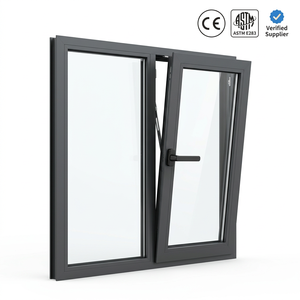
Below is an engineered showcase of premium black aluminum doors, thermal sunrooms, and commercial fenestration systems manufactured for international building codes. Each system features custom glass build-ups, structural thermal breaks, and high-durability surface finishes.
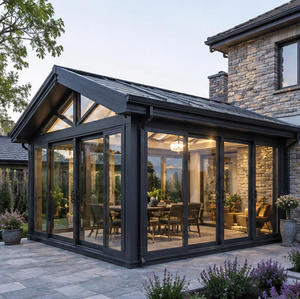
Heavy-duty structural aluminum alloy enclosure engineered with thermal break profiles, double-laminated Low-E insulated glass roofs, and integrated perimeter sliding door systems. Formulated for heavy snow-load zones and high solar heat reduction.
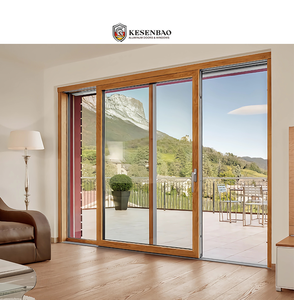
Dual-color anodized aluminum patio door utilizing matte black exterior architectural powder coating paired with interior heat-transfer wood grain. Features dual-tempered argon gas filled IGUs and stainless steel multi-track rollers.
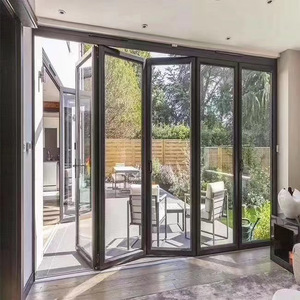
Multi-panel exterior bi-fold and tri-fold door system built with heavy-wall 2.0mm aluminum extrusions. Designed for seamless indoor-outdoor transition with top-hung heavy-duty stainless steel hinge bogies and continuous dual EPDM gaskets.
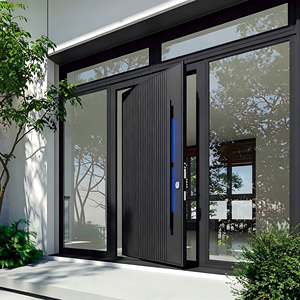
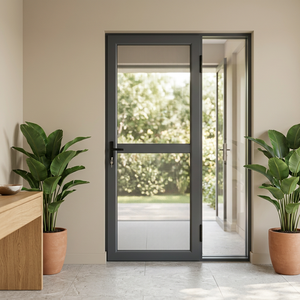
High-traffic commercial black aluminum swing doors designed for retail fronts, corporate office lobbies, and public structures. Includes overhead concealed hydraulic closers, panic hardware compatibility, and crash-rated aluminum stiles.
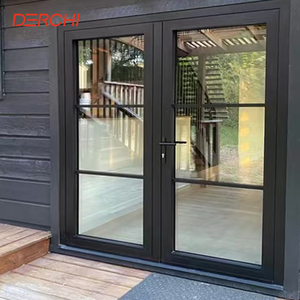
NFRC-tested slim profile Crittall-style black French door. Features narrow sightlines, interior applied grid bars, double toughened Low-E glass units, and superior U-factor thermal performance for energy-efficient villa entryways.
Key Engineering Parameters for Black Aluminum Door Manufacturing
When evaluating black aluminum door factories, comparing technical specifications is essential to avoid premature coating degradation, thermal bowing, or structural seal failures under harsh climate conditions. The matrix below defines standard industry benchmarks versus high-end OEM/ODM factory specifications.
Ensures glass integrity and profile stability in coastal typhoon zones.
How to Evaluate & Audit the Top 10 Black Aluminum Door Manufacturers
Navigating global fenestration supply chains requires looking past flashy catalog renders. B2B buyers must evaluate factories across six critical manufacturing competencies to ensure long-term project viability:
1. Extrusion & Billet Metallurgy
Top-tier factories utilize 100% primary aluminum ingot billets rather than remelted scrap. Primary AA6063-T6 extrusions guarantee uniform grain structure, enabling precise CNC machining of lock mortises without micro-cracking the profile wall.
2. In-House Powder Coating Lines
Black profiles are notoriously sensitive to solar heat absorption. Auditing whether a manufacturer operates an automated horizontal or vertical Qualicoat-certified coating line ensures strict pre-treatment (chromate-free zirconium etching) for maximum paint adhesion.
3. Thermal Break Assembly Precision
Ensuring high shear-strength knurling and crimping of the Polyamide PA66 GF25 thermal strips prevents "thermal movement" (where the exterior black profile expands faster than the interior profile under direct sunlight, causing door sash binding).
4. Glass Unit Integration (IGU)
Leading suppliers maintain automated dual-sealed IGU lines with warm-edge Techniform spacers, argon gas filling ($\ge 90\%$), and Low-E soft coatings (e.g., Sunguard or Solarban series), cutting solar heat gain coefficient (SHGC) down to 0.22.
5. Hardware Lifecycle Validation
A door system is only as reliable as its moving mechanical hardware. Premium OEMs partner with tier-1 hardware makers (Siegenia, Hoppe, Monticelli, Sobinco) or manufacture heavy-duty 304 stainless steel rollers rated for over 100,000 operation cycles.
6. Export Packaging & A-Frame Armor
Black powder-coated surfaces require rigid scratch protection during ocean transit. Quality factories wrap each extrusion in protective 80-micron PE film, applying custom foam corner guards and packing assembled doors inside steel-reinforced wooden A-frame crates.
Future Procurement Trends in Architectural Black Door Systems (2026–2030)
As building energy codes tighten across North America (IECC 2024/2027), Europe (EPBD Net-Zero requirements), and Australia (NCC 7-Star Ratings), procurement strategies for black aluminum doors are shifting rapidly. Understanding these trends allows buyers to future-proof their supply chains:
Trend 1: Micro-Sightline Minimalist Frameless Systems
Architectural demand is moving aggressively toward ultra-slim interlock stiles (<18mm visible width) for large sliding glass doors. These systems conceal the aluminum frame within the building floor-to-ceiling substrate, leaving only a ultra-narrow black accent line visible while utilizing structural silicone structural glazing (SSG) technology.
Manual door operation is increasingly replaced by concealed electro-mechanical drives integrated directly inside the top aluminum frame track. Black pivot doors and multi-panel bi-folds now feature smart biometric access (facial recognition, fingerprint, RFID) linked with home automation protocols (Zigbee, KNX, Matter).
To overcome the high thermal absorption of dark exterior profiles in extreme climates, manufacturers are infilling profile chambers with hydrophobic aerogel insulation. Paired with emerging Vacuum Insulated Glass (VIG) technology, total door thermal values ($U_w$) are dropping below $0.7\text{ W/m}^2\text{K}$ (Passive House standard).
Below are technical answers to common questions asked by architects, importers, and procurement officers during project specification and supplier evaluation:
Why does matte black powder coating fade or chalk over time, and how is it prevented?
Matte black surfaces absorb maximum solar radiation, breaking down low-grade polyester resin binders via UV radiation. To prevent chalking or color degradation, specify Qualicoat Class 2 or Class 3 Superdurable Fluorocarbon (PVDF) coatings (such as AkzoNobel Interpon D2525 or PPG Duranar). These coatings withstand 2,000+ hours of Florida accelerated weathering tests without color shift ($\Delta E < 5$).
What is the "Thermal Bowing Effect" on black aluminum doors, and how do factories solve it?
When exterior black profiles reach high temperatures ($70^\circ\text{C}+$) in direct sunlight while the interior stays air-conditioned ($22^\circ\text{C}$), differential thermal expansion causes the door sash to bow outward, making latches stick. Premier factories mitigate this by using split anti-bi-metal polyamide thermal strips or engineered sliding-fit thermal connectors that relieve internal thermal stress without compromising air tightness.
Do you accept OEM and ODM orders for custom aluminum door profile extrusions?
Yes. Full OEM/ODM services are available, including custom die extrusion development, private-label branding, customized powder coat RAL colors, unique hardware integrations, and tailored export packaging based on client CAD/BIM models.
What is the standard production lead time for customized door orders?
Standard customized orders are completed within approximately 4 weeks after final shop drawing sign-off and color sample approval. For large commercial or multi-family housing developments, batch delivery schedules are coordinated directly with site installation milestones.
Can engineering design proposals and CAD shop drawings be provided prior to production?
Yes. An experienced engineering design team works directly with client architects and procurement managers, delivering detailed 2D CAD shop drawings, 3D renderings, and structural wind-load calculation reports within 24 hours of initial project submission.
How do global logistics and container shipping protection work for glass door systems?
Comprehensive export logistics management includes fumigated wooden box crating, custom steel A-frame glass racking, container load optimization, customs documentation, and optional door-to-door (DDP/DAP) sea freight delivery with full cargo insurance.
As a recognized leader in precision fenestration engineering, Changsha Wincraft Aluminum Window Tech Co., Ltd. (Wincraft China Factory) represents the gold standard in factory-direct OEM/ODM production of custom aluminum doors, windows, sunrooms, and garden pavilions. Operating from a modern industrial manufacturing complex, Wincraft integrates research and development, advanced extrusion processing, automated IGU glass line assembly, and strict quality control.
20+
Years Industry Experience
20,000㎡
Modern Production Base
80+
Countries & Regions Served
24 Hours
CAD Drawing Turnaround
Full-Process Quality Management
From raw primary aluminum ingot verification to final hardware tolerance checks, Wincraft adheres to stringent ISO9001 quality protocols. Each manufactured door sash undergoes water tightness testing, air infiltration screening, and multi-point corner joint tension testing prior to export packaging.
Direct Architect & Contractor Support
Eliminating intermediate trading markups, Wincraft assigns dedicated structural fenestration engineers to every account. Whether matching complex local building code energy ratings (NFRC, CE, AS2047) or creating custom aluminum extrusions, client teams receive end-to-end technical stewardship.
Ready to Engineer Your Project's Black Aluminum Door Package?
Connect directly with our senior engineering team to receive complete CAD shop drawings, glass thermal calculations, and competitive factory-direct wholesale pricing within 24 hours.