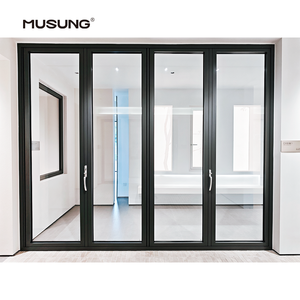
Outdoor Hurricane Proof Aluminum Frame Accordion Doors Interior Soundproof Folding Door
Heavy-duty structural accordion system designed for coastal wind pressures up to 5000 Pa with EPDM weather-sealing.
Factory-direct fenestration portfolio tested to global architectural standards (CE, AS2047, NFRC, Florida Building Code).
Heavy-duty structural accordion system designed for coastal wind pressures up to 5000 Pa with EPDM weather-sealing.
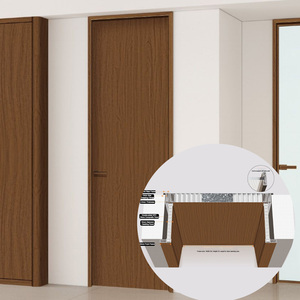
Ultra-narrow 16mm sightline interior composite door featuring a high-rigidity aluminum honeycomb matrix and scratch-resistant SPC lamination.
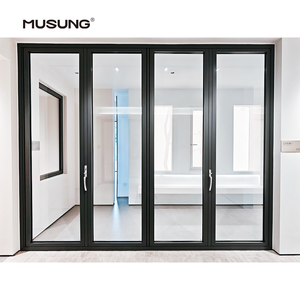
Commercial grade resort folding doors engineered with double tempered Low-E argon glass for maximum solar control and acoustic isolation.
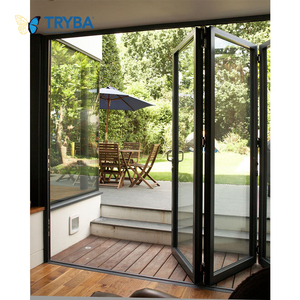
Integrated insect screen accordion system combining high ventilation, concealed multipoint gear hardware, and anti-lift structural security.
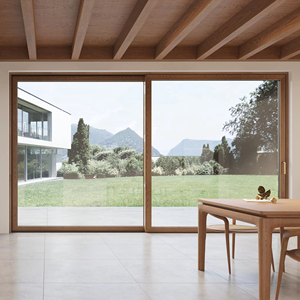
Architectural hybrid combining exterior structural 6063-T6 aluminum with rich interior natural timber, featuring thermal insulation U-factors ≤ 1.2 W/m²K.
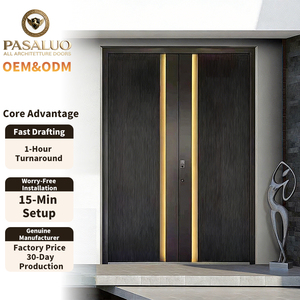
High-security composite entrance door armored with multi-chambered alloy profiles, anti-pry lock points, and integrated smart biometric access.
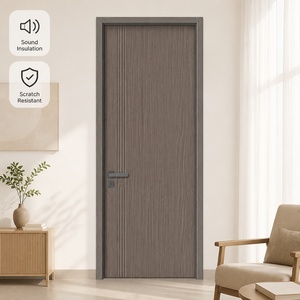
Fire-rated (Class B1/A2) composite interior door engineered for institutional and residential multi-family housing projects requiring zero maintenance.
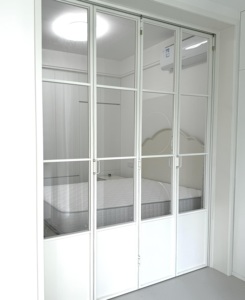
French bi-fold exterior system with PA66 polyamide thermal barrier, offering heavy-load bottom rollers rated for 300kg panel capacity.
An authoritative technical analysis of structural composite fenestration technology, thermal physics, and export quality verification.
In contemporary architectural design, the global demand for high-performance fenestration has elevated aluminium composite doors from a niche luxury to an essential building specification. As commercial developers, facade engineers, and general contractors seek to harmonize net-zero thermal efficiency with structural longevity, the choice of supplier becomes paramount. Changsha Wincraft Aluminum Window Tech Co., Ltd. stands at the forefront of China's advanced manufacturing sector, operating a state-of-the-art 20,000+ m² production facility dedicated to engineering high-precision aluminum door and window systems for international export.
Aluminium composite doors represent a pinnacle of material hybrid engineering. Unlike traditional single-extrusion aluminum profiles—which suffer from high thermal conductivity—or solid wood doors that are prone to moisture warping and atmospheric degradation, composite aluminum doors integrate multi-layered structural cores. By combining high-grade 6063-T6 architectural extruded aluminum outer shells with structural thermal breaks (PA66-GF25 polyamide), insulating honeycomb matrixes, and fire-resistant composite lamination, these systems achieve exceptional thermal resistance ($U \le 1.1 \text{ W/m}^2\text{K}$), sound attenuation (STC ratings up to 45 dB), and resistance to dynamic wind loads exceeding 5000 Pa.
B2B buyers frequently confuse simple surface-laminated aluminum profiles with true structural composite fenestration. A genuine engineering-grade composite door utilizes a decoupled structural framework where thermal expansion differential ($\Delta L = \alpha \cdot L \cdot \Delta T$) between aluminum ($\alpha \approx 23 \times 10^{-6}/\text{K}$) and internal composite core materials is fully neutralized through elastomeric shear-resisting PA66 polyamide locking tracks and pressure-equalized internal chambers.
Analyzing the internal matrix of high-durability extruded aluminium composite doors.
Primary structural profile utilizing high-purity aluminum-magnesium-silicon alloy, heat-treated to T6 temper for yield strengths exceeding 170 MPa and ultimate tensile strength up to 205 MPa.
Polyamide 66 reinforced with 25% glass fiber, matching aluminum's thermal expansion coefficient while reducing heat transfer by up to 300 times compared to solid metal.
Aircraft-grade aluminum honeycomb core sandwich structure coupled with high-density polyurethane (PU) foam or Stone Polymer Composite (SPC) laminates.
Quantifiable performance metrics evaluating structural, thermal, and acoustic properties for global project specifiers.
| Performance Metric | Wincraft Aluminium Composite | Solid Aluminium (Standard) | Solid Engineered Timber | UPVC Multi-Chamber |
|---|---|---|---|---|
| Thermal Transmittance ($U$-Value) | 0.9 – 1.4 W/m²K | 2.8 – 3.5 W/m²K | 1.3 – 1.8 W/m²K | 1.2 – 1.6 W/m²K |
| Acoustic Insulation Rating (STC / $R_w$) | 38 – 45 dB | 25 – 30 dB | 32 – 36 dB | 30 – 34 dB |
| Structural Tensile Strength (Yield) | ≥ 170 MPa (6063-T6) | ≥ 170 MPa | 35 – 55 MPa | 40 – 50 MPa |
| Moisture Absorption & Warpage | 0.00% (Zero Expansion) | 0.00% | 4.5% – 12.0% (High Risk) | 0.05% |
| Surface Finish Service Life | 25–30 Years (PVDF / Anodized) | 15–20 Years | 3–5 Years (Requires recoating) | 10–15 Years (UV yellowing risk) |
| Fire Safety Classification | Class A1 / B1 Standard | Class A1 | Class C / D (Combustible) | Class B2 (Melts under flame) |
Key market vectors shaping international procurement strategies for importers, contractors, and distributors.
With stringent energy regulations such as the EU Energy Performance of Buildings Directive (EPBD) and North American ASHRAE 90.1 standards, importers are shifting exclusively toward thermal-break composite systems. Thermal insulation and Low-E double/triple glazing units filled with 90% Argon gas are becoming mandatory specifications across European and Australian commercial developments.
Rising frequency of tropical storms and severe weather events has drastically heightened demand for hurricane-impact certified doors. Sourcing specifications require rigorous compliance with ASTM E1886/E1996 cyclic pressure testing up to 5000 Pa, featuring laminated safety glass with 1.52mm SentryGlas® (SGP) interlayers.
Modern residential architecture favors expansive glass-to-frame ratios. Sourcing trends prioritize "invisible" or slim-edge aluminum frame designs (interlockers as narrow as 16mm–25mm) capable of supporting massive panel weights up to 400kg via concealed stainless-steel roller assemblies.
Commercial entry door procurement now merges physical strength with electronic security. High-end villa entrance systems integrate motorized multi-point lock mechanisms, 3D facial recognition, fingerprint biometrics, and home automation protocols (Zigbee/Matter) natively within the composite aluminum sash structure.
Integrated OEM/ODM engineering, automated production lines, and rigorous export quality control.
As a leading China aluminum doors and windows supplier, Changsha Wincraft Aluminum Window Tech Co., Ltd. provides comprehensive whole-building fenestration packages for B2B buyers across 80+ countries. Our manufacturing philosophy integrates high-precision CNC machinery, standardized QA protocols, and responsive engineering support to streamline overseas sourcing.

Precision CNC Machining Center
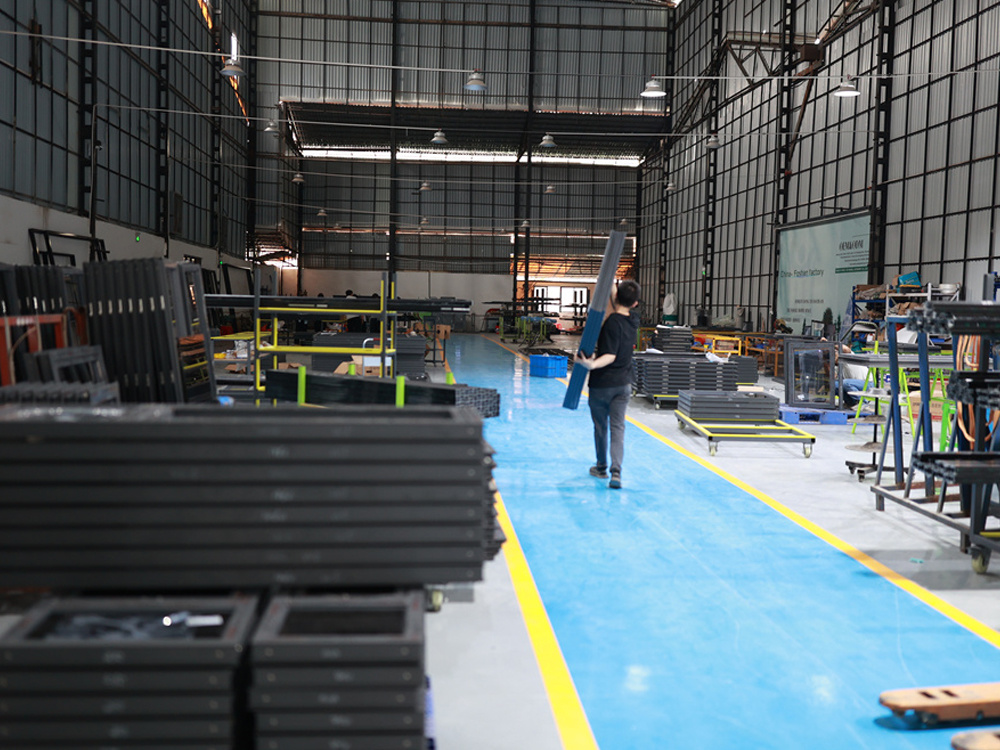
Automated Mitre & Corner Crimping
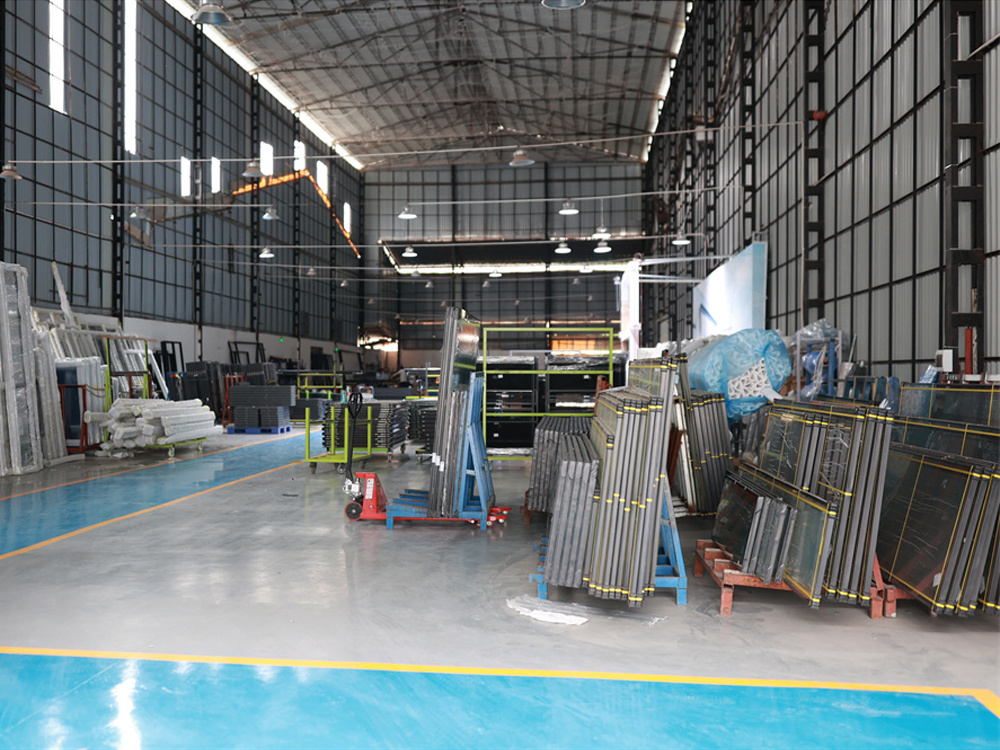
5-Stage Quality Verification Line
Our in-house engineering team translates architectural floor plans into detailed 24-hour CAD shop drawings and 3D renderings, ensuring complete structural and aesthetic alignment before production.
Streamlined ERP inventory management and automated cutting systems enable rapid standard order completion within 28 calendar days, with staggered container scheduling for large-scale project deliveries.
Every door assembly is packed in fully enclosed fumigated plywood crates, shrink-wrapped with moisture-barrier films, and reinforced with corner protectors to guarantee damage-free transit across sea freight routes.
Expert answers to technical, commercial, and logistics inquiries from international importers and project specifiers.
Partner with China's leading fenestration manufacturer. Request complete technical catalogs, CAD details, and competitive factory-direct quotes for your project today.
Get Catalog