Executive Sourcing Summary: Global Architectural Fenestration & Supply Chain Dynamics
The global demand for high-performance architectural fenestration has experienced a structural pivot toward energy-efficient, visually seamless, and extreme-weather-resistant entrance solutions. As residential villas, commercial complexes, and hospitality developments demand lower U-factors and higher structural wind-load capacities, **Aluminium Glass Swing Doors** have emerged as the premier choice for modern architectural envelopes.
Sourcing directly from tier-1 Chinese manufacturers allows overseas importers, architectural contractors, and B2B distributors to capitalize on advanced extrusion technologies, multi-cavity thermal break systems, and automated powder-coating lines. This comprehensive whitepaper provides architectural buyers and engineering procurement specialists with an unvarnished technical assessment of material specs, structural thermal performance, global procurement trends, and a curated audit of benchmark products available directly from accredited manufacturing facilities in China.
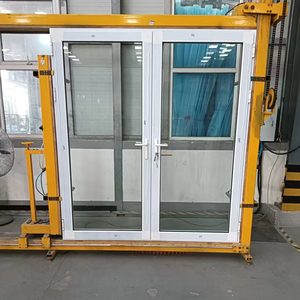
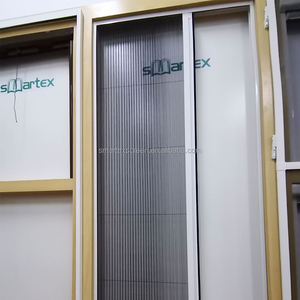
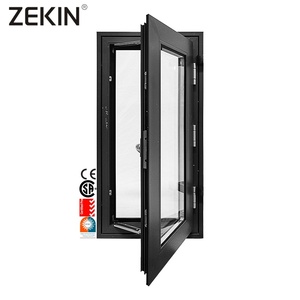
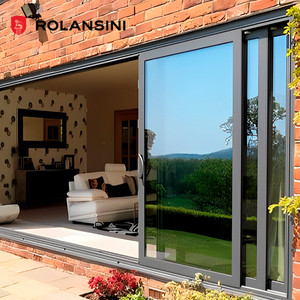
Featured China Aluminium Glass Swing Door Portfolio
Explore top-rated structural swing door assemblies engineered for residential exterior access, commercial storm protection, and ultra-narrow interior spatial partitioning.
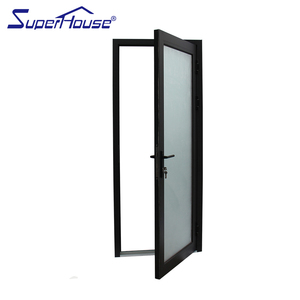
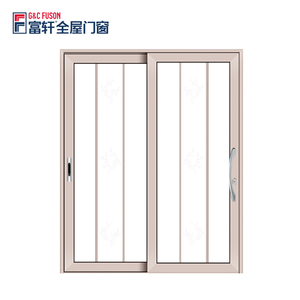
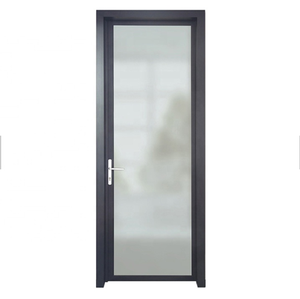
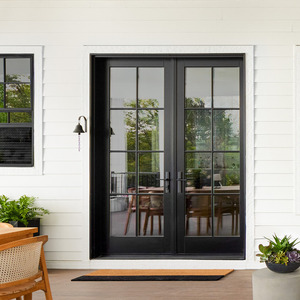
Manufacturing Ecosystem & Enterprise Strengths
Changsha Wincraft Aluminum Window Tech Co., Ltd. operates as a premiere integrated building-materials manufacturer and exporter. We unify architectural design, precise profile extrusion, thermal break assembly, rigorous quality control, and international logistics under one standardized quality management system.
Technical Engineering & Material Selection Guide
Selecting the optimal aluminium glass swing door system requires a thorough evaluation of metallurgical properties, thermal barrier design, glass build-up, surface treatment longevity, and hardware stress ratings. Below is the technical specification benchmark for global B2B procurement:
| Performance Parameter | Standard Non-Thermal Systems | Architectural Thermal Break Systems | Extreme Hurricane / Soundproof Systems |
|---|---|---|---|
| Aluminium Alloy Profile | 6063-T5 (Wall thickness 1.4 - 1.6mm) | 6063-T6 High Precision (Thickness 2.0mm) | 6061-T6 Reinforced Structural (Thickness 2.5 - 3.0mm) |
| Thermal Insulation Strip | N/A (Direct Aluminium Contact) | PA66 GF25 Polyamide Strip (24mm - 34mm) | Multi-Cavity PA66 GF25 + Aerogel Infill Insulation |
| Glazing Configuration | 5mm + 12A + 5mm Tempered Glass | 6mm Low-E + 16Ar + 6mm Toughened Double Glazed | 6mm + 1.52PVB + 6mm Laminated Double Low-E Triple Glazed |
| U-Factor Rating (W/m²·K) | 3.5 - 4.5 W/m²·K | 1.6 - 2.2 W/m²·K | < 1.1 W/m²·K (Passive House Standard) |
| Acoustic Isolation (Rw / STC) | 28 - 32 dB | 36 - 42 dB | 45+ dB High-Mass Acoustic Dampening |
| Structural Wind Load (Pa) | 1,500 Pa (ASTM E330 Class 30) | 3,000 Pa (ASTM E330 Class 60) | 5,000+ Pa (Impact Tested / High Velocity Hurricane Zone) |
| Surface Finish Standard | Standard Powder Coating (50-60μm) | Fluorocarbon PVDF Spray Coating (AAMA 2605) | Anodized Hard-Coat / Marine-Grade PVDF Finish |
1. Metallurgical Profiles & Wall Thickness Engineering
High-end swing doors require high torsional rigidity to prevent panel sagging over time, especially when supporting heavy double or triple insulated glass units (IGUs). Leading China suppliers utilize 6063-T5 or 6063-T6 architectural aluminium alloys. The wall thickness for exterior swinging entrance doors should strictly adhere to a minimum threshold of 2.0mm in accordance with international standards (such as GB 5237 or AS 2047).
2. Polyamide PA66 GF25 Thermal Insulation Barriers
Thermal bridging in metal frames can account for up to 40% of standard door energy loss. Advanced manufacturers insert 24mm to 34mm **PA66 GF25 (Polyamide 66 reinforced with 25% glass fiber)** thermal break strips into the aluminum extrusions. This structural break drastically slows thermal transfer, preventing interior condensation in freezing climates and drastically reducing cooling costs in hot tropical regions.
3. High-Security Multi-Point Locking & Heavy-Duty Hinge Mechanics
Unlike sliding doors that distribute panel weight continuously along a horizontal track, swing doors exert cantilever forces on side-mounted hinges. Premium manufacturers utilize 3D adjustable 304 stainless steel hinges or concealed heavy-duty pivot systems rated for 150kg to 300kg per leaf. Security is enforced via German-engineered or premium domestic multi-point lock systems that clamp the door frame across top, middle, and bottom strike plates upon handle engagement.
Core OEM / ODM Engineering Capabilities
Why leading global architectural firms and hardware wholesalers select Chinese manufacturing partners for custom fenestration projects.
Bespoke Architectural Engineering
Complete custom drawing support (AutoCAD, Revit BIM models) provided within 24 hours. Custom profile extrusion capabilities tailored to project-specific wind pressures and thermal compliance.
Comprehensive Code Compliance
Systems pre-tested and engineered to meet North American NFRC/AAMA standards, Australian AS2047 accreditation, and European CE/EN 12207 airtightness specifications.
Streamlined Export Logistics
Protective wooden crate packaging, steel frame pallet loading, export customs clearance, and DDP (Door-to-Door Delivered Duty Paid) shipping to over 80 countries worldwide.
Future Procurement Trends & Technological Innovations (2025–2030)
As the international construction landscape adapts to strict decarbonization goals and modern architectural aesthetics, the procurement strategy for aluminium glass swing doors is undergoing four major transformations:
1. Ultra-Narrow Sightlines & Concealed Frame Architecture
Modern luxury residential design favors maximum natural daylight and unobstructed outdoor views. The industry is moving rapidly toward **minimalist narrow-edge profiles** with visible frame widths under 20mm. Achieving structural integrity with ultra-slim sightlines demands high-tensile 6063-T6 aluminium and structural silicone glazing (SSG) techniques where glass functions as a structural component of the door panel.
2. Integrated Smart Access & Motorized Automation
Commercial entry doors and high-end residential main entrances are increasingly specifying integrated electronic access control. Procurement contracts now frequently demand pre-routed wire channels inside profile cavities to accommodate biometric fingerprint scanners, facial recognition cameras, motorized automatic swing operators, and smart home IoT lock integration.
3. Low-Carbon Recycled Billets & EPD Certification
European and North American buyers are demanding **Environmental Product Declarations (EPDs)**. Chinese Tier-1 suppliers are transitioning to hydro-powered primary aluminium smelting and post-consumer recycled aluminium billets (R-Alloy). Utilizing low-carbon aluminium reduces embedded carbon emissions by up to 70%, assisting property developers in achieving LEED Platinum or BREEAM Outstanding status.
4. Off-Site Prefabrication & Modular Threshold Solutions
On-site labor costs in North America, Australia, and Europe have reached historical highs. Sourcing trends favor fully pre-assembled, pre-glazed swing door packages equipped with **flush zero-barrier drainage thresholds**. Prefabricated sub-frames cut site installation times by up to 50% while guaranteeing factory-tested water tightness and seamless wheelchair accessibility (ADA compliance).
Frequently Asked Questions (B2B Procurement FAQ)
Answers to common engineering, quality control, and logistics questions asked by international buyers prior to contract signing.
Accelerate Your Architectural Fenestration Sourcing Today
Partner with Changsha Wincraft Aluminum Window Tech Co., Ltd. for factory-direct pricing, 24-hour CAD design support, and certified performance door systems. Contact our senior engineering team to request detailed shop drawings, technical catalogs, and competitive project estimates.