Featured Architectural Fenestration & Mesh-Integrated Door Systems
Factory-direct OEM solutions engineered by Changsha Wincraft Aluminum Window Tech Co., Ltd. for global distributors, commercial contractors, and architectural projects.
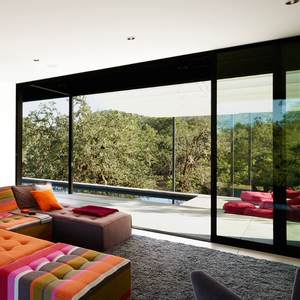
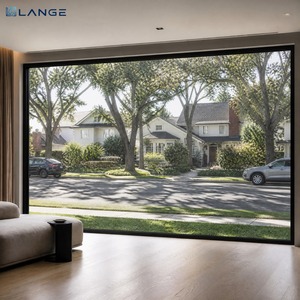
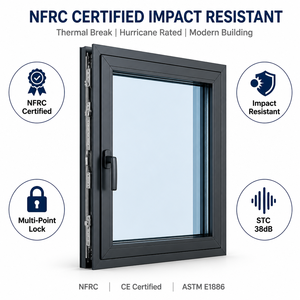
Storm-proof thermal insulation system for coastal luxury villas. Compatible with high-tensile 304 stainless steel security screens for extreme wind resistance.
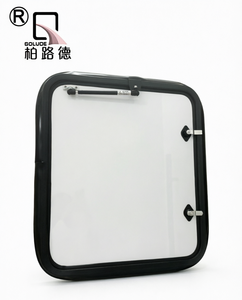
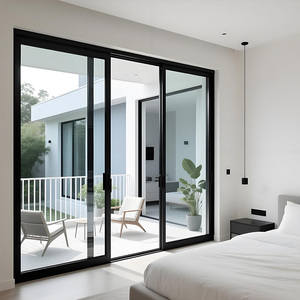
Specialized modular aluminum hatch door equipped with self-tightening compression locks and integrated fine bug-mesh screens for mobile & residential units.
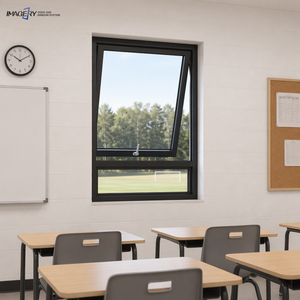
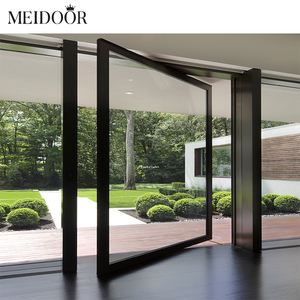
Grand architectural entrance door featuring floor-spring heavy-duty pivots. Can be retrofitted with magnetic security mesh side lites for luxury commercial spaces.
Strategic Analysis of Top China Aluminum Mesh Door Manufacturing
The global demand for architectural fenestration that balances aesthetic elegance, natural ventilation, thermal insulation, and physical intruder defense has placed China’s specialized aluminum mesh door manufacturers at the forefront of the international supply chain. As modern residential villas, commercial high-rises, and resort complexes demand multifunctional opening systems, the integration of high-tensile security screens—frequently designated as "Kingkong Mesh" or 304/316 marine-grade stainless steel woven wire—with precision-extruded aluminum alloy frames has evolved into a highly specialized engineering domain.
Leading Chinese manufacturing hubs, spearheaded by advanced industrial bases such as Changsha Wincraft Aluminum Window Tech Co., Ltd., have transitioned from traditional basic assembly lines to fully integrated digital manufacturing ecosystems. Sourcing from top-tier Chinese aluminum mesh door factories allows global B2B buyers—including architectural specification writers, hardware distributors, and real estate developers—to access custom-engineered aluminum door systems that conform strictly to international building codes, including Australian AS5039, North American NFRC/AAMA, and European CE benchmarks.
Provides multi-stage anti-pry security while maintaining seamless frame alignment
Achieving superior quality in aluminum mesh door fabrication requires stringent raw material quality control. Raw primary aluminum ingots must undergo precise homogenized thermal processing to yield 6063-T5 extrusions with minimal dimensional tolerance variance. Simultaneously, the screen mesh must be secured within the aluminum profile using structural aluminum bead clamping or double-bevel mechanical locking slots. This construction prevents mesh tear-out under heavy physical impact or forced intrusion attempts, providing real structural protection alongside insect exclusion.
Why Direct Sourcing from Wincraft Delivers Structural Competitive Advantages
Integrating end-to-end design capabilities, advanced CNC processing, and rigorous quality inspection under a single roof.
Integrated OEM / ODM Engineering
From initial architectural hand sketches to full 3D CAD/BIM model development, Changsha Wincraft's in-house design team turns complex project requirements into precise shop drawings within 24 hours.
20,000 m² Digital Manufacturing Base
Equipped with multi-axis CNC machining centers, automated corner-crimping machines, and high-precision glass assembly lines, ensuring millimeter-perfect squareness and tight seam tolerances across high-volume production orders.
Global Trade & Logistics Mastery
Serving clients in over 80 countries, Wincraft manages export packaging, customs compliance, and container loading efficiency (both pre-assembled and knock-down flat-packs) to safeguard products during sea transit.
Key Technical Trends Reshaping the Aluminum Mesh Door Industry
The aluminum mesh door manufacturing sector in China is undergoing a major transformation driven by architectural demand for thermal efficiency, sleek visual profiles, and integrated smart technologies. B2B buyers sourcing from Chinese factories must evaluate how prospective suppliers incorporate these engineering advancements:
1. Integration of Thermal Break Systems with Multi-Track Mesh Configurations
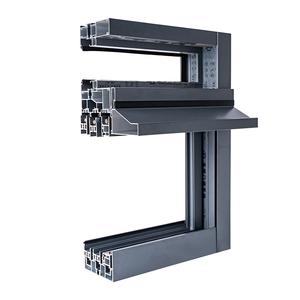
Historically, security screen doors were installed as secondary, standalone storm frames mounted outside primary sliding or casement glass doors. Modern architectural designs favor single, integrated frame profiles. Leading Chinese factories manufacture triple-track sliding systems and integrated casement profiles with dual sash chambers. These systems combine a polyamide PA66 thermal break glass sash with a dedicated sliding security mesh sash within one continuous extrusion frame. This cuts installation depth, reduces job-site labor costs, and maintains continuous thermal performance across the building envelope.
2. Evolution of Mesh Materials: 304 vs. 316 Stainless Steel & High-Transparence Weaves
The core of security screen door performance lies in the wire mesh specification. Premium Chinese factories have shifted away from standard low-carbon wire screens toward high-tensile AISI 304 and AISI 316 marine-grade stainless steel wire (with tensile strengths exceeding 900 MPa). 316 stainless steel is preferred for coastal and high-humidity applications due to its higher molybdenum content, which resists pitting corrosion caused by salt spray. Concurrently, advancements in precision wire weaving yield fine-wire high-transparence security screens (such as 0.7mm wire with a 14-mesh grid) that deliver impact resistance without obstructing outdoor views or natural lighting.
Modern luxury residential design heavily favors ultra-thin aluminum sightlines. Chinese manufacturers are pushing frame engineering to hide heavy multi-point locking mechanisms within slim profile depths (ranging from 20mm to 45mm visible face width). To offset reduced frame mass, high-strength aluminum alloys (such as 6060-T66) are combined with structural corner keys and cold-crimping epoxy injection, preserving structural frame rigidity under high wind pressures.
4. Smart Access Integration & Concealed Hardware
Modern security mesh doors are increasingly equipped with biometric smart locks, RFID access interfaces, and motor-driven automated sliding actuators. Top Chinese manufacturers design custom lock cavities and concealed wiring channels within aluminum extrusions, allowing smart access hardware to integrate directly into screen door frames without compromising structural seals or aesthetics.
Future Procurement Trends & Sourcing Strategies for International Importers
Sourcing custom fenestration products internationally requires balancing raw material costs, fabrication precision, freight tariffs, and lead times. As the global construction market demands greater supply chain transparency, B2B procurement strategies for aluminum mesh doors are evolving:
1. Shift to Full System Engineering Packages
Rather than procuring frames, glass, screen mesh, and hardware from separate vendors, international buyers increasingly partner with primary OEM factories that deliver fully validated system packages. Single-source supply guarantees hardware compatibility, unified powder-coat batch matching, and clear warranty accountability.
2. Freight Density & KD (Knock-Down) Packaging
Rising ocean freight costs make shipping fully assembled large-panel patio doors inefficient. Top factories now provide modular Knock-Down (KD) assembly kits with pre-drilled hardware slots, pre-installed perimeter seals, and detailed assembly guides. This maximizes container volume while maintaining fast installation on site.
3. Stringent Factory Auditing & Quality Protocols
Leading international buyers now require comprehensive factory verification covering five key areas: raw extrusion chemical testing, powder coating film thickness verification (>60 microns), mesh tensile strength pull-out testing, air-water-wind lab testing, and final export wood-crate packaging standards.
By establishing direct OEM/ODM partnerships with technology-driven factories like Wincraft, international importers eliminate middleman markups while ensuring that profile designs, glass builds, and mesh specifications align directly with project wind load calculations and regional building energy standards.
Frequently Asked Questions (FAQ) for Aluminum Mesh Door Procurement
Clear technical and commercial answers to help importers, architects, and project managers streamline direct sourcing from Chinese manufacturers.
Q1
What wire diameter and stainless steel grade are recommended for security mesh doors vs. standard fly screens?
For anti-theft security screen doors designed to withstand physical intrusion, we recommend 0.8mm to 1.0mm wire diameter AISI 304 or AISI 316 stainless steel security mesh (often 11-mesh or 14-mesh). AISI 316 grade is essential for coastal areas subject to marine salt spray. For basic insect protection without security needs, 0.5mm to 0.6mm stainless mesh or fine fiberglass mesh is sufficient.
Q2
Do you accept custom OEM and ODM orders for specialized aluminum profiles and mesh integration?
Yes, Wincraft specializes in complete OEM and ODM manufacturing. We support private-label brand packaging, custom extrusions based on client drawings, specialized architectural powder-coat color matching (RAL palette), and system development tailored to specific regional hardware or structural standards.
Q3
How do thermal break profiles incorporate security mesh screens without creating thermal bridges?
Advanced multi-track extrusion designs separate the thermal break glass sash chamber from the screen mesh track using structural polyamide (PA66-GF25) thermal insulation bars. This configuration allows the glass door sash to maintain a sealed thermal barrier while the exterior or interior mesh screen slides on its own dedicated non-thermal track, preserving total system thermal efficiency.
Q4
What is the standard production lead time for custom aluminum mesh doors and windows?
Standard customized orders are typically produced within 3 to 4 weeks (approximately 25-30 days) following shop drawing approval and deposit confirmation. Large-scale commercial developments or custom extrusion die development projects are scheduled in planned batches to align with site construction timelines.
Q5
What surface treatment provides the highest corrosion resistance for marine/coastal projects?
For coastal installations, we recommend Fluorocarbon PVDF spray coating or high-durability architectural powder coatings (such as AkzoNobel Interpon) applied over a chromate-pretreated aluminum substrate. This ensures an anodizing film thickness of 15–25µm or powder coating thickness of 60–80µm, passing 3,000-hour salt spray corrosion testing (ASTM B117).
Q6
Can Wincraft provide design engineering proposals and shop drawings prior to production?
Yes. Our dedicated engineering team works directly from your architectural floor plans, elevation drawings, or project specifications. We deliver comprehensive 24-hour design proposals and 3D renderings, followed by detailed CAD shop drawings detailing extrusion cross-sections, corner joint construction, glass builds, and hardware layout for your formal approval.
Q7
How are products packaged to prevent scratching and mesh deformation during ocean freight?
All finished door sashes and frames undergo a 4-layer export protective wrapping process: PE protective film over finished profiles, protective corner guards, EPDM foam wrapping, and fully enclosed fumigated plywood crates or rigid steel-framed stillages. This prevents frame abrasion, glass breakage, and mesh tension distortion during transit.
Q8
Can aluminum security mesh doors meet hurricane impact and knife shear testing standards?
Yes. Our high-tensile 304/316 security screen doors are engineered to comply with Australian AS5039 standards—passing the Knife Shear Test, Dynamic Impact Test, and Jemmy Test. When combined with laminated impact-resistant glass sashes, these systems meet stringent wind-load and debris-impact requirements for hurricane-prone regions.
Partner with a Leading China Aluminum Mesh Door Factory
Consult with our engineering team today for technical drawings, custom extrusion quotes, and factory-direct project support within 24 hours.