Recommended Product Systems for Global Export
Explore high-precision engineered aluminium composite windows, exterior doors, thermal break profiles, and custom architectural glazing systems certified for global structural codes.
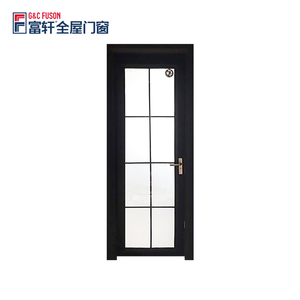 Casement Door
Fuson Tempered Glass Casement Door Aluminium Casement Door Interior Bathroom Swing Door With Private Label Wholesale
- Alloy Grade: 6063-T5 Aluminium
- Glazing Type: 5mm+9A+5mm Tempered
- Application: Bathroom / Interior
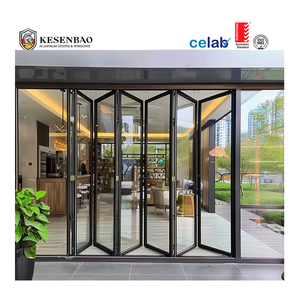 Bifold System
Exterior Waterproof Soundproof Aluminum Folding Door with Fly Screen Patio Bifold Door Glass Folding Door System for Villa
- Thermal Break: PA66GF25 Barrier
- Acoustic Rating: STC 38 dB
- Hardware: Heavy Duty German Lock
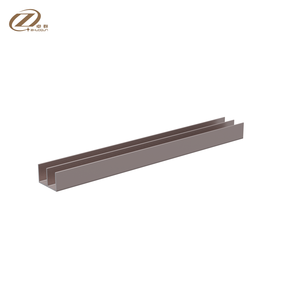 Cabinet Frame
Customized Scratch Resistant 6000 Series Aluminum Kitchen Cabinet Door Frame with Cutting & Bending Services
- Material: 6000 Series Extrusions
- Surface Finish: Anodized / Scratch Resistant
- Customization: Cutting & Bending CNC
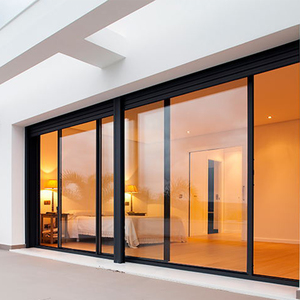 AU Standard
AS2047 Modern Double Glazed Stacker Aluminum Sliding Doors Australia Standard with Flyscreen Aluminum Alloy Material
- Compliance: AS2047 / AS1288 Certified
- Glazing Unit: 6mm Low-E + 12Ar + 6mm
- Screen Option: Stainless Mesh / Flyscreen
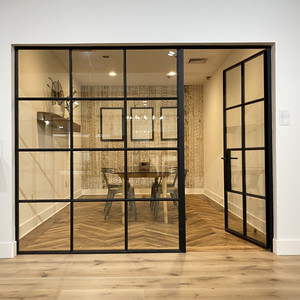 French Divider
China Supplier Customized Size Metal Framed French Wrought Iron Indoor Walls Divider Aluminium Glass Doors
- Design Type: Slim Frame French Grid
- Glass Build: 8mm Toughened Clear/Frosted
- Powder Coating: Matte Black AAMA 2604
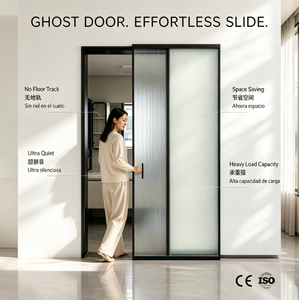 Pocket Door
Modern Interior Aluminum Glass Sliding Wall Pocket Door for Bedroom Office
- Track System: Concealed Soft-Close Track
- Frame Profile: Ultra-Narrow 16mm Sightline
- Space Savings: 100% In-Wall Recess
 Thermal Casement
Thermal Break Aluminum Casement Window With Double Glazed Tempered Glass For Villa Projects, Custom Size OEM
- U-Factor: 1.4 W/m²K (Energy Star)
- Air Infiltration: Class 8 (EN 12207)
- Sealing: Triple EPDM Gaskets
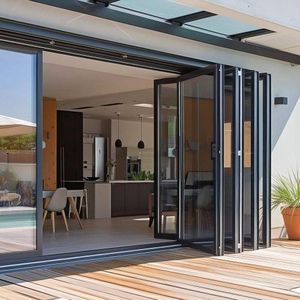 Triple Glazed Bifold
Thermal Break Aluminium Triple Glass Bifold Doors Insect Screens Accordion Exterior Patio Bifold Doors
- Glass Build: 5mm+12Ar+5mm+12Ar+5mm
- Thermal Rating: Passive House Standard
- Flyscreen: Integrated Accordion Mesh
Executive Sourcing Guide: Architectural Metallurgy & Thermal Composite Dynamics
In modern high-performance architecture, specifying the optimal envelope system requires navigating complex engineering trade-offs between structural rigidity, thermal transmittance (U-Factor), solar heat gain coefficients (SHGC), and long-term weathering resistance. As leading manufacturers and global exporters of aluminium composite windows and doors, Changsha Wincraft Aluminum Window Tech Co., Ltd. delivers structural precision designed to meet or exceed international building codes including North American NFRC/AAMA standards, Australian AS2047, and European CE/EN 14351-1 benchmarks.
Aluminium composite fenestration integrates prime 6063-T5/T6 structural aluminium extrusions with composite cladding materials or solid timber interior elements, joined via advanced poly-insulation structural thermal breaks. The structural frame provides dynamic wind load resistance up to pressure ratings of P3 ≥ 5.0 kPa, while the interior thermal barrier effectively eliminates heat bridge thermal transfers across the building envelope.
Technical Insight (Information Gain): Standard non-thermal aluminium profiles exhibit high thermal conductivity ($\approx 200 \text{ W/m}\cdot\text{K}$). By integrating Technform PA66GF25 (polyamide 66 reinforced with 25% glass fiber) thermal break strips, thermal conductivity at the frame barrier drops to under $0.3 \text{ W/m}\cdot\text{K}$, decreasing overall window U-factors from $4.5 \text{ W/m}^2\text{K}$ down to under $1.2 \text{ W/m}^2\text{K}$.
Beyond structural extrusions, surface treatment durability is paramount for global procurement officers operating in varied microclimates—ranging from harsh coastal salt-spray environments to hyper-arid high-UV regions. Our production facility utilizes AkzoNobel and PPG architectural powder coatings certified under Qualicoat Class 2 and AAMA 2604/2605 specifications. These coatings undergo rigorous 3,000-hour salt spray testing (ASTM B117) to ensure zero blistering, chalking, or color degradation over a 25-year operational lifecycle.
Fenestration System Technical Benchmark Matrix
Comparative structural and energy performance evaluation across primary architectural window and door profile materials.
| Performance Parameter | Wincraft Thermal Aluminium Composite | Standard Non-Thermal Aluminium | uPVC / Vinyl Systems | Solid Timber Systems |
|---|---|---|---|---|
| Thermal Transmittance ($U$-Factor) | 1.0 – 1.4 W/m²K (High Efficiency) | 3.8 – 5.2 W/m²K (Poor) | 1.3 – 1.8 W/m²K (Moderate) | 1.4 – 1.9 W/m²K (Moderate) |
| Structural Wind Load (ASTM E330) | P3 ≥ 5.0 kPa (Commercial / High-Rise) | P3 ≥ 4.5 kPa (High) | P2 ≤ 2.5 kPa (Residential Only) | P2 ≤ 3.0 kPa (Moderate) |
| Acoustic Insulation (STC Rating) | STC 38 – 45 dB (Double/Triple Glazed) | STC 26 – 30 dB | STC 32 – 36 dB | STC 34 – 38 dB |
| Frame Lifespan & Durability | 40+ Years (Zero Rot/Warping) | 40+ Years | 15 – 20 Years (UV Brittle Risk) | 15 – 25 Years (High Maintenance) |
| Coastal Corrosion Resistance | AAMA 2605 / Qualicoat Class 2 | Standard Anodized | High Chemical Resistance | Susceptible to Moisture Decay |
| Fire Safety Rating (EN 13501-1) | Class A1 / A2 Non-Combustible | Class A1 Non-Combustible | Class B/C Self-Extinguishing | Class D Combustible |
State-of-the-Art Factory Infrastructure & Export Mastery
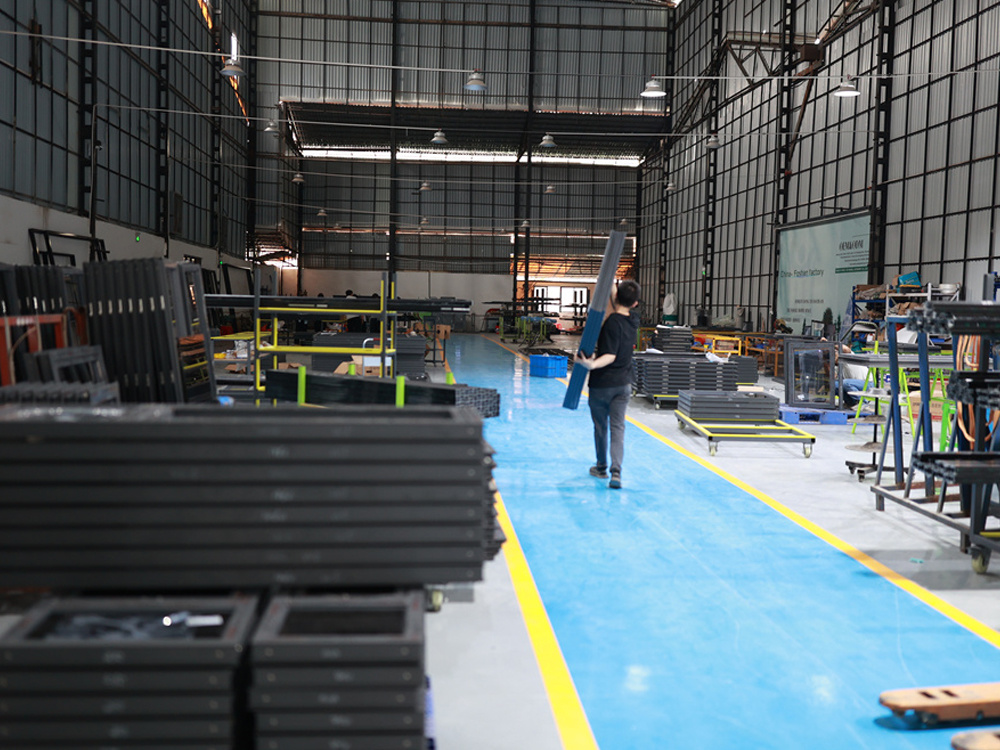
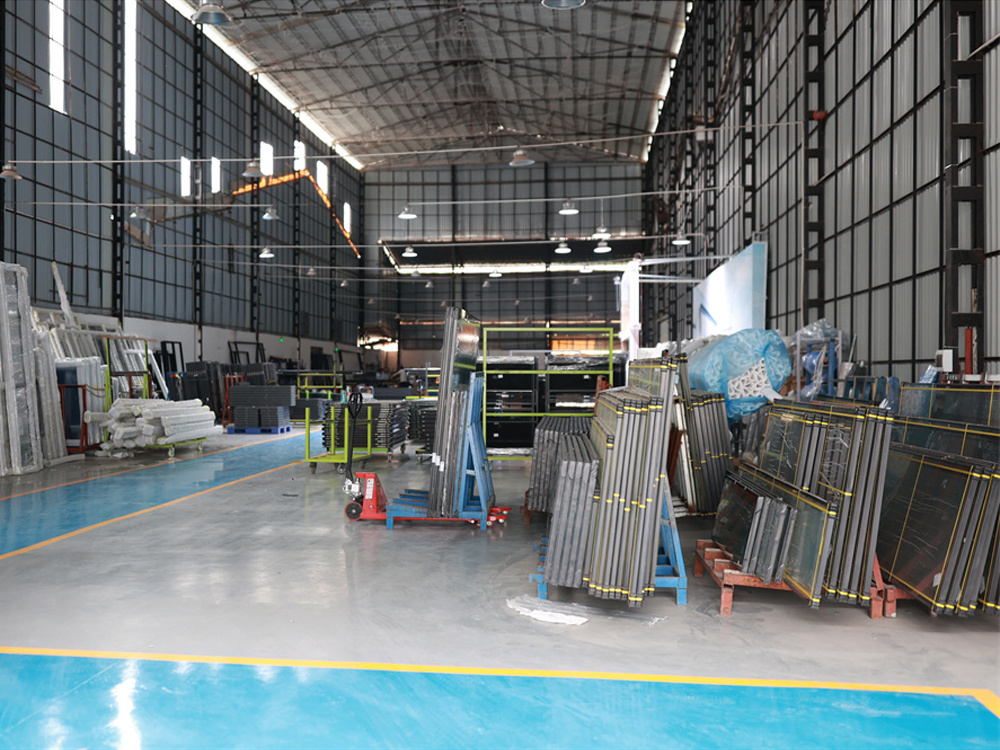
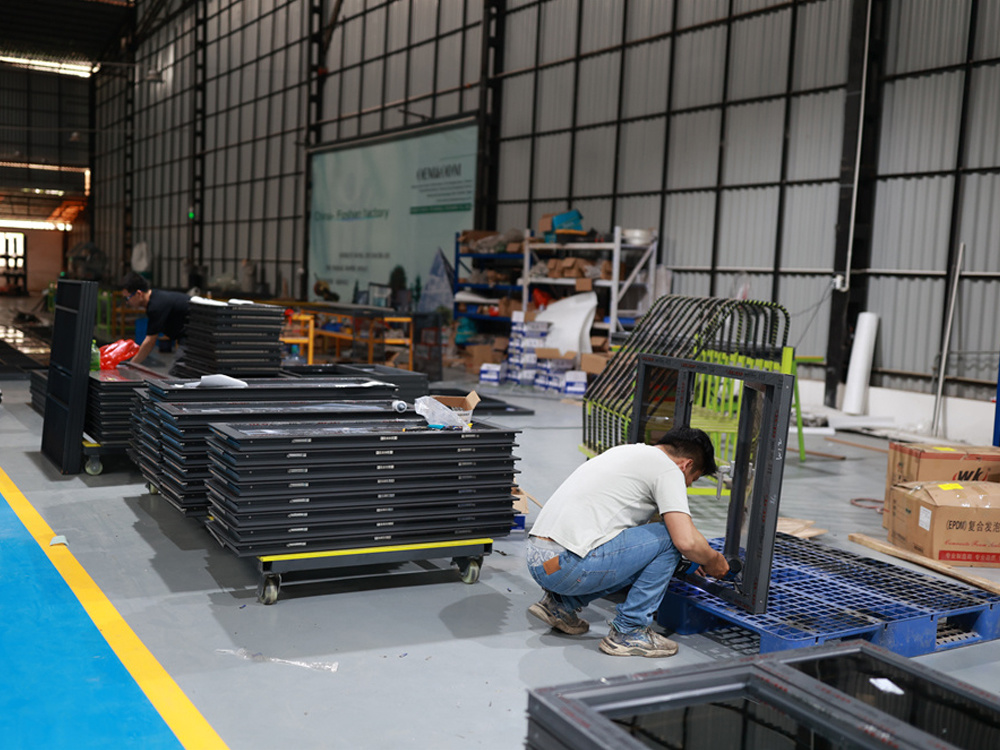
Changsha Wincraft Aluminum Window Tech Co., Ltd. operates as a premier integrated manufacturer and direct exporter specializing in custom architectural fenestration solutions. Spanning a 20,000+ square meter advanced production facility, our factory integrates automated CNC machining centers, precision double-head cutting saws, continuous corner-crimping lines, and strict automated assembly lines.
We eliminate supply chain inefficiencies by offering direct factory-to-project manufacturing. From CAD shop drawing approval to final container loading, every order undergoes a 14-point Quality Control audit checking extrusion wall tolerances (EN 12020-2 standard), corner joint shear strength, EPDM seal continuity, and hardware locking torque.
- OEM & ODM Capabilities: Full custom profile extrusion development, private label branding, and custom powder-coat color matching (RAL palette).
- Rapid Design Engineering: Dedicated architectural engineering team providing 3D renderings and structural shop drawings within 24 hours.
- 4-Week Delivery Turnaround: Standard order execution within 28 business days with batch delivery management for multi-phase commercial sites.
- Export Packaging Protocol: Protective film surface wrapping, corner corner guards, fumigated wooden crates, and steel-strapped palletizing for sea freight.

Future Procurement Trends in Aluminium & Fenestration
Strategic foresight into regulatory shifts, decarbonization mandates, smart home integration, and modern architectural preferences shaping global procurement.
1. Carbon Neutrality & Recycled Aluminium Billets
With the European Union's Carbon Border Adjustment Mechanism (CBAM) and global ESG policies coming into full force, B2B buyers are prioritizing low-carbon aluminium extrusions. Sourcing aluminium manufactured using hydroelectric smelting—or utilizing post-industrial recycled content (exceeding 75% scrap ratios)—slashes embedded carbon emissions from 18kg CO₂/kg down to under 4kg CO₂/kg without compromising tensile strength or structural integrity.
2. Ultra-Low Energy & Passive House Certification
Energy codes across North America (IECC 2024) and Europe (NZEB - Nearly Zero Energy Buildings) mandate stringent envelope performance. Sourcing trends are shifting rapidly toward triple-pane insulated glass units (IGUs) filled with 95% Argon gas, featuring warm-edge composite spacers (e.g., Technoform or Swisspacer) and double soft-coat Low-E coatings, driving window U-values down into passive house ranges ($\le 0.80 \text{ W/m}^2\text{K}$).
3. Smart Glazing & Building Automation Integration
Architectural specification is increasingly incorporating Electrochromic (EC) smart glass and motor-driven concealed hardware systems. Modern commercial and high-end residential projects demand motorized sliding stacker doors and tilt-turn windows that interface directly with KNX or Zigbee Building Management Systems (BMS), featuring automated rain sensors, wind-load retraction, and automated solar shading controls.
4. Industrialized Prefabrication & Dry Glazing Innovations
To overcome rising site labor costs in destination markets, contractors are demanding prefabricated, unitized fenestration units shipped complete with factory-installed glass and dry-gasket EPDM sealing systems. Dry-glazing technology eliminates wet silicone application on-site, accelerating building envelope enclosure times by up to 40% while ensuring factory-controlled weatherproofing performance.
Product & Technological Development Trends in Composite Fenestration
The global architectural fenestration sector is experiencing a technological paradigm shift. Historical fenestration design treated windows as static barriers; contemporary engineering treats them as dynamic, active environmental filters. Key technological advancements include:
1. Multi-Cavity Polyamide Thermal Insulation Chambers: Next-generation extrusions utilize multi-cavity thermal break profiles filled with expanded polyolefin (PE) or aerogel foam inserts. This multi-chamber geometry breaks convection currents inside the aluminium frame cavity, driving thermal performance to structural limits.
2. Structural Silicone Glazing (SSG) & Slim Sightlines: Modern architectural aesthetics demand maximum glass surface areas and minimal frame visibility. Structural silicone bonding transfers wind loads directly from glass panes to hidden aluminium sub-frames, enabling ultra-slim sightlines (as narrow as 16mm) while retaining full structural resistance against typhoon-force winds.
3. Advanced Multi-Point Security Locking Hardware: Security compliance under European RC2/RC3 (EN 1627) and North American forced-entry resistance standards requires hardened steel mushroom-head locking cams, continuous gearboxes, and anti-lift pin mechanisms concealed within the profile's European standard C-groove or V-groove channels.
Frequently Asked Questions (B2B Procurement & Engineering)
Detailed technical answers for architects, contractors, importers, and procurement directors sourcing aluminium composite windows and doors.
Q1 Do you accept OEM and ODM orders for custom aluminium windows and doors?
Yes. We provide comprehensive OEM and ODM services. Our engineering department develops custom profile extrusions, custom die tooling, private label packaging, and tailored hardware integration based on your CAD/BIM architectural drawings or market specifications.
Q2 What is the standard production lead time for export orders?
Standard customized order production is completed within approximately 4 weeks (28 calendar days) following final shop drawing sign-off and deposit receipt. Large-scale commercial project orders are scheduled in synchronized batch deliveries aligned with your jobsite installation schedule.
Q3 Can your engineering team provide design proposals and shop drawings prior to production?
Yes. Our in-house architectural engineering team reviews your elevation schedules and structural requirements to deliver 2D/3D shop drawings and visual renderings within 24 hours, ensuring full dimensional and code verification prior to manufacturing.
Q4 How are products packed to prevent damage during long-distance ocean transport?
Products are protected using a multi-layer export protocol: 1) Protective anti-scratch film on all profile surfaces; 2) Impact-resistant corner caps; 3) EPE foam wrapping; 4) Fully enclosed, fumigated ISPM-15 compliant plywood crates or steel-framed A-frame pallets designed for forklift handling.
Q5 How do your aluminium composite windows comply with local building codes (e.g., AS2047, NFRC, CE)?
We configure system profiles, thermal break specifications, glass build-ups (such as Low-E coatings, argon fill, laminated glass), and hardware to meet destination codes. We supply complete structural calculation reports and test certificates for wind load, water tightness, air infiltration, and thermal transmittance upon request.
Q6 What aluminium alloy grades and surface treatment standards do you utilize?
We utilize prime 6063-T5 and 6063-T6 architectural aluminium alloy extrusions. Surface treatments include AkzoNobel fluorocarbon (PVDF) spray coating, Qualicoat Class 2 architectural powder coating (AAMA 2604/2605), and anodized finishes up to 25 microns for maximum corrosion protection.
Q7 What is the minimum order quantity (MOQ) for custom project sourcing?
For standard profile systems and stock RAL color finishes, our MOQ starts at just 50 square meters, catering to custom luxury residential projects. For custom profile extrusion dies or specialized non-standard colors, factory MOQ is evaluated based on profile weight and project scope.
Q8 What warranty coverage is provided on exported window and door systems?
We provide a comprehensive 10-year structural warranty on aluminium profile extrusions and thermal break integrity, a 10-year warranty on insulated glass units against seal failure/fogging, and a 5-year warranty on mechanical hardware components under standard operating conditions.
Ready to Source High-Performance Aluminium Composite Windows?
Partner directly with Changsha Wincraft Aluminum Window Tech Co., Ltd. for factory-direct wholesale pricing, OEM/ODM customization, and rapid 24-hour engineering drawing turnarounds.
Send an Inquiry