Understanding the Engineering & Sourcing Landscape for Aluminum Clad Replacement Windows
In modern architectural design and envelope restoration, specifying replacement fenestration requires a technical evaluation of material durability, thermal physics, structural design pressures, and lifecycle cost analysis. For commercial developers, general contractors, and fenestration importers, identifying top trusted aluminum clad replacement windows manufacturers goes far beyond catalog aesthetics—it demands an audit of extrusion precision, thermal barrier integration, and compliance with international building standards.
Key Procurement Takeaway: High-performance aluminum clad replacement windows combine the natural thermal insulation and aesthetic warmth of interior timber (or high-density composite substrates) with an exterior armor of heavy-gauge extruded aluminum. This dual-material construction shields the structural frame from extreme thermal cycling, solar UV degradation, and moisture intrusion.
When evaluating premier window manufacturers, building specifiers must differentiate between legacy roll-formed aluminum cladding (often as thin as 0.019 to 0.024 inches) and heavy-duty extruded aluminum cladding (typically 0.060 to 0.080 inches thick, conforming to 6063-T5 or 6063-T6 alloy standards). Extruded aluminum cladding acts as a structural load-bearing shell, providing superior resistance to denting, wind-load deflection, and coastal atmospheric corrosion.
Technical Comparison: Aluminum Clad vs. Thermally Broken Aluminum vs. Vinyl/PVC
To assist architectural procurement officers and project managers in making data-driven decisions, the matrix below details the structural and thermal performance parameters across common window profile systems.
| Profile Technology | Structural DP Rating | Thermal Insulation (U-Factor) | Expected Lifespan | Maintenance Requirement | Cost-Benefit Efficiency |
|---|---|---|---|---|---|
| Extruded Aluminum Clad Wood | DP50 – DP90 | 0.14 – 0.22 BTU/h·ft²·°F | 45+ Years | Low (Exterior) | Premium / High Value |
| Thermally Broken Aluminum (PA66 Strip) | DP60 – DP100+ | 0.18 – 0.26 BTU/h·ft²·°F | 50+ Years | Very Low | Excellent ROI |
| Roll-Formed Aluminum Clad | DP30 – DP45 | 0.24 – 0.30 BTU/h·ft²·°F | 20 – 25 Years | Moderate | Economy Tier |
| Unreinforced Vinyl / PVC | DP20 – DP35 | 0.22 – 0.28 BTU/h·ft²·°F | 15 – 20 Years | Low | Budget Sensitive |
Enterprise Advantages of Changsha Wincraft Aluminum Window Tech Co., Ltd.
As a premier Chinese manufacturer and global exporter of custom architectural aluminum doors, windows, sunrooms, and pavilions, Changsha Wincraft Aluminum Window Tech Co., Ltd. operates at the intersection of European engineering precision and scale manufacturing efficiency. Serving B2B clients, importers, contractors, and architects in over 80 countries, Wincraft maintains rigorous quality control across every production phase.
20,000+ m² Production Base
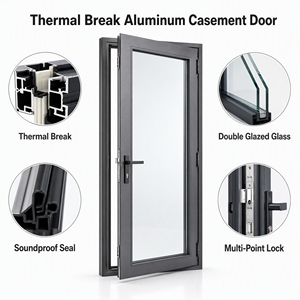
Equipped with automated CNC profile machining centers, precision miter cutting equipment, and multi-chamber thermal barrier assembly lines to guarantee structural tolerance within ±0.5mm.
24-Hour Drawing Turnaround
Our dedicated engineering office communicates directly with project architects, providing full structural calculations, elevation renderings, and CAD shop drawings within 24 hours of inquiry.
~4-Week Lead Time Assurance
Standard customized orders are fabricated, glazed, and quality-inspected within 28 days. Large-scale multi-unit commercial developments are scheduled in synchronized site-delivery batches.
Future Procurement Trends in Architectural Aluminum Replacement Windows
The global fenestration sector is experiencing a rapid technological shift driven by stringent decarbonization codes, net-zero building directives (such as European Passive House standards and North American IECC codes), and evolving architectural preferences. Key procurement trends shaping supplier selection include:
1. Ultra-Low U-Value & Vacuum Glazing Integration
Next-generation aluminum clad systems are abandoning traditional double-pane IGUs in favor of triple-pane and hybrid Vacuum Insulated Glass (VIG) configurations. Utilizing argon gas fill and dual Low-E coatings, overall window U-factors drop below 0.12, dramatically lowering HVAC operational loads.
2. Ultra-Narrow Sightlines & Structural Glazing
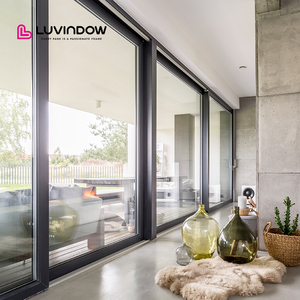
Architectural demand leans heavily toward minimal frame exposure. Advanced extruded aluminum frames utilize structurally bonded glass units that act as internal bracing elements, allowing panel heights to exceed 3.5 meters while maintaining minimal sightlines.
3. Smart Automated Micro-Ventilation & Mechatronics
Commercial window systems are increasingly specified with integrated concealed motors, motorized tilt-and-turn mechanisms, dynamic smart glass tinting (electrochromic glass), and rain/wind sensor automation synced directly with modern Building Management Systems (BMS).
Frequently Asked Questions (FAQ) for Global B2B Window Sourcing
Essential technical and operational answers to aid purchasing heads, importers, and general contractors during factory vetting and contract negotiation.