Featured Architectural Aluminum Doors & Windows
Engineered for extreme wind loads, thermal insulation, and architectural aesthetics. Every unit undergoes rigorous hydrostatic and structural stress testing prior to global dispatch.
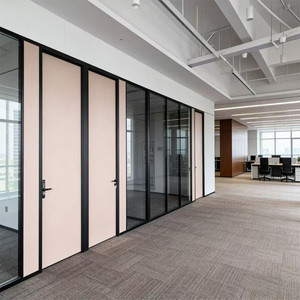
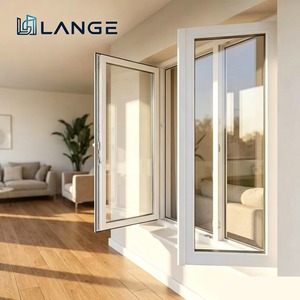
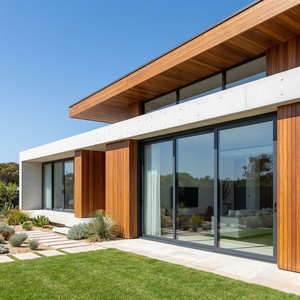
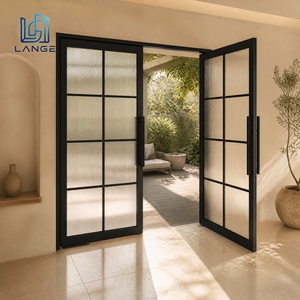
B2B Vendor Evaluation & Structural Engineering Matrix
Selecting top trusted aluminum door factories requires evaluating systemic parameters beyond simple profile thickness. Premium manufacturers implement calibrated alloy chemical compositions, precision thermal break strips, and validated hardware integrations.
| Evaluation Parameter | Tier-1 OEM Manufacturing Base (e.g., Wincraft) | Standard Regional Assembler | Low-Cost Commodity Sourcing |
|---|---|---|---|
| Primary Aluminum Alloy Grade | 6063-T5 / 6061-T6 (100% Primary Billet) | 6063-T5 (Mixed Scrap Blend) | Uncertified Recycled Scrap Aluminum |
| Thermal Break Technology | PA66-GF25 Polyamide Strips (25% Glass Fiber) | Standard PVC Extruded Strips | Non-Thermal Solid Aluminum Profiles |
| Structural Wall Thickness | 1.8mm – 3.0mm (Exceeds ASTM/AS2047) | 1.4mm – 1.6mm (Minimum Standard) | 1.0mm – 1.2mm (Sub-standard Flexing) |
| Surface Finishing Compliance | AAMA 2605 PVDF / Qualicoat Class 2 Powder | AAMA 2603 Standard Spray Coating | Single-Coat Liquid Paint (Fades <2 Yrs) |
| Sealing Gasket Compound | Continuous Vulcanized EPDM (30-Yr Elasticity) | Standard Thermoplastic Rubber (TPR) | Recycled PVC (Cracks Under Thermal Stress) |
| Acoustic & Thermal Metrics | U-Factor ≤ 1.3 W/m²K | STC ≥ 42 dB | U-Factor ≈ 2.2 W/m²K | STC ≈ 32 dB | U-Factor ≥ 3.8 W/m²K | STC ≤ 24 dB |
Architectural fenestration failure during extreme meteorological events is rarely caused by glass breakage alone; in over 84% of documented coastal building envelope failures, deformation occurs at the structural profile interlock or due to thermal break strip shear. Changsha Wincraft Aluminum Window Tech Co., Ltd. utilizes high-tensile 6063-T5 aluminum extrusions with a minimum ultimate tensile strength of 205 MPa, ensuring zero structural deflection under high wind loads up to 5.0 kPa.
Key Technological Trends Shaping Aluminum Fenestration
As global building codes mandate lower carbon footprints and higher envelope efficiency, aluminum door and window manufacturing is shifting toward advanced material physics and smart automation.
Multi-Chamber Polyamide Thermal Barriers
Modern architectural aluminum doors incorporate multi-chamber PA66-GF25 insulating bridges combined with aerogel cavity infill. This multi-barrier design breaks thermal conduction pathways, reducing frame thermal conductivity ($K_f$) to below $1.2 \text{ W/m}^2\text{K}$.
Ultra-Narrow Minimalist Sightlines
Architectural preference is heavily favoring hidden-frame casement windows and narrow-stile sliding stacker doors. Interlocking vertical profiles as slim as 18mm can support heavy double and triple IGUs using structural silicone bonding techniques.
High-Durability PVDF & Anodized Finishes
Coastal luxury developments require surface resistance to salt spray corrosion. Fluorocarbon (PVDF) 3-coat finishes compliant with AAMA 2605 withstand over 4,000 hours of continuous salt-spray testing without chalking or loss of adhesion.
Future Procurement Trends for International B2B Buyers
Navigating international supply chains requires understanding how global logistics, digital engineering assets, and environmental compliance impact project lead times and overall delivered cost.
1. Decarbonization & EPD Certification
European and North American building codes increasingly mandate Environmental Product Declarations (EPDs). Commercial developers are evaluating aluminum suppliers based on embodied carbon metrics. Leading China aluminum door suppliers are transitioning to hydro-powered primary smelting processes and utilizing up to 30% pre-consumer recycled aluminum alloy content to drastically lower carbon footprints without compromising structural integrity.
2. BIM Model Integration & 24h Digital Shop Drawings
Paper-based procurement is rapidly being replaced by direct digital twin integration. Modern architects require CAD/Revit BIM (LOD 350) models upfront. Importers and general contractors partner with factories that offer fast shop drawing turnarounds within 24 hours. This practice mitigates field installation errors and aligns hardware locations directly with structural framing openings.
3. Prefabricated Modular Fenestration Assemblies
On-site skilled labor shortages across Europe, Australia, and North America have accelerated the adoption of factory-assembled modular sunrooms, aluminum pavilions, and sub-frame window modules. Delivering fully assembled units equipped with pre-drilled anchoring slots reduces jobsite labor hours by up to 40% and ensures factory-controlled sealant application around thermal bridges.
4. Multi-Point Locking & Concealed Automation
Security standards like PAS 24 and RC2/RC3 anti-burglary ratings are standard expectations for luxury villa developments. B2B buyers prioritize doors featuring concealed mechatronic drives, bi-directional multi-point stainless steel locking hooks, and full integration with smart home automation frameworks (Zigbee/KNX protocols).
Why Changsha Wincraft is a Preferred Global Partner
Combining deep technical expertise with state-of-the-art intelligent manufacturing, Wincraft delivers customized fenestration solutions across 80+ countries worldwide.
Integrated Factory Production & Customization
Changsha Wincraft Aluminum Window Tech Co., Ltd. is an integrated building materials manufacturer combining R&D, structural design, precision extrusion processing, double-glazing assembly, and international export logistics under one unified quality management system.
Unlike trading houses or small local workshops, Wincraft manages end-to-end production in a 20,000+ m² modern manufacturing plant. Equipped with automated CNC double-head cutting saws, multi-axis corner-crimping machines, and computerized glass insulating lines, Wincraft achieves tight machining tolerances (±0.5mm) across high-volume production orders.
Rigorous 5-Stage Quality Inspection Framework
Quality assurance is embedded in every stage of manufacturing to ensure full compliance with target export region standards (such as Australian AS2047, European CE Mark, and North American NFRC/AAMA requirements):
- Spectrometric Alloy Verification: Testing aluminum billet purity before profile extrusion.
- Coating Gauge Checks: Verifying micron thickness of anodized and PVDF layers.
- Hydrostatic Chamber Testing: Simulating hurricane wind load and torrential rain resistance.
- Hardware Stress Testing: 50,000-cycle continuous operation testing on hinges and rollers.
- Export Packing Protection: Multi-layer protective foam, plastic wrap, and steel-reinforced plywood crates.
Frequently Asked Questions by Global B2B Buyers
Get clear, engineering-focused answers regarding technical specifications, OEM customization, building code compliance, and global delivery schedules.
Do you accept complete OEM and ODM customization for custom architectural projects?
How do your aluminum door and window systems meet international building codes (AS2047, CE, NFRC)?
What is the standard production lead time and minimum order quantity (MOQ)?
What packaging methods are utilized to prevent glass breakage and surface scratching during ocean transport?
What is the difference between thermal break aluminum and non-thermal break aluminum doors?
What warranty coverage and technical support do you offer to overseas importers?
Accelerate Your Architectural Sourcing Today
Send your project drawings or specification requirements directly to our senior structural engineering team. Get a comprehensive technical review, material takeoff, and preliminary pricing within 24 hours.
Inquire Now