Featured Aluminium Fenestration & Door Systems
Engineered to precision standards for importers, architectural specifiers, and construction contractors across Greater Nagoya and the Chubu region.
Strategic Analysis of Aluminium Flush Casement Windows in Nagoya's Architectural Ecosystem
Nagoya, as the central economic engine of Japan's Chubu region and Aichi Prefecture, represents a unique convergence of dense urban development, demanding climatic conditions, and stringent architectural regulations. Positioned on the Nobi Plain bordering Ise Bay, Greater Nagoya experiences a humid subtropical climate (Köppen Cfa) characterized by intensely hot, humid summers and cold winter winds blowing down from the Mikawa and Ibuki mountain ranges (known locally as Ibuki-oroshi). Furthermore, coastal proximity renders building envelopes susceptible to typhoons originating in the Pacific Ocean, requiring exceptional wind load resistance, superior air permeability, and absolute watertight integrity.
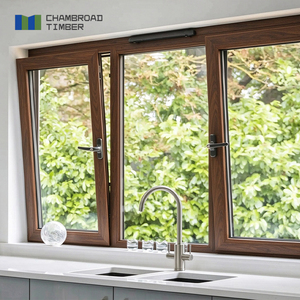
Traditionally dominated by standard overlapping sliding sashes, the Nagoya architectural fenestration sector is undergoing a profound paradigm shift toward high-performance aluminium flush casement windows. Flush casement designs—where the exterior window sash sits perfectly co-planar with the frame to form a flat, seamless outer plane—offer unmatched minimalist visual alignment sought by modern Japanese architects in Meieki, Sakae, Showa-ku, and Yagoto villa districts. Beyond aesthetic refinement, flush casement windows engineered with advanced polyamide thermal break profiles deliver continuous multi-point compression seals. This structural geometry eliminates draughts, drastically lowers thermal transmittance values (U-values), and satisfies Japan's updated mandatory Energy Conservation Standards (Sho-ene Kijun) for ZEH (Zero Energy House) compliance.
Core Engineering & Structural Architecture of Flush Casement Systems
To achieve both high structural stiffness and superior thermal insulation in Nagoya’s challenging urban climate, direct factory manufacturing of aluminium flush casement windows relies on specialized extrusion engineering and multi-cavity thermal separation technology.
Polyamide (PA66 GF25) Thermal Barriers
High-tensile polyamide thermal break strips reinforced with 25% glass fiber effectively sever the thermal bridge between exterior and interior aluminium profiles. This reduces frame thermal conductivity and prevents interior condensation during Nagoya's chilly winters.
Coplanar Exterior Geometry
Eliminates sightline breaks. The outer face of the sash rests 100% flush with the window frame. This seamless profile prevents water pooling during typhoon downpours while providing the clean, monolithic aesthetic demanded in modern Japanese architectural design.
Triple EPDM Sealing Matrix
Continuous automotive-grade EPDM rubber gaskets line the frame rebate, sash perimeter, and central thermal break barrier. Combined with multi-point perimeter locking hardware, the system achieves maximum air tightness (JIS A 4706 A-4 equivalent) and acoustic isolation.
Optimizing Fenestration for Nagoya's Microclimate & Typhoons
Standard imported window systems often fail in the Japanese market because they do not account for the specific atmospheric stress vectors present in Aichi Prefecture. During severe typhoons passing through Ise Bay, wind pressure forces rain horizontally against high-rise facades at speeds exceeding 45 m/s. Standard flush windows without engineered internal pressure-equalized drainage chambers can experience rainwater siphon effect through hardware rebates.
Our OEM/ODM factory extrusion profiles incorporate stepped internal drainage channels, concealed weep holes with anti-backflow baffles, and structural corner crimping with dual-component epoxy glue injections. This technical architecture guarantees a water tightness rating exceeding 500 Pa (JIS W-5), ensuring zero moisture ingress even under severe gale-force downpours.
Target Application Scenarios Across Greater Nagoya & Aichi Prefecture
Tailored architectural solutions designed for specific project types, structural codes, and urban zoning environments in Central Japan.
Luxury Urban Villas in Showa-ku & Yagoto
High-end custom residences in residential enclaves require ultra-slim sightlines, integrated flyscreens, and exceptional acoustic insulation against urban background traffic. Our aluminium flush casement windows equipped with double-glazed Low-E laminated glass deliver acoustic attenuation up to 38 dB, creating silent indoor sanctuaries.
Commercial & Mixed-Use Infill in Meieki & Sakae
Commercial boutique offices and modern retail facades in downtown Nagoya demand high structural wind load resistance (JIS S-6 / up to 3000 Pa design pressure) and precise fire-retardant glazing compatibility under the Japanese Building Standards Act (Article 22 zones).
Coastal Hospitality Resorts on Chita Peninsula
Resort developments facing the ocean require superior salt-spray corrosion protection. We supply high-micron fluorocarbon (PVDF) or anodized surface finishes (Qualicoat Class 2 standard) that resist marine air degradation, preventing surface chalking, pitting, and frame discoloration.
Aluminium Flush Casement Technical Benchmark Specifications
Factory engineering metrics evaluated against Japanese Industrial Standards (JIS A 4706) and International ISO performance standards.
| Performance Indicator | JIS Standard Benchmark | Factory Technical Parameter | Nagoya Architectural Benefit |
|---|---|---|---|
| Thermal Transmittance (U-Value) | JIS H-5 to H-6 Grade | 1.2 – 1.6 W/m²K (Double/Triple Low-E) | Exceeds 2025 mandatory ZEH insulation standard for Region 6 (Nagoya). |
| Air Permeability (Airtightness) | JIS A 4706 Grade A-4 | < 0.5 m³/(h·m²) at 10 Pa pressure | Eliminates winter cold drafts from Ibuki-oroshi mountain winds. |
| Water Tightness | JIS Grade W-5 (> 350 Pa) | 500 Pa – 750 Pa continuous pressure | Zero water penetration during severe typhoon wind-driven rainstorms. |
| Wind Pressure Resistance | JIS Grade S-6 (> 2400 Pa) | 3000 Pa – 4500 Pa ultimate structural load | Ensures frame stability in high-rise facades and coastal storm zones. |
| Acoustic Isolation | JIS Grade T-2 to T-3 | 32 dB – 42 dB Sound Reduction (Rw) | Filters city traffic, train line noise, and urban background sound. |
| Aluminium Extrusion Alloy | JIS H 4100 (6063 Alloy) | 6063-T5 / 6063-T6 Marine Grade | Superior structural rigidity and long-term electrochemical stability. |
| Profile Surface Finish | JIS H 8601 / JIS H 8602 | PVDF Coating / Electrophoretic Anodizing | 20+ year color retention resistant to UV exposure and salt spray. |
Emerging Fenestration Trends in the Chubu Architectural Market
As general contractors, Japanese trading companies (Shosha), and real estate developers in Aichi Prefecture re-evaluate building envelope strategies, four primary macro trends are shaping procurement decisions for aluminium flush casement windows:
1. Zero Energy House (ZEH) Alignment
With Japan's Ministry of Land, Infrastructure, Transport and Tourism (MLIT) mandating energy efficiency compliance for all new residential buildings by 2025, builders must lower overall envelope thermal conductivity. High thermal barrier flush casement windows equipped with argon-filled warm-edge double glazing are becoming the preferred fenestration standard over uninsulated aluminum profiles.
2. Concealed Hardware & Dark Anodized Finishes
Architectural aesthetics in Nagoya favor subtle, sophisticated dark tones—such as matte black, dark bronze, and deep charcoal grey. Coupled with 180-degree concealed heavy-duty hinges (German SIEGENIA or HOPO hardware), the exterior surface remains smooth without protruding hinge barrels, complementing modern timber and concrete rain-screen facades.
3. Integrated Flyscreen & Security Systems
Japanese home buyers strongly prioritize ventilation free from summer insects. High-end flush casement window systems are now specified with built-in retractable or high-transparency stainless steel mesh insect screens (304 grade), maintaining view clarity while providing anti-theft protection.
Why Nagoya Importers & Contractors Partner With Wincraft
Direct factory manufacturing combining advanced OEM/ODM custom engineering, rapid drawing turnarounds, and complete export logistics.
Changsha Wincraft Aluminum Window Tech Co., Ltd. operates as a premier integrated manufacturer and direct global exporter of architectural aluminium doors, windows, sunrooms, and pavilions. Operating out of a modernized 20,000 m² production base equipped with automated CNC cutting centers, corner punching machines, and automated glass glazing lines, Wincraft controls the entire manufacturing chain from raw profile extrusions to final multi-point locking assembly.
24-Hour CAD & Rendering Turnaround
Our in-house fenestration engineering team works directly from your architectural elevation plans and shop drawings. We generate precise 2D section drawings, thermal simulation reports, and 3D CAD models within 24 hours for client approval.
4-Week Fast-Track Manufacturing
Standard custom order production cycles are completed within ~4 weeks following final drawing sign-off. For multi-phase commercial developments across Greater Nagoya, production is batch-scheduled to match site crane and installation timelines seamlessly.
Direct Sea Freight to Port of Nagoya
We provide complete end-to-end export logistics. Windows are packed in custom steel-reinforced fumigated plywood crates with protective foam corner guards. Direct container shipping lanes connect directly to Kinjo Pier / Tobishima Container Terminal at the Port of Nagoya.
Frequently Asked Questions for Nagoya Importers & Contractors
Technical and logistical insights for architects, building material distributors, and project managers sourcing from our factory.
Accelerate Your Fenestration Project in Nagoya
Partner directly with a certified manufacturer for high-performance aluminium flush casement windows. Our engineering team provides direct shop drawing reviews, thermal simulations, and direct factory pricing within 24 hours.