The Houston Climate Challenge: IECC Zone 2A & Severe Wind Pressure Dynamics
The Greater Houston metropolitan area—spanning Harris, Fort Bend, and Montgomery counties—presents one of the most demanding environmental profiles for building envelope design in North America. Classified under IECC Climate Zone 2A (Hot-Humid), Houston experiences over 2,600 hours of intense annual solar irradiation, elevated relative humidity levels averaging 75%, and severe seasonal weather events ranging from extreme summer heat waves (exceeding 105°F) to Gulf Coast tropical cyclones producing wind pressures upwards of 140 mph (ASCE 7-22 wind load provisions).
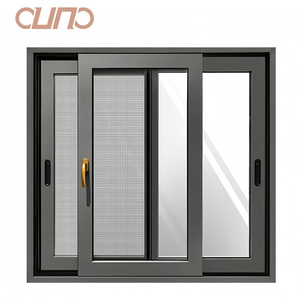
In this challenging climate, traditional residential window frames constructed from unreinforced vinyl (PVC) or standard non-thermal aluminum fail to maintain structural and thermal integrity. Standard vinyl frames exhibit high thermal expansion coefficients, leading to sash warping and seal failure under Texas solar load. Conversely, legacy uninsulated aluminum creates severe thermal bridging, transferring radiant heat directly into interior spaces and overwhelming residential HVAC systems.
Structural Alloy Engineering: Why 6063-T6 Extruded Aluminum Outperforms Steel & Vinyl
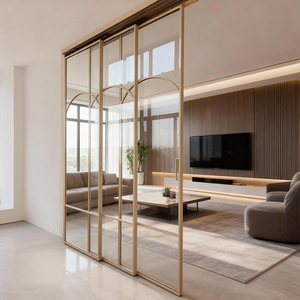
To deliver ultra-narrow sightlines (down to 20mm interlock profiles) while accommodating massive floor-to-ceiling glass expanses (up to 12 feet in height), Changsha Wincraft Aluminum Window Tech Co., Ltd. utilizes primary ingot 6063-T6 architectural grade aluminum extrusions. Unlike recycled scrap alloys, 6063-T6 delivers a tensile strength of ≥ 205 MPa and yield strength of ≥ 170 MPa, ensuring structural deflection parameters remain well within strict L/175 limits under peak DP-70 wind pressure tests.
Furthermore, to achieve energy performance exceeding the latest 2021/2024 Texas International Energy Conservation Code (IECC) requirements, Wincraft integrates high-density Polyamide PA66 GF25 thermal break strips (25% glass fiber reinforced). These structural insulating barriers separate the exterior and interior aluminum profiles, reducing frame thermal conductivity (K-value) from 200 W/m·K down to less than 2.2 W/m·K.