Featured CE Certified Aluminium Door Systems
Engineered to meet rigorous European standards (EN 14351-1), featuring high-durability surface coatings and optimal thermal efficiency.
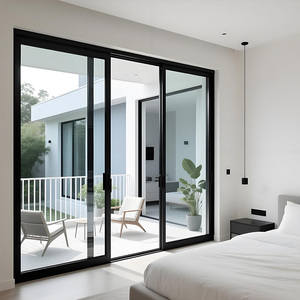
Soundproof Aluminium Tempered Glass Patio & Balcony Sliding Door
Get a Quote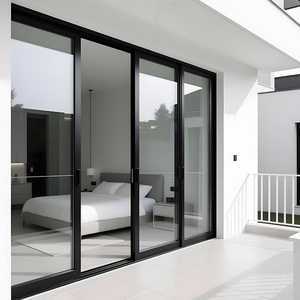
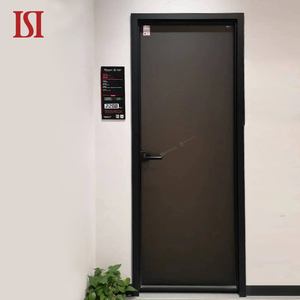
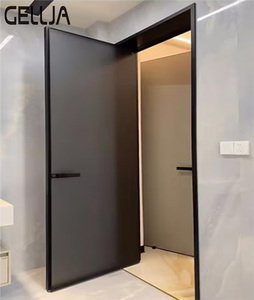
Modern Minimalist Black Frame Aluminium Interior Swing Door
Get a Quote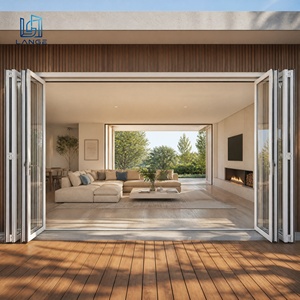
Thermal Break High-Insulation Aluminium Bi-Fold Patio Door
Get a Quote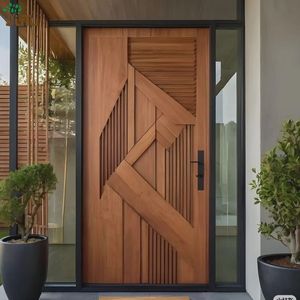
3D Wood Grain Coated Aluminium Dutch Style Security Entry Door
Get a Quote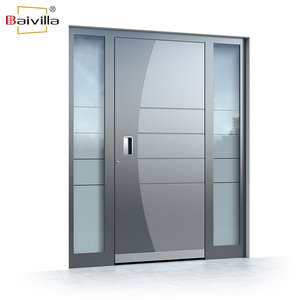
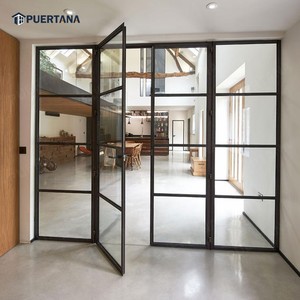
Black Industrial Architectural Aluminium Double French Glass Door
Get a QuoteArchitectural Engineering Whitepaper: CE Certified Aluminium Coating Metallurgy & Performance Standards
An executive B2B guide for facade engineers, architectural specifiers, and procurement officers evaluating high-performance fluorocarbon and powder-coated aluminium entry and sliding door assemblies.
In contemporary commercial and residential fenestration architecture, extruded aluminium profile systems serve as the structural backbone for exterior structural facades, folding patio doors, and heavy-duty entryways. However, raw extruded aluminium alloy (predominantly 6063-T5 / 6063-T6) remains susceptible to atmospheric oxidation, chemical degradation, galvanic corrosion, and ultraviolet breakdown when exposed to harsh environmental elements. Achieving long-term structural integrity and color retention requires advanced surface coating technologies combined with strict compliance under European Conformity (CE Certification via EN 14351-1 standards).
Critical Quality Metric: What CE Certification Means for Aluminium Doors
Under the Construction Products Regulation (CPR EU 305/2011) and harmonized norm EN 14351-1, a genuine CE certified aluminium coated door manufacturer must rigorously validate mandatory performance characteristics: Air Permeability (EN 12207), Watertightness (EN 12208), Resistance to Wind Load (EN 12210), Thermal Transmittance ($U_w$ value via EN ISO 10077-2), and Surface Coating Adhesion/Corrosion Resistance (Qualicoat / Qualanod directives).
1. Advanced Surface Coating Metallurgy: PVDF vs. Architectural Powder Coating
When procuring coated aluminium door systems from OEM/ODM Chinese factories, global importers must understand the chemical differences between surface finishing methodologies to balance capital expenditure with lifecycle environmental performance:
| Coating Technology | Chemical Formulation | Film Thickness | AAMA / Qualicoat Standard | Optimal Application Environment |
|---|---|---|---|---|
| Fluorocarbon PVDF (Polyvinylidene Fluoride) | 70% Kynar 500® / Hylar 5000® Resin base + inorganic ceramic pigments | 30 - 45 μm (2-coat or 3-coat system) | AAMA 2605 / Qualicoat Class 3 | High-salinity coastal zones, extreme UV tropical regions, high-rise curtain walls |
| Super Durable Powder Coating (SDP) | Polyester resin with high-crosslink TGIC / Primid binders | 60 - 80 μm (Single layer electro-deposition) | AAMA 2604 / Qualicoat Class 2 | Commercial retail entrances, urban residential apartment projects, interior glass partitions |
| Architectural Anodizing + Electrophoresis | Electrolytic aluminium oxide film sealed with acrylic coat | 15 - 25 μm Anodized layer | Qualanod Class 20 / 25 | Minimalist modern interior frames, high-traffic commercial swing doors |
| 3D Fluorocarbon Wood Grain Transfer | Base PVDF coat + vacuum thermo-transfer polyurethane sublimation | 45 - 65 μm Combined profile | Qualicoat Wooden Finish Standard | Luxury villa front doors, Dutch security doors, eco-resort exterior entries |
2. Structural Integrity & Thermal Barrier Integration
A CE certified door system requires more than superior paint aesthetics; structural efficiency is dictated by the alloy geometry and thermal break design. High-tier manufacturers utilize Polyamide PA66-GF25 (reinforced with 25% glass fiber) thermal barrier strips crimped between outer and inner extruded profiles. This structural break interrupts heat transfer paths, lowering overall door thermal transmittance ($U_w$) down to $\le 1.1 W/(m^2\cdot K)$ when paired with Low-E double or triple tempered insulated glass units (IGUs).
Future B2B Procurement Trends in Global Aluminium Door Sourcing
Key strategic shifts driving how global real estate developers, contractors, and building material importers source customized architectural doors.
1. Decarbonization & Recycled Low-Carbon Aluminium
Global building codes (such as EU Taxonomy and US LEED v4.1) increasingly mandate Environmental Product Declarations (EPD). Modern B2B procurement is rapidly prioritizing manufacturers using primary aluminium smelted with hydroelectric power or incorporating at least 75% post-consumer recycled aluminium (scrap recycling), reducing embodied carbon emissions by up to 85% per metric ton.
2. Complete System Supply vs. Component Sourcing
Importers are shifting away from buying raw extrusions and assembling hardware locally. B2B buyers now request fully engineered, pre-machined, and factory-tested "ready-to-install" door packages. Pre-assembled units with factory-sealed EPDM continuous gaskets reduce site installation errors by over 60% and guarantee single-source warranty accountability.
3. Rapid BIM & 3D Digital Twin Prototyping
Contractors require direct integration with architectural Revit/BIM workflows. Supply chains are adopting digital twin modeling where manufacturers provide full 3D CAD shop drawings and 24-hour design rendering turnarounds, eliminating costly pre-production discrepancies between China factories and overseas job sites.
Next-Gen Product Development Trends in Aluminium Fenestration (2025-2030)
Innovations defining the future of residential and commercial architectural aluminium doors.
Ultra-Slim Sightlines & Concealed Hardware
Architectural demand is heavily leaning towards minimalist "invisible frame" designs. Profile sightlines are shrinking below 20mm, while concealed heavy-duty stainless steel hinges and multi-point locking gear are integrated directly into the thermal break cavity for seamless visual continuity.
Smart Home & Mechatronic Access Integration
Modern entry security doors now standardly embed biometric fingerprint sensors, facial recognition, encrypted RFID keypads, and motor-driven multi-bolt automatic locking systems. These systems plug directly into home automation networks via Zigbee, Z-Wave, or Matter protocols.
Self-Cleaning & Anti-Microbial Coatings
Nanotechnology-infused fluorocarbon finishes are transforming maintenance cycles. Super-hydrophobic photocatalytic coatings break down organic dirt under atmospheric UV light, allowing rain water to sheet cleanly off exterior door surfaces without leaving mineral streaks.
Enterprise Advantage: Changsha Wincraft Aluminum Window Tech Co., Ltd.
Integrated manufacturing capabilities tailored for high-volume OEM/ODM B2B partnerships.
Changsha Wincraft Aluminum Window Tech Co., Ltd. stands as a Premier Chinese Manufacturer specializing in custom aluminium doors, architectural windows, luxury glass sunrooms, and aluminium pavilions. Operating from a modern 20,000 square meter standardized production base, Wincraft seamlessly unifies R&D, precision extrusion machining, automated surface coating, double-glazing assembly, and rigorous export packaging.
1. End-to-End Production Control
From precision profile cutting to CNC milling of hardware slots and automated powder spraying, our internal QC team enforces strict process control, keeping defect rates below 0.1%.
2. Serving 80+ Global Markets
Our engineering team possesses deep familiarity with regional building codes—including North American NFRC/AAMA, European CE/EN, and Australian AS2047 standards.
3. Accelerated Project Cycles
We deliver comprehensive design renderings and BIM models within 24 hours, backed by an efficient ~4-week lead time for standard customized project orders.
B2B Procurement FAQ: CE Certified Aluminium Coated Doors
Essential guidance for commercial buyers, importers, and project engineers during the factory evaluation and purchasing process.
Ready to Source CE Certified Aluminium Door Systems?
Connect directly with Wincraft's senior facade engineering team. Receive detailed CAD shop drawings, technical specifications, and factory-direct wholesale pricing within 24 hours.
Get a Quote