Featured Security Door & Architectural Fenestration Systems
Engineered for international B2B importers, general contractors, and luxury villa developers requiring verified impact resistance, thermal insulation, and bespoke system customization.
Engineering Excellence: Why China's Aluminium Safety Door Manufacturers Lead Global Sourcing
In modern architectural fenestration, the entry safety door serves a dual imperative: acting as an impenetrable structural fortress against forced physical intrusion while acting as a high-efficiency thermal envelope barrier. For global B2B procurement managers, real estate developers, and architectural specifiers, selecting a China top aluminium safety door factory is no longer simply a cost-efficiency decision—it is a technical partnership aimed at fulfilling rigorous international building codes, structural wind load mandates, and net-zero thermal isolation performance.
Historically, steel doors dominated the security sector due to mass density. However, modern metallurgy and structural aluminum profile design have fundamentally altered this paradigm. High-tensile 6063-T6 and 6061-T6 aluminum alloys, engineered with internal multi-chamber ribbing, cast aluminum armor plates, and polyamide thermal breaks, deliver exceptional strength-to-weight ratios. Unlike steel, aluminum exhibits inherent oxidation immunity, preserving mechanical tolerances and aesthetic finishes even under aggressive coastal salt-spray conditions (tested up to 3,000 hours ASTM B117 neutral salt spray).
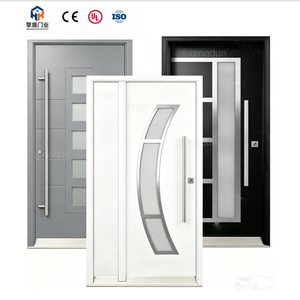
Core Technical Takeaway: Modern cast aluminum entry safety doors integrate multi-point gearboxes driving hardened steel deadbolts directly into reinforced aluminum alloy frames. Combined with Polyamide PA66-GF25 thermal insulation strips, these doors achieve burglary resistance ratings up to EN 1627 RC3/RC4 and PAS 24 standards while keeping thermal transmittance (U-values) as low as 1.1 to 1.4 W/m²K.
Metallurgical & Structural Force Dynamics
When evaluating structural integrity, engineering teams measure yield strength, shear resistance, and torsional rigidity. China's top tier factories utilize primary aluminum ingots with strict purity controls (>99.7% Al), avoiding contaminated scrap metals that compromise structural grain structures during extrusion. The profile wall thickness for heavy-duty security front entry doors typically ranges between 2.0mm and 3.0mm, with solid cast aluminum face plates measuring between 8mm and 12mm in thickness.
This massive structural foundation resists forced pry-bar attacks exceeding 10,000 N of hydraulic force. Furthermore, internal multi-lock locking systems interact with anti-lift hinge pins to eliminate pivot points as vulnerabilities, fulfilling European EN 1627 security standards.
Changsha Wincraft Aluminum Window Tech Co., Ltd.
A benchmark for integrated fenestration manufacturing, design engineering, and export logistics serving 80+ countries.
20,000+ ㎡ Automated Facility
Operating state-of-the-art double-head CNC cutting equipment, automated corner-crimping machinery, and robotic powder coating lines to maintain structural tolerances within ±0.5mm across massive batch outputs.
24-Hour Renderings & Engineering
Our dedicated engineering department communicates directly with architects and commercial importers, generating complete 3D shop drawings, structural wind load calculations, and visual renderings within one working day.
Strict Quality & Certification Compliance
All fenestration systems undergo rigorous factory acceptance testing (FAT) for air tightness, water penetration resistance under hurricane conditions, and compliance with CE, AS2047, and ISO9001 certifications.
Comparative Technical Specifications for Security Fenestration
B2B specifiers guide comparing system parameters across high-security entry doors, thermal sliding patio systems, and wide-span pivot units.
| System Category | Alloy Grade & Profile Thickness | Thermal Barrier System | Security & Hardware Lock Points | Max Glass Build-up | Acoustic Rating (STC) |
|---|---|---|---|---|---|
| Smart Cast Aluminum Entry Door | 6063-T6 / 8-12mm Cast Plate + 2.5mm Frame | Polyamide PA66-GF25 Multi-Chamber Strip | 3D Biometric Mortise + 12-Point Hook Lock | Single Solid Armor or Triple Laminated | 48 dB - 52 dB |
| Thermal Pivot Entry Door | 6063-T6 / 3.0mm Structural Wall | Dual Continuous Thermal Break (24mm Strip) | Heavy-Duty German Floor Spring + 5-Point Lock | 6mm Low-E + 12Ar + 6mm Toughened | 42 dB - 45 dB |
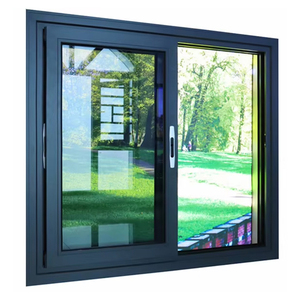
| AS2047 Stacking Sliding Door | 6063-T5 / 2.0mm Reinforced Track | E-Type Thermal Break Gaskets | Stainless Steel Anti-Pry Twin Pin Lock | 5mm + 12Ar + 5mm Double Tempered | 38 dB - 42 dB |
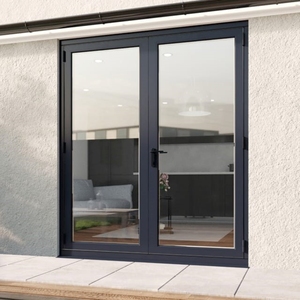
| French Security Double Glazed Door | 6063-T6 / 2.2mm Frame Profile | Integrated Insulating Polymer Core | Multi-Point Gearbox + Euro Profile Cylinder | 6mm Low-E + 16Ar + 6mm Security Glass | 44 dB - 46 dB |
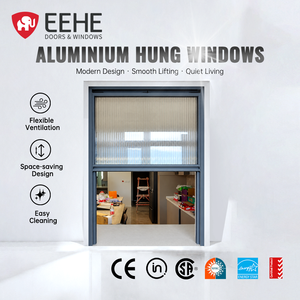
| Vertical Hung & Louver Windows | 6063-T5 / 1.8mm Architectural Grade | Single / Double Thermal Break Strip | Concealed Cam Lock & Safety Flyscreens | 5mm + 9Ar + 5mm Double Glazed | 35 dB - 40 dB |
Future Procurement Trends & Technological Developments in Security Fenestration
The global luxury residential and commercial real estate markets are undergoing a seismic shift toward intelligent security, passive insulation, and sustainable manufacturing processes. B2B buyers sourcing from China must align their product roadmaps with four critical emerging technological trends over the next decade:
1. Smart Biometric & IoT Mortise Integration
Mechanical keys are rapidly becoming obsolete in luxury developments. Future-ready aluminum entry doors feature built-in 3D structured-light facial recognition, encrypted palm vein scanning, and smart home IoT protocols (Matter, Zigbee, Z-Wave). Embedded sensors alert building automation systems if a door is left unlatched or subjected to thermal shock during forced entry attempts.
2. Ultra-Low Thermal Transmittance (Passive House Standard)
With worldwide carbon regulations tightening (such as the EU's EPBD directive), safety doors must deliver U-values below 0.8 W/m²K. Factories are innovating with vacuum insulating glass (VIG), aerogel filled profile cavities, and quadruple continuous perimeter EPDM weather seals to minimize HVAC energy losses completely.
3. Modular Pre-Assembled Procurement Units
On-site labor costs in Western nations continue to surge. B2B importers are shifting procurement toward pre-hung modular aluminum safety door assemblies. Doors arrive on-site fully framed, factory-glazed, with locks pre-calibrated, reducing jobsite installation labor by up to 40%.
4. Sustainable Low-Carbon Recycled Extrusions
Top China factories are transitioning to hydro-electric powered aluminum smelters and utilizing high percentages of post-consumer recycled aluminum alloy. This allows real estate developers to claim LEED and BREEAM credits without compromising structural tensile capacity.
Frequently Asked Questions for International B2B Buyers
Direct answers from our engineering and export logistics departments regarding custom production, international building code compliance, and global delivery logistics.
Do you accept OEM and ODM orders for aluminum doors and windows?
Yes. We provide complete OEM and ODM engineering support. This includes custom aluminum extrusion profile development, private-label branding, customized powder coating colors (RAL / AkzoNobel catalog), specialized packaging for retail or jobsite distribution, and bespoke hardware integration based on your CAD drawings or target market requirements.
What is the standard production lead time for customized safety doors?
Standard customized orders are typically produced within about 4 weeks after final shop drawings and technical specifications are approved by the buyer. For large multi-unit commercial developments or villa project batches, production schedules are staged into container shipments according to your on-site installation timeline.
Can your engineering team provide design proposals and drawings before production?
Absolutely. Our in-house engineering team communicates directly with architects, general contractors, and project developers. We deliver 3D visual renderings and initial design proposals within 24 hours. Once accepted, we issue detailed 2D AutoCad shop drawings including section cuts, glass build-ups, structural anchor points, and drainage details for formal sign-off.
How do you package and ship heavy aluminum security doors overseas to prevent damage?
Export safety is paramount. All doors undergo multi-layer protective packaging: full surface protective film, corner foam guards, bubble wrap, and fully sealed heavy-duty fumigated wooden crates or steel-framed pallets. We manage complete export logistics including customs declaration, Bill of Lading documentation, real-time container tracking, and door-to-door (DDP/DAP) sea freight delivery options.
Can your aluminum door and window systems meet the local building codes in my country?
Yes. Simply share your local project specifications, design wind pressure (Pa), acoustic attenuation targets (STC/Rw), and energy code requirements (U-factor/SHGC). Our engineers custom-configure profile wall thickness, glass build-ups (such as double/triple Low-E laminated units), structural corner crimping, and sealing hardware to guarantee compliance with regional standards such as AS2047 (Australia), CE (Europe), or NFRC (North America).
What surface treatments are available to prevent salt-spray corrosion in coastal areas?
For harsh coastal environment applications, we recommend our specialized PVDF (Fluorocarbon) coating or Qualicoat Class 2 / Class 3 certified architectural powder coatings. Combined with pre-anodized alloy surface pretreatments, these finishes prevent aluminum surface pitting, chalking, and discoloration, backed by up to 25 years of outdoor finish warranty.
Partner with China's Premier Aluminium Safety Door Manufacturer
Whether you require a custom cast aluminum entry door range for a wholesale distribution catalog or complete high-performance fenestration packages for luxury villa projects, our engineering team is ready to assist.