Precision-Engineered OEM Aluminium Door & Window Systems
Architectural grade profile extrusions engineered for high thermal performance, structural wind-load durability, and seamless integration across luxury residential and commercial developments.
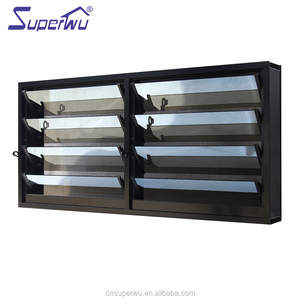
Australia Standard Aluminum Glass Louvre Window
- AS2047 & AS1288 Certified
- Variable blade tilt control ventilation
- 6063-T5 High tensile aluminum frame
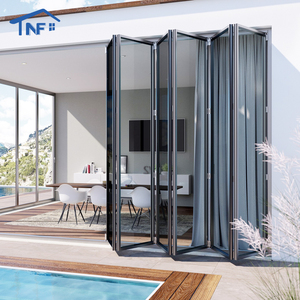
Custom Thermal Break Exterior Accordion Bi-fold Doors
- NFRC thermal insulation rating
- Double Low-E tempered safety glass
- Heavy-duty stainless steel carriage rollers
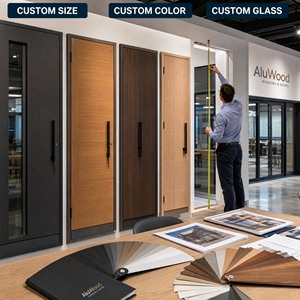
Aluminum Clad Wood Thermal Break Pivot Entrance Door
- Solid core wood with external aluminum shield
- German multi-point safety locking mechanism
- Over-sized custom architectural dimensions
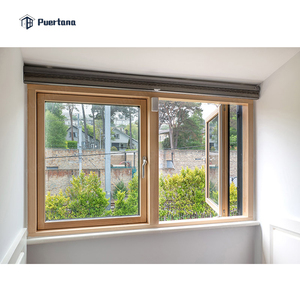
America Style Aluminum Clad Wood Casement Window
- AAMA rated aluminum exterior coating
- Double toughened insulated argon glass
- Concealed friction hinges & crank operator
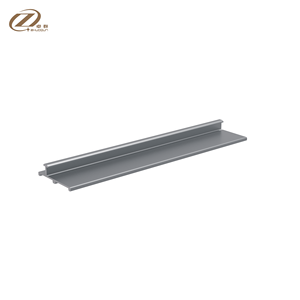
Custom 6063 Aluminum Insect Protection Mesh Door Profile
- High-density 304 stainless steel mesh
- Powder coated anti-corrosion finish
- Precision extruded 6063-T5 aluminum
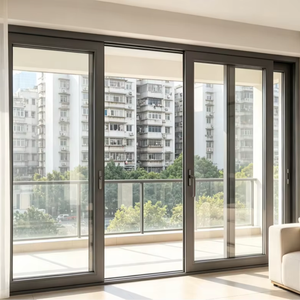
Airtight Heavy Duty Aluminum Lift & Slide Door System
- High load-bearing capacity (up to 400kg/sash)
- Triple EPDM gasket compression sealing
- Flush sill threshold for barrier-free entry
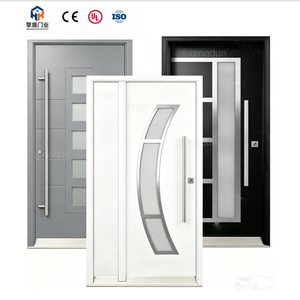
Luxury Smart Cast Aluminum Front Entry Security Door
- Solid cast aluminum anti-impact structure
- Biometric smart lock integration
- Thermal insulation foam core filler
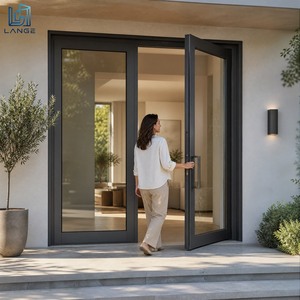
Slim Frame Thermal Break Aluminum Glass Hinged Door
- Ultra-narrow 16mm sightline design
- Thermal break polyamide structural frame
- Sound reduction up to 42 dB
Changsha Wincraft Aluminum Window Tech Co., Ltd.
As a leading Chinese fenestration manufacturer and global exporter, Changsha Wincraft Aluminum Window Tech Co., Ltd. specializes in custom aluminum doors, aluminum windows, sunrooms, and garden pavilions. Operating from a modern 20,000 m² production base, we combine state-of-the-art aluminum extrusion machining, precision CNC corner crimping, automated insulating glass assembly, and rigorous quality verification under unified ISO9001 governance.
We work directly with architects, general contractors, commercial developers, and regional importers across 80+ countries. By consolidating design CAD drawings, structural calculation, system fabrication, hardware integration, and export container packing under one accountable engineering management team, we eliminate the communication friction and structural risks typical of complex supply chains.
Whole-House & Commercial Project OEM Sourcing
Whether you require private-label profile systems for regional distribution or engineered window wall packages for high-rise residential construction, our OEM workflow accommodates full customization:
- Metallurgical Profile Alloy: Primary 6063-T5 / 6063-T6 aluminum extrusion with profile wall thickness ranging from 1.4mm to 3.0mm conforming to GB 5237 / ASTM B221 standards.
- Thermal Break Barrier: Polyamide PA66-GF25 structural thermal barrier strips for extreme climate isolation and low Uw values.
- Architectural Glazing Builds: Double and triple insulated Low-E glass units, argon gas filled, warm-edge spacers, laminated acoustic interlayers, and fire-rated tempered glass.
- Premium Hardware Suites: Integration with German hardware systems (Siegenia, Roto, Hoppe) or customized heavy-duty OEM multi-point locking mechanisms.
Engineering Parameters & Sourcing Benchmarks for Custom Aluminium House Windows
An authoritative breakdown of material science, energy performance coefficients, structural weatherization mechanics, and supplier auditing metrics for overseas procurement officers.
1. Metallurgy & Extrusion Profile Integrity
The structural foundation of any high-performance aluminum window resides in its alloy chemistry and extrusion geometry. Premium custom OEM suppliers utilize virgin 6063-T5 or T6 grade aluminum billets rather than scrap-heavy recycled billets containing iron impurities.
- Structural Wall Thickness: Residential windows require a minimum profile wall thickness of 1.4mm to 1.6mm, whereas heavy-duty sliding doors and curtain walls demand 2.0mm to 3.0mm.
- Tensile & Yield Strength: 6063-T5 exhibits a minimum tensile strength of 185 MPa, whereas T6 heat-treated alloys reach 205+ MPa, preventing deflection under extreme storm conditions.
- Anodizing & Powder Coating: Architectural surface treatments conforming to AAMA 2605 specifications utilize PVDF fluoropolymer coatings capable of withstanding 2,000+ hours of salt-spray testing without chalking or fading.
2. Thermal Break Mechanics & Energy Metrics
Uninsulated aluminum exhibits high thermal conductivity (~200 W/m·K), leading to interior heat loss in winter and solar heat gain in summer. Modern fenestration solves this through multi-chamber thermal breaks.
- Polyamide vs. PVC Strips: Inferior windows utilize cheap PVC thermal strips that brittle under UV exposure. Leading OEM exporters exclusively integrate Polyamide PA66 reinforced with 25% glass fiber (PA66-GF25), matching the linear expansion coefficient of aluminum.
- U-Factor (Uw Value): Thermally broken profile systems combined with double-pane Low-E insulated glass routinely achieve Uw ratings between 1.2 and 1.8 W/m²K (0.21 - 0.31 BTU/h·ft²·°F), satisfying Energy Star and NFRC criteria.
- Solar Heat Gain Coefficient (SHGC): Customizable Low-E magnetron sputtering coatings fine-tune SHGC from 0.22 for tropical cooling zones to 0.55 for northern heating-dominated regions.
3. Structural Weatherization & Sealing Physics
A window's resistance to hurricane-force wind load, driving rain penetration, and acoustic infiltration depends on its sealing architecture and corner crimping technique.
- EPDM Gasket Seals: Synthetic EPDM (Ethylene Propylene Diene Monomer) triple-sealed weatherstripping maintains elastic memory across temperatures ranging from -40°C to +120°C, outperforming cheap TPE or PVC seals.
- Corner Joint Assembly: High-end OEM manufacturing employs hydraulic corner crimping machines coupled with dual-component corner injection glue (corner sealant), ensuring airtight structural rigidity and preventing water leakage at frame joints.
- Water Drainage System: Concealed downward pressure drainage channels with non-return flap valves prevent wind-driven rainwater from backing up into interior window tracks.
Comprehensive System Engineering Comparison Matrix
Use this empirical matrix to select the optimal aluminum fenestration system based on structural design, wind-load capacity, and acoustic rating requirements.
| System Type | Profile Wall Thickness | Thermal Isolation (Uw) | Air Tightness (EN 12207) | Wind Load Resistance | Acoustic Reduction (STC) | Primary B2B Application |
|---|---|---|---|---|---|---|
| Thermal Break Casement Window | 1.4mm – 1.8mm | 1.2 – 1.6 W/m²K | Class 4 (Highest) | Up to 5000 Pa (Class C5) | 38 – 45 dB | Luxury Residential, Cold Climate Villas |
| Heavy Duty Lift & Slide Door | 2.0mm – 3.0mm | 1.5 – 1.9 W/m²K | Class 3 | Up to 3500 Pa (Class C4) | 35 – 40 dB | Patio Entrances, High-End Commercial |
| Slim-Frame Glass Hinged Door | 1.4mm – 2.0mm | 1.6 – 2.0 W/m²K | Class 3 | Up to 2500 Pa (Class C3) | 32 – 38 dB | Modern Interiors, Balcony Partitions |
| Exterior Accordion Bi-Fold Door | 2.0mm – 2.2mm | 1.4 – 1.8 W/m²K | Class 3 | Up to 3000 Pa (Class C4) | 34 – 39 dB | Resort Terraces, Indoor-Outdoor Spaces |
| Glass Louvre Window System | 1.5mm – 2.0mm | 2.2 – 3.0 W/m²K | Class 2 | Up to 2000 Pa (Class C2) | 25 – 30 dB | Tropical Ventilation, Coastal Regions |
Future Architectural Window Trends: What B2B Buyers Must Prepare For
The global aluminum fenestration market is shifting rapidly driven by updated building codes, net-zero carbon goals, and modern architectural aesthetics. Procurement managers must realign their sourcing specifications.
1. Ultra-Narrow Minimalist Sightlines
Architects are driving demand for invisible frame profiles with ultra-slim face widths (15mm to 25mm). Modern OEM suppliers are re-engineering profile structural ribs to support large glass panes up to 500kg while concealing frames within wall structures.
2. Low-Carbon Recycled Aluminum Sourcing
With Europe's Carbon Border Adjustment Mechanism (CBAM) and North America's Buy Clean policies, importers are requiring Environmental Product Declarations (EPD) verifying that aluminum profiles are extruded using renewable hydro-power energy.
3. Smart Home & Automated Fenestration
Next-generation commercial and residential windows are integrating electric chain actuators, motorized lift-and-slide drives, concealed magnetic contact sensors, and smart tinting electrochromic VIG (Vacuum Insulated Glass).
Frequently Asked Sourcing & OEM Customization Questions
Direct answers from our engineering and export logistics divisions regarding customization, compliance, shipping, and order management.
Do you support complete OEM and ODM customization for custom profile systems?
Yes. We provide full OEM and ODM services. We can extrude custom profile dies according to your CAD/BIM architectural drawings, apply private label branding, offer custom powder-coating colors (RAL palette), and supply customized packaging for retail or project sites.
What is the standard production lead time for custom aluminum windows?
Standard customized order production takes approximately 4 weeks following drawing confirmation and deposit receipt. For massive commercial project orders, we coordinate batch production and staggered sea container dispatches matching your job site installation timeline.
Can your technical team provide CAD shop drawings before manufacturing?
Absolutly. Our in-house fenestration engineering team reviews your architectural elevation plans and generates detailed 2D/3D CAD shop drawings, glass stress analysis, and structural wind-load calculation proposals within 24 hours for sign-off prior to extrusion cutting.
How do you ensure global building code compliance (AAMA, NFRC, CE, AS2047)?
We configure profile wall thickness, thermal break widths, gasket seals, and glass build-ups (e.g. double Low-E toughened argon glass) specifically to comply with your regional building energy codes (such as Australia's AS2047/AS1288, USA NFRC/AAMA, or Europe EN 14351-1).
What export packaging protection do you use to prevent sea freight damage?
All finished window and door frames undergo a 5-layer protective packaging sequence: protective surface film, corner guard caps, bubble wrap protection, moisture-proof wrapping, and fully enclosed fumigated wooden crates or steel-frame transport racks suitable for FCL and LCL shipping.
What is the Minimum Order Quantity (MOQ) for custom project sourcing?
For standard profile series, our MOQ starts at just 50 square meters, making custom luxury villa projects cost-effective. For custom extrusion profile die development, profile mold setup fees apply, which are fully refunded once batch order thresholds are achieved.