Executive OEM Fenestration Whitepaper & Market Dynamics
The modern fenestration industry is undergoing a structural paradigm shift. As global building energy codes tighten—driven by the European Union’s Energy Performance of Buildings Directive (EPBD) and North American ASHRAE 90.1 standards—architectural procurement teams can no longer view aluminum doors and windows merely as structural closures. Today, custom OEM architectural aluminum around windows factories function as essential precision-engineering partners. High-performance aluminum profiles must deliver continuous thermal breaks, extreme wind-load resistance (Pascal rating), structural air-tightness, and acoustic dampening, while preserving slim visual profiles.
Featured OEM Products & Fenestration Systems
Engineered to exact OEM/ODM specifications with factory-direct quality management.
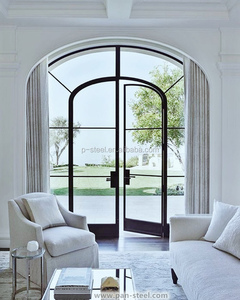
European Casement Steel-Look Aluminum French Patio Doors
Ultra-slim architectural steel-look profiles utilizing high-tensile 6063-T6 aluminum extrusion, German multi-point hardware, and thermal barrier strips.
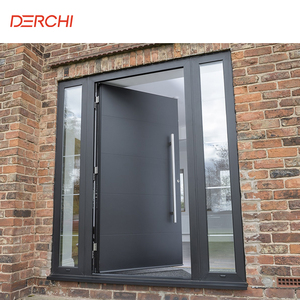
Luxury Architectural Heavy-Duty Exterior Security Pivot Door
Commercial-grade oversized entrance pivot system engineered with stainless steel internal reinforcement, dynamic weight-bearing pivots, and smart lock integration.
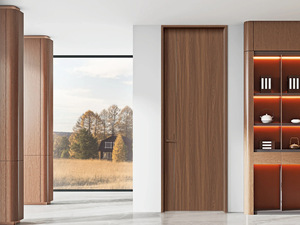
Custom Narrow-Frame Wood-Grain Aluminum Interior Door
Minimalist interior single door featuring high-definition thermal transfer wood-grain finish, complete moisture proofing, and zero-maintenance frame design.
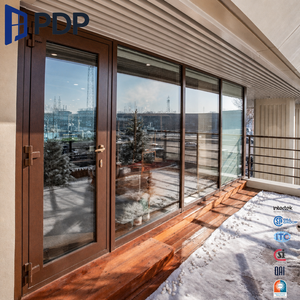
PDP Anti-Theft Aluminium-Clad Wood Casement Balcony Doors
Hybrid fenestration combining weather-resistant exterior aluminum cladding with interior solid timber aesthetics. Fitted with integrated security locking pins.
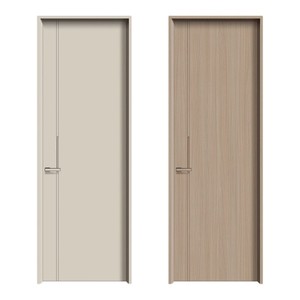
Minimalist Flat-Panel Waterproof Aluminum Internal Doors
Contemporary flush-panel door system constructed with sound-dampening aluminum honeycomb core for luxury apartment residential developments.
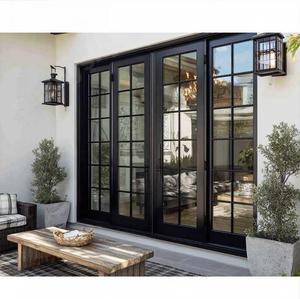
Commercial Double-Glazed Exterior Aluminum French Swing Doors
Heavy-duty entrance doors designed for retail and commercial project facades. Features continuous double EPDM gaskets and argon-filled Low-E glass units.
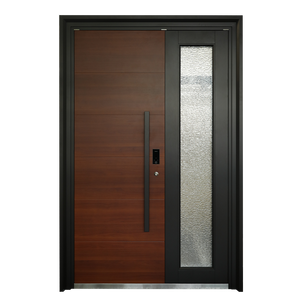
Waterproof Exterior Aluminum Security French Entry Door
Engineered for luxury villas, hospitality structures, and multi-family units, offering extreme hurricane-impact resistance and multi-chamber thermal breaks.
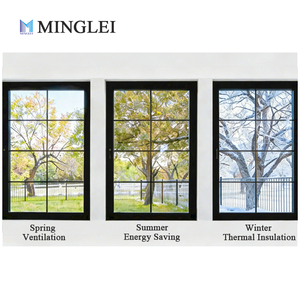
Energy-Saving Black Slim-Profile Aluminum Casement Windows
North American code-compliant thermal break casement window featuring ultra-narrow sightlines, high solar heat reduction (SHGC ≤ 0.22), and concealed hinges.
Micro-Structural Engineering & Thermal Breakthroughs
Understanding raw profile metallurgy, extrusion tolerances, and thermal breaks is essential when selecting a reliable custom OEM aluminum around windows factory. Standard commercial aluminum often suffers from thermal bridging, structural deflection, and premature finish breakdown if non-compliant alloys or sub-standard powder coatings are used.
Alloy Metallurgy & Tempering
We exclusively process high-grade 6063-T6 and 6060-T6 primary aluminum billets. This guarantees a tensile strength ≥ 205 MPa and yield strength ≥ 170 MPa, delivering superior structural stability under severe wind load conditions (up to 5000 Pa design pressure) without profile distortion.
PA66-GF25 Thermal Barriers
To eliminate thermal bridging, our OEM profiles incorporate Polyamide PA66 reinforced with 25% glass fiber (PA66-GF25) structural insulation strips. This reduces profile thermal conductivity ($K$-value) down to under 1.0 W/m²K while maintaining mechanical shear strength under extreme thermal expansion cycles.
Qualicoat Class 2 Surface Coatings
For coastal and high-UV installations, profiles undergo chemical pre-treatment followed by AkzoNobel or PPG Fluorocarbon (PVDF 3-coat) or Qualicoat Class 2 architectural powder coating. This delivers over 3,000 hours of salt-spray resistance (ASTM B117) and chalking immunity for 20+ years.
Comparative OEM Extrusion Material Specifications
| Technical Metric / Specification | Standard Aluminum (Non-Thermal) | Wincraft OEM Thermal Break 6063-T5 | Wincraft Architectural OEM 6063-T6 |
|---|---|---|---|
| Primary Alloy Grade | Secondary / Recycled Scraps | Primary 6063 Ingot (Al-Mg-Si) | Primary High-Purity 6063-T6 Ingot |
| Tensile Strength (σb) | ≤ 130 MPa | ≥ 185 MPa | ≥ 215 MPa |
| Yield Strength (σ0.2) | ≤ 110 MPa | ≥ 150 MPa | ≥ 175 MPa |
| Thermal Barrier Material | None (Solid Profile) | PVC / Standard Nylon Strip | Imported Technoform PA66-GF25 |
| Overall Frame U-Factor ($U_f$) | 5.8 - 6.5 W/m²K | 1.8 - 2.2 W/m²K | 0.9 - 1.3 W/m²K |
| Salt Spray Resistance (ASTM B117) | 480 Hours | 1,500 Hours | 3,000+ Hours (PVDF Finish) |
Future Procurement Trends in Custom Aluminum Fenestration
Global architectural trends and building regulations are driving rapid technological shifts. Importers, project contractors, and architectural procurement managers must align with these four macro supply-chain developments:
1. Passive House & Net-Zero Fenestration ($U_w \le 0.8\text{ W/m}^2\text{K}$)
Thermal insulation requirements are moving beyond standard double glazing. Global markets are rapidly adopting triple-pane and vacuum-insulated glass (VIG) IGUs combined with multi-chamber thermal breaks and warm-edge spacers (such as Swisspacer Ultimate). Custom OEM manufacturing now demands frame systems capable of carrying heavy, 48mm-thick structural triple-glazed units without sagging or hinge fatigue.
2. Ultra-Narrow Sightlines & Structural Glass Bonding
Modern minimalist architecture prioritizes maximum light transmission and seamless indoor-outdoor transition. Modern OEM factories must master structural silicone glazing (SSG) per ASTM C1184 standards, transferring wind loads directly from glass to ultra-narrow aluminum frame profiles (interlock sightlines as thin as 18mm) while hiding outer frames inside wall reveals.
3. Smart Home Integration & Motorized Actuation
Automated luxury residential and commercial structures require factory-integrated concealed motors, magnetic locks, and rain/wind sensor interfaces. Leading custom aluminum window factories are embedding internal wiring channels and low-voltage electric actuators directly into profile extrusions during the assembly phase, eliminating visual wire clutter on site.
4. BIM LOD 350 Digital Twin Engineering
B2B buyers now require full digital integration before production. OEM manufacturing workflows must provide Building Information Modeling (BIM) files up to LOD 350, including exact thermal performance metadata, anchorage detailing, and precise weight parameters. This enables real-time CAD/Revit collision checks within master architectural models.
B2B Procurement & Technical Risk FAQ
Addressing critical engineering, logistics, and quality assurance questions for international buyers.
Our structural engineering team evaluates wind load pressures based on location parameters (ASCE 7-16 in North America, EN 1991-1-4 in Europe). We perform Finite Element Analysis (FEA) on profile cross-sections to calculate the moment of inertia ($I_x$, $I_y$). Profile wall thicknesses are adjusted between 2.0mm and 3.0mm, with internal steel reinforcements added where necessary to guarantee design pressure ratings up to ±5,000 Pa without structural yield.
Standard customized orders transition from approved shop drawings to container loading in approximately 4 weeks (28 calendar days). This timeline covers extrusion die preparation (if custom profile dies are required), aluminum extrusion, thermal-strip insertion, surface powder coating/anodizing, glass IGU assembly, multi-point hardware installation, pre-shipment air/water tightness testing, and export crating.
Yes. We offer complete OEM/ODM support, including custom profile branding, private-label protective film printing, customized hardware branding, and custom packaging. Furthermore, our dedicated in-house engineering team provides complete 2D CAD shop drawings, 3D renderings, and BIM Revit files within 24 hours of receiving project architectural blueprints.
All export shipments utilize heavy-duty, fully enclosed fumigated plywood crates reinforced with internal steel banding. Individual door and window frames are wrapped in anti-scratch foam padding, Corner-Guard protection, and vacuum-sealed moisture-barrier film. Insulated glass units are separated by anti-vibration cork spacers to prevent thermal shock and sea-freight transport breakage.
For salt-spray environments (within 5 km of the ocean), we strongly advise utilizing PVDF (Fluorocarbon 70% Kynar 500) 3-coat finish systems or Anodizing with a film thickness ≥ 25 microns (μm). These surface coatings pass 3,000-hour continuous salt-spray testing per ASTM B117 and meet Qualicoat Class 2 / AAMA 2605 specifications.
Our fenestration systems are engineered to meet NFRC and AAMA standards for North America, AS2047 / AS1288 for Australia/New Zealand, and CE (EN 14351-1) testing protocols for Europe. We provide detailed third-party laboratory test reports covering Air Infiltration (EN 12207 Class 4), Water Tightness (EN 12208 Class 9A), and Structural Wind Resistance (EN 12210 Class C5).
Why Partner with Changsha Wincraft Aluminum Tech
Integrated engineering, digital precision manufacturing, and complete global supply chain accountability.
20,000m² Modern Facility
Our state-of-the-art production base in Changsha features multi-axis CNC profile machining centers, automated corner-crimping systems, double-head precision cutting saws, and automated double-glazed IGU assembly lines to deliver millimetric manufacturing tolerances.
Complete Turnkey OEM/ODM
From alloy selection, custom extrusion die opening, thermal break assembly, to bespoke hardware integration—we provide a seamless one-stop manufacturing workflow that eliminates intermediary costs and ensures total quality traceability.
Global Delivery to 80+ Countries
With decades of international trade expertise, our export department manages all customs documentation, origin certificates, sea freight logistics, and door-to-door project deliveries for importers, contractors, and architectural developers worldwide.
Ready to Engineer Your OEM Fenestration Package?
Contact our technical engineering team today for immediate blueprint review, 24-hour CAD shop drawings, factory-direct OEM quotation, and complete system catalogs.