Understanding Aluminum Fixed Glass Window Systems: Structural Integrity & Physics
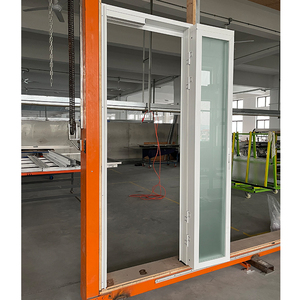
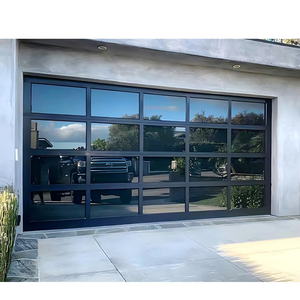
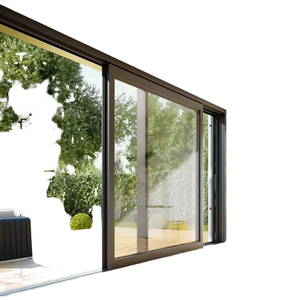
Fixed glass windows—commonly known in commercial architecture as picture windows, direct-glazed units, or non-operable curtain wall modules—represent the cornerstone of modern daylighting design. Unlike operable casement, awning, or sliding windows, fixed aluminum glass windows contain zero moving hardware mechanisms. This inherent structural simplicity allows facade engineers to maximize glass surface areas, drastically reduce air infiltration rates, and achieve unmatched thermal isolation performance across demanding climatic zones.
Key Architectural Takeaway: In high-rise residential towers and luxury commercial envelopes, fixed glass windows account for up to 70% of total fenestration surface area. Selecting the correct extrusion alloy, thermal barrier composition, and structural silicone glazing matrix is paramount to avoiding glass deflection, seal failure, and thermal bridging over a 30+ year lifecycle.
1. Metallurgical Profile Selection: 6063-T6 vs 6060-T66 Extrusions
The structural backbone of any high-performance fixed glass window is its aluminum frame profile. Premier manufacturers utilize prime architectural grade aluminum alloys—predominantly 6063-T5/T6 or European-standard 6060-T66. The extrusion process subjects magnesium-silicon aluminum billets to precise thermal heat treatment, yielding yield strengths exceeding 170 MPa and ultimate tensile strength above 205 MPa.
Unlike secondary recycled scrap extrusions that suffer from microscopic iron contamination and structural brittleness, primary 6063-T6 profiles deliver superior bending resistance under dynamic wind load pressure (tested beyond 5000 Pa / DP70 ratings), while maintaining perfect surface passivity for electrostatically applied Qualicoat Class 2 powder coatings or 25-micron anodized finishes.
PA66GF25 Thermal Break
Polyamide 66 reinforced with 25% glass fiber creates an impermeable thermal barrier, reducing frame U-factors down to 1.1 W/m²K while matching the thermal expansion coefficient of aluminum.
Multi-Chamber Structure
Internal air cavities engineered with EPDM foam inserts disrupt convective heat transfer and sound transmission waves, achieving STC acoustic ratings above 42 dB.
Structural Silicone Glazing
Two-component structural adhesive bonds glass directly to profile rebates, transferring suction loads during atmospheric storms without relying on mechanical retaining beads.
2. Insulated Glass Unit (IGU) Physics: Low-E Coatings & Warm Edge Technology
The energy performance of a fixed window system is predominantly dictated by the glass configuration matrix. Standard single-pane clear glass offers an abyssimal U-Factor of roughly 5.8 W/m²K, converting buildings into energy-draining thermal traps. Leading manufacturers specify multi-layer Insulated Glass Units (IGU) incorporating double or triple silver vacuum-sputtered Low-Emissivity (Low-E) coatings.
Low-E films selectively reflect long-wave infrared thermal energy (heat) while permitting high levels of Visible Light Transmittance (VLT). When combined with 90%+ Argon or Krypton noble gas fill between glass panes and integrated with Thermo Plastic Spacers (TPS) or Swiss Warm-Edge Spacers, perimeter edge condensation is eliminated, and overall window U-Factors drop as low as 0.78 W/m²K (R-value 7.2).
| Glass Configuration | U-Factor (Btu/h·ft²·°F) | U-Value (W/m²K) | SHGC Range | Sound Transmission (STC) |
|---|---|---|---|---|
| Single Clear 6mm Glass | 1.02 | 5.80 | 0.81 | 28 dB |
| Double Glazed (6mm Clear + 12A + 6mm Clear) | 0.48 | 2.70 | 0.70 | 34 dB |
| Thermal Break + Double Low-E (6mm + 16Ar + 6mm) | 0.24 | 1.35 | 0.27 - 0.40 | 38 dB |
| Thermal Break + Triple Low-E Argon (6 LowE + 14Ar + 6 + 14Ar + 6 LowE) | 0.14 | 0.80 | 0.20 - 0.32 | 44 dB |
Future Procurement & Technological Development Trends in Fixed Glazing
As international energy codes (such as ASHRAE 90.1, California Title 24, and the EU Energy Performance of Buildings Directive) become increasingly stringent, B2B buyers, real estate developers, and facade contractors must align their supply chain with four critical technological macro-trends shaping fixed aluminum glass window manufacturing through 2030:
TREND 01 // ARCHITECTURAL AESTHETICS
Ultra-Slim Sightlines & Flush Direct-Glazed Profiles
Modern architectural language demands borderless transparency. Modern fixed window profiles are transitioning toward minimalist concealed frames, reducing perimeter frame sightlines from traditional 75mm profiles down to ultra-slim 18mm or completely frameless embedded perimeter tracks. This design maximizes natural daylighting while maintaining structural wind load capacity via structural silicone bonding.
TREND 02 // SUSTAINABILITY & ESG
Low-Carbon Aluminum Billets & Closed-Loop Circularity
Global procurement directives now mandate Environmental Product Declarations (EPD) and embodied carbon accounting. Premier OEM manufacturers are shifting toward low-carbon aluminum smelted using renewable hydroelectric energy (generating < 4.0 kg CO2e per kg Al compared to global averages of 16.5 kg CO2e). Recycled aluminum content in PA66 thermal-break profiles is now exceeding 75%.
TREND 03 // EXTREME CLIMATE ADAPTATION
DP100 Hurricane Impact & Missile Resistance
With extreme weather events accelerating globally, demand for large-span fixed glass windows capable of withstanding Design Pressure (DP) 100 ratings and Florida Building Code (FBC) large missile impact tests is soaring. These systems integrate multi-layer SentryGlas (SGP) ionoplast interlayers that remain structurally intact even under severe impact from airborne debris during Category 5 hurricanes.
TREND 04 // BUILDING AUTOMATION INTEGRATION
Smart Electrochromic & BIPV Integrated Fixed Envelopes
Fixed glass windows are expanding beyond passive building envelopes. The integration of dynamic electrochromic glass allows automated tint adjustment controlled by building management systems (BMS) to optimize daylighting and solar heat gain in real-time. Simultaneously, transparent Building-Integrated Photovoltaics (BIPV) embedded within fixed spandrel glass units generate clean solar power.
Changsha Wincraft: Engineering Precision & OEM/ODM Supply Chain Mastery
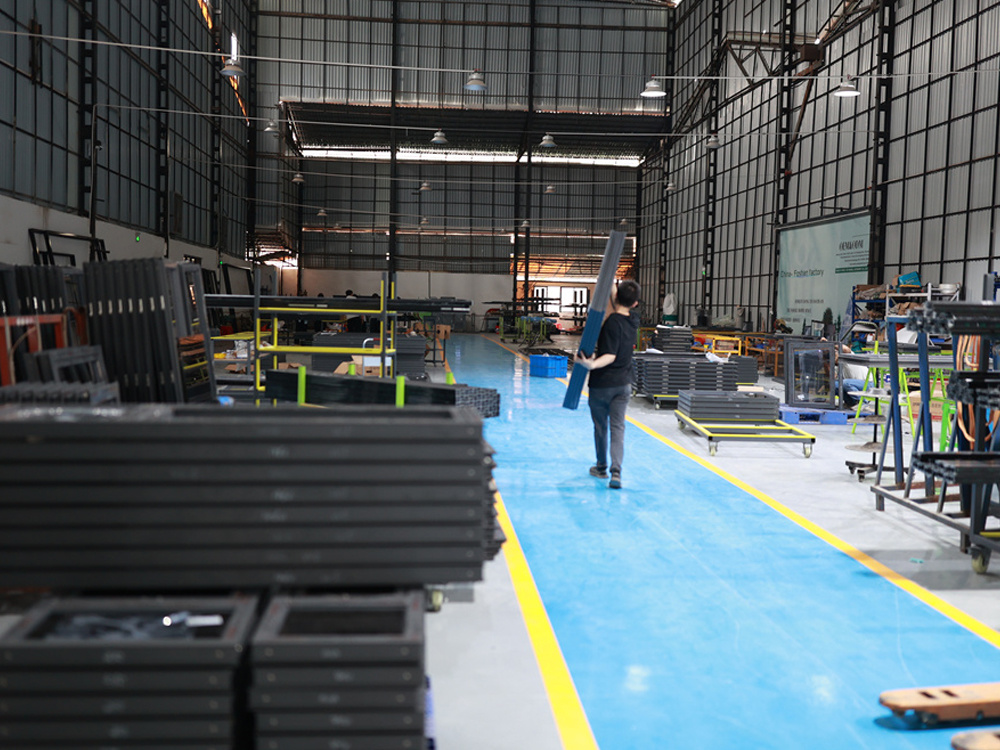
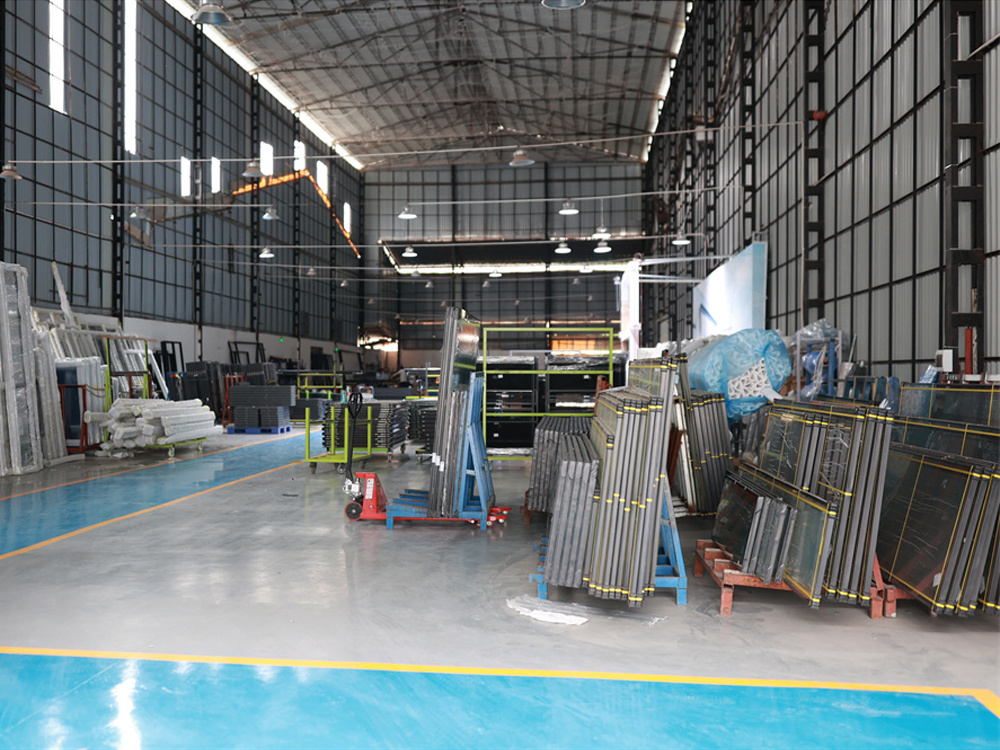
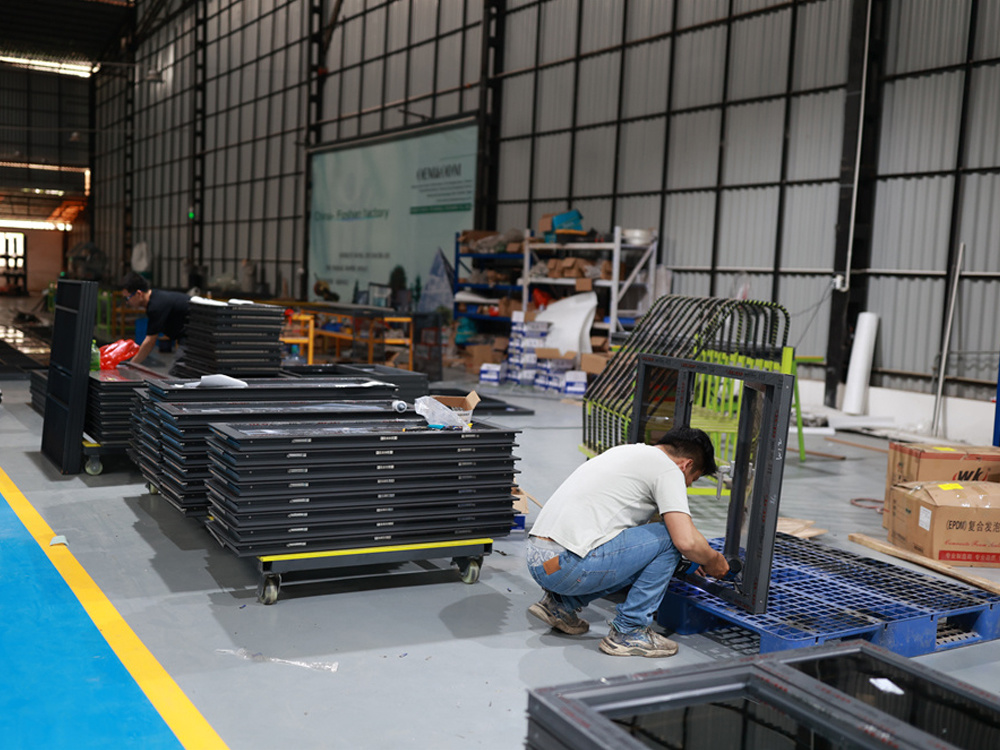
Changsha Wincraft Aluminum Window Tech Co., Ltd. stands at the forefront of high-precision fenestration manufacturing in China. Operating a modern, intelligent manufacturing base spanning over 20,000 square meters, Wincraft combines German CNC machining centers, automated corner-crimping technology, and strict ISO9001-certified quality assurance protocols.
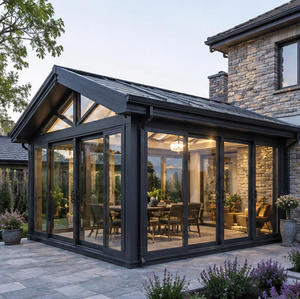
Whether servicing commercial facade developers requiring thousands of direct-glazed fixed window panels or custom villa architects seeking complex geometric sunrooms and oversized picture windows, Wincraft delivers unmatched engineering execution. Our internal technical team produces complete CAD shop drawings, structural wind load calculations, and thermal analysis reports within 24 hours of inquiry.
20+
Years Industry Expertise
20km²
Intelligent Production Facility
80+
Countries Exported Worldwide
4Wks
Standard Order Lead Time

B2B Procurement Intelligence
Frequently Asked Questions for Architectural Buyers & Importers
Technical guidance on building code compliance, custom aluminum extrusion dies, export packaging, and structural warranties.
1. How do Wincraft fixed aluminum windows comply with regional building codes (NFRC, CE, AS2047, Florida Product Approval)?
Our fenestration engineering team configures every production batch to match your regional compliance metrics. For North America, we utilize NFRC-certified thermal modeling and AAMA 101 structural wind pressure testing profiles. For Australia and New Zealand, systems are certified under AS2047 and AS1288 standards (including acoustic and water penetration pressure up to 450 Pa). For the EU, CE mark documentation with EN 14351-1 declarations of performance is provided.
2. What is the maximum recommended size panel for fixed aluminum picture windows?
Fixed window panels can be engineered significantly larger than operable sash windows because there are no hinges or rollers restricting load capacities. Utilizing 6063-T6 heavy-duty profiles with frame depths ranging from 100mm to 150mm, we routinely supply single fixed glass units up to 3.0 meters wide by 6.0 meters high. Oversized panels incorporate 10mm or 12mm fully tempered exterior glass paired with laminated interior panes to resist wind deflection (L/175 structural criteria).
3. How does Wincraft ensure zero water leakage and air infiltration on large fixed window facades?
We employ a dual-defense sealing strategy. Primary weather sealing utilizes continuous EPDM (Ethylene Propylene Diene Monomer) gasket co-extrusions that resist UV degradation and thermal cycling between -40°C and +90°C. Secondary perimeter sealing utilizes high-modulus structural silicone applied in controlled factory cleanroom conditions. Additionally, our aluminum frame profiles feature concealed pressure-equalized drainage channels with anti-backflow baffle valves to discharge any incidental moisture.
4. Can Wincraft produce custom powder coating colors and anodized finishes to match project specifications?
Yes. We provide full OEM/ODM surface finishing customization. We support complete RAL color matching, metallic fluorocarbon (PVDF) 3-coat spray finishes for high-salinity coastal environments, dual-color thermal break extrusions (different exterior and interior frame finishes), and authentic wood-grain sublimated powder coatings backed by a 15 to 25-year manufacturer warranty against chalking, fading, or peeling.
5. What packaging protections are implemented to prevent glass breakage during international ocean freight?
Export logistics security is paramount. All fixed window units undergo a 5-layer protective packing protocol: (1) Surface protective film on aluminum profiles, (2) Shock-absorbing foam corner guards, (3) High-density bubble wrap enclosure, (4) Fumigated heavy-duty A-frame timber or steel crates with rubber cushioning strips, and (5) Vacuum-strapped container tie-downs. Our historical damage rate during ocean transit is under 0.05%.
6. What is the standard production lead time and workflow for B2B orders?
Standard customized production turnaround is approximately 4 weeks (28 calendar days) following CAD shop drawing approval and deposit receipt. For large-scale multi-unit commercial developments or villa projects, shipment schedules can be staggered in synchronized batches aligned with your site construction schedule. Design renderings and initial CAD engineering shop drawings are delivered within 24 hours of receiving your architectural plans.
Accelerate Your Project with Factory-Direct Engineering Support
Connect directly with Wincraft facade engineers for custom CAD shop drawings, structural wind load analysis, and competitive factory-direct wholesale pricing within 24 hours.
Inquire Now